



Last Updated: October 29, 2026
Quick Summary
The top cruelty-free moisturizers for dry skin pair barrier support with ethical sourcing: our Serenity Face Moisturiser 125ml at $39.99 AUD is the best overall daily pick, while the Zetox Night Restorative Cream at $79.99 AUD suits overnight repair. Verify any cruelty-free claim with certification, a parent-company check and an ingredient scan, since a bunny logo alone is not proof.
- Serenity Face Moisturiser 40ml costs $15.99 AUD, about $0.40 per ml, for trialling the formula.
- Apply moisturiser within about a minute of patting dry, while skin is still slightly damp.
- Cruelty-free, vegan and free-from are three separate claims that brands often blur.
- Very dry skin benefits from layering the Juniper Orange Facial Serum under a richer cream.
- Dry skin is usually a barrier problem, so look for humectants, emollients and occlusives together.
Table of Contents
- Quick Comparison: Cruelty-Free Moisturizers for Dry Skin
- How to Identify Cruelty-Free Skincare Brands
- 1. Serenity Face Moisturiser 125ml: Best Overall for Daily Dry Skin
- 2. Zetox Protective Daily Moisturiser 80ml: Best for Dry, Pollution-Exposed Skin
- 3. Zetox Night Restorative Cream 60ml: Best Overnight Treatment for Dry Skin
- 4. Serenity Face Moisturiser 40ml: Best Budget Cruelty-Free Moisturizer
- 5. Juniper Orange Facial Serum 40ml: Best Hydrating Layer for Very Dry Skin
- 6. Zetox Protective Face Lotion 80ml: Best Lightweight Option for Oily-Dry Skin
- What Actually Fixes Dry Skin: Barrier Support Over Quick Fixes
- Frequently Asked Questions
Quick Comparison: Cruelty-Free Moisturizers for Dry Skin
Finding cruelty-free moisturizers for dry skin means balancing ethics with genuine hydration. At Oliveoil Skincare Group, we built our entire range around olive oil because it delivers both. Cruelty-free moisturisers for dry skin vary widely, so it helps to check what each one actually contains and how it is verified.
Below, we compare five products from our range by size, price and best use, so you can match one to your skin.
| Product | Size | Price (AUD) | Best For | Texture |
|---|---|---|---|---|
| Serenity Face Moisturiser | 125ml | $39.99 | Daily dry skin | Rich cream |
| Zetox Protective Daily Moisturiser | 80ml | $79.99 | Pollution-exposed skin | Light lotion |
| Zetox Night Restorative Cream | 60ml | $79.99 | Overnight repair | Nutrient-rich cream |
| Serenity Face Moisturiser | 40ml | $15.99 | Budget buyers | Rich cream |
| Juniper Orange Facial Serum | 40ml | $49.99 | Very dry skin layering | Lightweight serum |
How to Identify Cruelty-Free Skincare Brands
Most roundups tell you to "look for the bunny logo" and stop there. That is not verification. A cruelty-free claim can be true at the finished-product level while animal testing still occurs upstream in ingredient supply, or under a parent company that tests elsewhere. The checklist below is the one we use, and it is deliberately harder to pass than a logo scan.
Step 1: Separate the three claims
Cruelty-free, vegan, and free-from are three different things, and brands often blur them.
- Cruelty-free means no animal testing at any stage, finished product, ingredients, or third-party suppliers, in any market where the brand sells.
- Vegan means no animal-derived ingredients. A product can be cruelty-free but contain beeswax, lanolin, carmine, or honey.
- Free-from is a marketing term with no fixed definition. "Free from SLS" or "free from parabens" tells you nothing about animal testing.
A brand that says "we do not test on animals" but sells in markets that require animal testing by law has a gap to explain. Ask directly whether they test via a third party or accept market-specific testing. The answer is usually on their FAQ page, not the product page.
Step 2: Check for a recognised certification
Third-party programs are commonly used to verify cruelty-free claims, and each has different standards:
- Leaping Bunny (Cruelty Free International) is a commonly cited certification program.
- Choose Cruelty Free is an Australian certification program.
- PETA's Beauty Without Bunnies is a pledge programme; check its published criteria to see how verification works.
If a brand claims certification, the certifier's own database should list them. Check the certifier, not the brand's badge.
Step 3: Trace the parent company
A small cruelty-free brand acquired by a larger group may still carry its original policy, but the parent's practices matter if you care about the whole supply chain. Search the brand name plus "parent company" and read the parent's animal-testing statement. If the parent tests in any market, note it and decide whether that meets your standard.
Step 4: Read the ingredient list for animal derivatives
If vegan status matters to you, scan for these common animal-derived ingredients:
- Beeswax and honey
- Lanolin (sheep wool wax)
- Carmine (red pigment from insects)
Step 5: Screen for irritants that matter for dry skin
Cruelty-free does not mean non-irritating. For dry or barrier-compromised skin, check the label for:
- Added fragrance and essential oils (limonene, linalool, citronellol)
- Denatured alcohol high in the ingredient list
- SLS and other sulfate surfactants
Step 6: Verify with independent reviews, not brand testimonials
Look for reviews from people with your skin type and, ideally, patch-test reports. A five-star review from someone with oily skin tells you little about how a rich cream behaves on dry, reactive skin.
1. Serenity Face Moisturiser 125ml: Best Overall for Daily Dry Skin
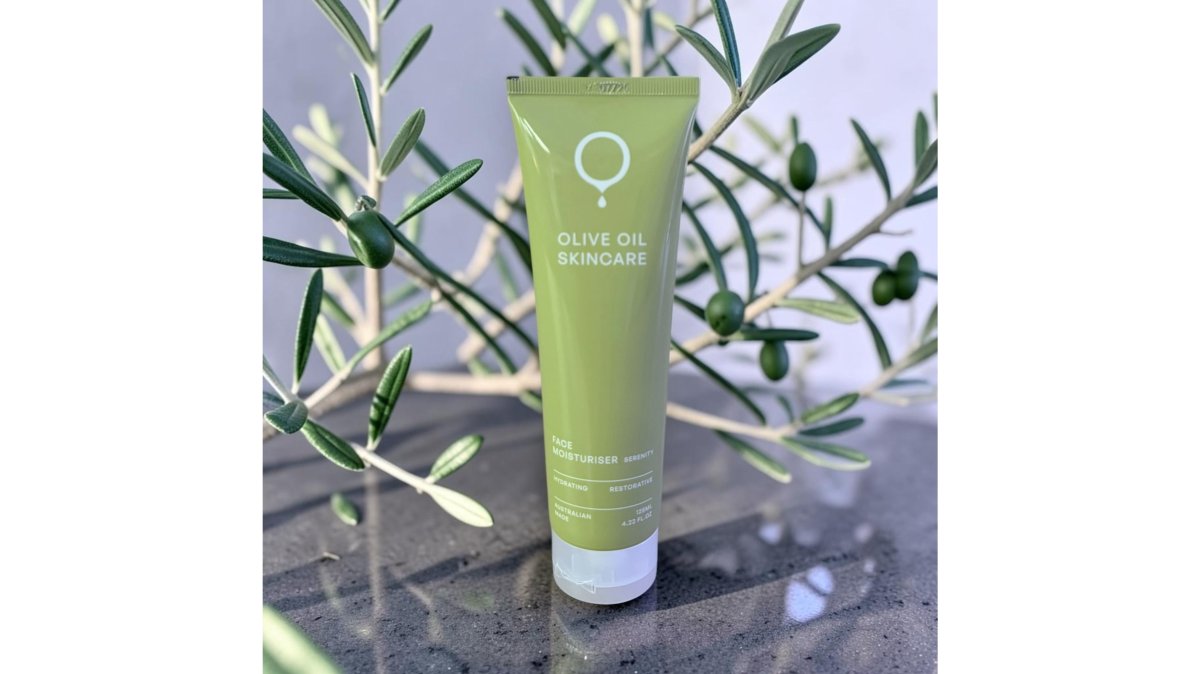
Our top pick for daily dry skin is the Serenity Face Moisturiser. Olive oil carries vitamins A, E and K, plus naturally occurring squalene and polyphenols, which work with your skin to support its natural barrier.
Best for: most skin types needing a daily moisturiser. Skip if: you want a light lotion for oily skin.

2. Zetox Protective Daily Moisturiser 80ml: Best for Dry, Pollution-Exposed Skin
The Zetox Protective Daily Moisturiser contains zeolite, green tea, calendula flower and olive oil, and is formulated for dry skin types.
This is a lotion formulated for dry skin types, and it can be used instead of primer. See the Zetox Protective Daily Moisturiser page for the full ingredient breakdown.

Best for: dry skin exposed to pollution daily. Skip if: you prefer a rich cream texture.
3. Zetox Night Restorative Cream 60ml: Best Overnight Treatment for Dry Skin
The Zetox Night Restorative Cream is a nutrient-rich moisturiser formulated with zeolite, natural extracts and precious oils, and it contains vitamins E and K.
Apply a five-cent amount after cleansing each night. At $79.99 for 60ml, it is the richest option here. The Zetox Night Restorative Cream page lists everything in the jar.
Face Moisturiser, Serenity , 125ml →
Best for: overnight barrier recovery. Skip if: you prefer a single morning-and-night product.
4. Serenity Face Moisturiser 40ml: Best Budget Cruelty-Free Moisturizer
Budget buyers get the same Serenity formula in a smaller jar. The 40ml size costs $15.99, which works out to roughly $0.40 per ml, a sensible way to trial the range before committing.
For anyone trying the Serenity formula, this smaller size is an option to consider. Check the Serenity 40ml product page for details and current pricing.

Best for: first-time buyers and travel. Skip if: you already know you love it and want better value per ml.
5. Juniper Orange Facial Serum 40ml: Best Hydrating Layer for Very Dry Skin
Very dry skin often needs hydration before moisturiser, not instead of it. The Juniper Orange Facial Serum is a lightweight, all-natural serum described as deeply hydrating.
Apply it morning and evening before moisturiser. The Juniper Orange Facial Serum page shows the full formula.
Best for: very dry skin needing an extra hydration layer. Skip if: your skin is already comfortable with one product.
6. Zetox Protective Face Lotion 80ml: Best Lightweight Option for Oily-Dry Skin
The Zetox Protective Face Lotion is a lightweight, moisturising lotion with olive oil that is described as ideal for oily skin, and it can be used instead of primer for oily skin.
At $79.99 for 80ml, it suits combination skin that flakes but shines. Use it before makeup.
Best for: oily-dry and combination skin. Skip if: your skin is very dry and needs a richer cream.
What Actually Fixes Dry Skin: Barrier Support Over Quick Fixes
Dry skin is usually a barrier problem, not a water problem. The outer layer of skin is made of skin cells held together by lipids such as ceramides, cholesterol and fatty acids. When the mortar thins, from over-cleansing, cold weather, age, or irritants, water escapes faster than the skin can replace it.
The three ingredient jobs
Most effective moisturisers combine three types of ingredient. Knowing which is which helps you read a label.
- Humectants pull water into the upper skin layers. Common examples are glycerin, sodium hyaluronate, panthenol, and urea. They work best applied to slightly damp skin, because they need water to draw on.
- Emollients soften and smooth by filling the gaps between skin cells. Examples include olive oil, squalane, shea butter, and fatty alcohols such as cetearyl alcohol. They improve texture and flexibility.
- Occlusives slow water loss by forming a breathable film. Examples include petrolatum, dimethicone, beeswax, and lanolin. They are the heaviest category and the most effective at reducing water loss, but they can feel greasy and may not suit acne-prone skin.
A well-built dry-skin moisturiser usually has all three: a humectant to attract water, an emollient to soften, and an occlusive to hold it in. A product that is only a humectant can, in very dry conditions, draw water from deeper skin rather than the air, which is why layering matters.
Match the formula to the severity
Not all dryness is the same, and the right texture changes with severity.
- Everyday dryness (tightness after cleansing, occasional flaking): a medium-weight cream with glycerin, squalane, and a modest occlusive is usually enough.
- Very dry or winter-dry skin (persistent flaking, rough patches): look for a richer cream or balm with shea butter, ceramides, or petrolatum, and consider a hydrating serum under it.
- Reactive or barrier-impaired skin (stinging, redness, reaction to products that used to be fine): strip the routine back to a gentle cleanser and a fragrance-free moisturiser with ceramides and panthenol. Avoid essential oils, exfoliating acids, and high-alcohol products until the barrier settles.
Ingredients to treat with caution on dry, sensitive skin
- Added fragrance and essential oils, pleasant, but among the most common causes of contact irritation.
- Denatured alcohol high in the list, can sting compromised skin and speed water loss.
- Strong surfactants in cleansers, the cleanser often matters more than the moisturiser for dry skin.
Application habits that change the result
- Cleanse gently and briefly with lukewarm, not hot, water.
- Apply moisturiser within about a minute of patting dry, while skin is still slightly damp, so humectants have water to work with.
- Layer a humectant-rich serum under a richer cream for very dry skin rather than using a thicker cream alone.
Frequently Asked Questions
How can I verify if a skincare brand is truly cruelty-free?
Look for third-party certification logos from recognised bodies such as Leaping Bunny or Choose Cruelty Free, and check whether the brand tests on animals or pays others to do so. A genuine cruelty-free moisturizers brand will state its policy clearly on its website and packaging, list certification details, and avoid vague claims like 'not tested on animals' without evidence. If a brand sells in markets that require animal testing by law, ask how it handles that conflict before trusting the claim.
What natural ingredients should I look for in a moisturizer for dry skin?
Prioritise ingredients that both attract water and seal it in. Humectants such as glycerin and sodium hyaluronate draw moisture into the skin, while occlusives like olive oil, shea butter, and squalane slow water loss. Ceramides and niacinamide support the skin barrier, and panthenol and allantoin calm irritation. For very dry or compromised skin, look for short ingredient lists with few essential oils, and patch test any new product on your inner arm before applying it to your face.
What is the difference between vegan and cruelty-free skincare?
Cruelty-free means no animal testing was conducted on the product or its ingredients. Vegan means the formula contains no animal-derived ingredients such as beeswax, lanolin, or carmine. A product can be cruelty-free but not vegan, or vegan but tested on animals by a third party. Check both claims separately, and look for certification rather than relying on marketing language alone. Olive oil-based formulas can be both, but confirm the full ingredient list before buying.
How do I know if a moisturizer is suitable for a damaged skin barrier?
A damaged barrier usually shows up as stinging, redness, flaking, or tightness after cleansing. Choose a moisturizer with barrier-supporting ingredients such as ceramides, niacinamide, panthenol, and squalane, and avoid alcohol-heavy formulas and strong fragrances. Apply to slightly damp skin morning and night, and layer a serum underneath if your skin feels tight. If irritation persists after two weeks of gentle use, stop the product and see a dermatologist or pharmacist.
Are there affordable cruelty-free moisturizers for dry skin?
Yes, and cost per millilitre matters more than the shelf price. The 125ml face moisturiser is listed at $39.99, the 40ml version at $15.99, and the 500ml hand and body lotion at $35.99, all in AUD. Compare sizes and prices before choosing.
Dry skin that stays dry despite your best efforts usually means the barrier needs real support, not another quick fix. At Oliveoil Skincare Group, our all-natural, Australian-made range is cruelty-free, vegan and built on olive oil to hydrate and improve skin resilience. Explore the Serenity Face Moisturiser, the Zetox range and the Juniper Orange Facial Serum, and get started with Oliveoil Skincare Group to give dry skin the daily hydration it needs.

