




Table of Contents
- What the Research Says About Olive Oil and Skin Barrier
- Is Olive Oil Comedogenic? The Pore-Clogging Question
- Why Oleic Acid Can Disrupt the Stratum Corneum
- Signs of a Damaged Skin Barrier and How to Spot Them
- How to Fix a Damaged Moisture Barrier With the Right Oils
- Choosing Quality Matters: EVOO vs. Refined Olive Oil
- Who Should Skip Olive Oil on Their Face? Skin Type Guide
- The Verdict: Does Olive Oil Help or Hurt Your Skin Barrier?
- Frequently Asked Questions
Last Updated: September 7, 2026
The short answer is that olive oil can help the skin barrier for some people, but it can actively damage it for others, and the difference comes down to skin type, oil quality, and how the oil is formulated. The skin barrier, also known as the stratum corneum, is the outermost layer of skin responsible for retaining moisture and blocking irritants. The science is far more divided than most "natural beauty" advice suggests.
A 2025 study published through the National Center for Biotechnology Information found that both extra virgin olive oil and petrolatum enhanced skin barrier function and improved microtopographic skin features Effects of Extra Virgin Olive Oil and Petrolatum on Skin Barrier. Yet a 2021 paper in the Journal of Allergy and Clinical Immunology argues the opposite: that olive oil's low linoleic-to-oleic acid ratio can disrupt the barrier, increase permeability, and worsen acne-prone skin Olive oil is for eating and not skin moisturization. Both findings are correct, because they apply to different skin conditions and different oil compositions.
Below, we'll break down exactly why olive oil works for some and fails for others, what the research says about clogged pores, and how to tell if your own skin barrier is compromised.
What the Research Says About Olive Oil and Skin Barrier
The scientific literature on olive oil and the skin barrier is genuinely split, and the disagreement centres on skin condition rather than oil quality. For compromised or diseased skin, olive oil appears risky: one widely cited review on natural oils and skin barrier repair notes that olive oil can act as a penetration enhancer, potentially carrying allergens deeper into the skin Anti-Inflammatory and Skin Barrier Repair Effects of Topical Natural Oils. This is because oleic acid, which makes up roughly 55% to 85% of olive oil, disrupts the tightly packed lipid structure of the stratum corneum.
For healthy skin, however, the picture improves. A 2024 study tracked adults using olive oil polyphenols over 30 days and recorded a 34% to 52% reduction in visible wrinkles Marianella polyphenol study. Dermatological research increasingly bridges these ancient traditions with clinical evidence, particularly for barrier repair in otherwise intact skin Olive Oil in Dermatology: Bridging Ancient Traditions with Modern Science.
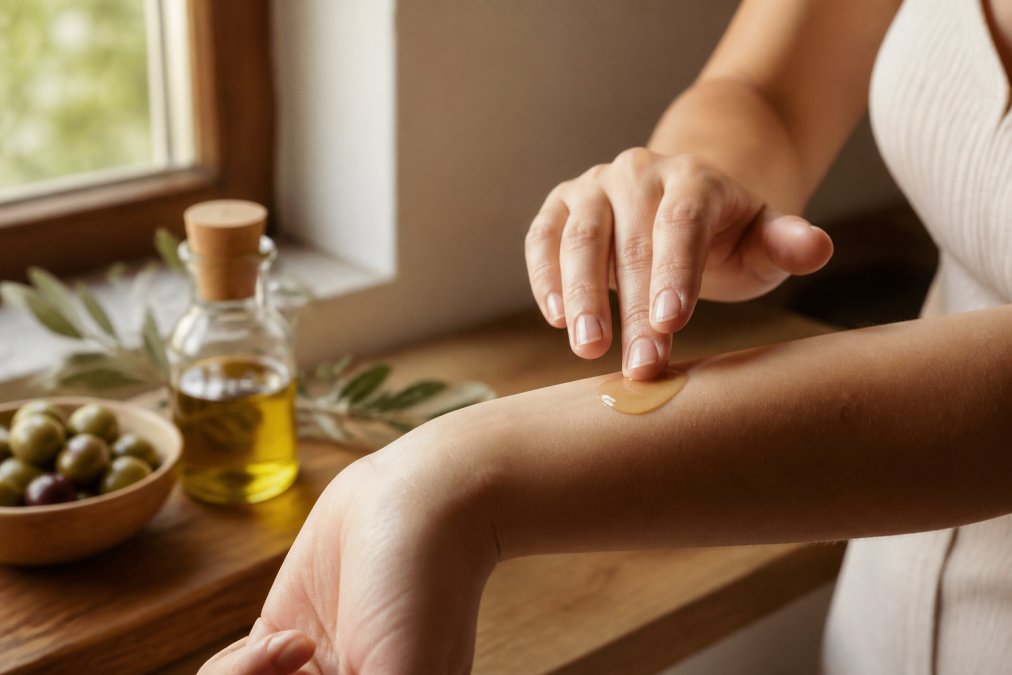
The takeaway is that olive oil is not universally good or bad. It behaves like an emollient on healthy skin but can act as a barrier disruptor on skin that is already inflamed or compromised.
Is Olive Oil Comedogenic? The Pore-Clogging Question
Olive oil is moderately comedogenic, which means it has a real potential to clog pores, though it is not the worst offender among natural oils. The comedogenic scale typically rates olive oil between 2 and 3 out of 5, placing it below coconut oil but above most seed oils like sunflower or safflower.
The mechanism is straightforward. Olive oil is rich in oleic acid, a monounsaturated fatty acid that can thicken the skin's outer layer and trap dead cells and sebum inside the follicle. For someone prone to blackheads or breakouts, regular topical application can worsen congestion within a few weeks.
That said, comedogenicity is not a fixed property. How the oil is formulated matters enormously. A pure oil sitting on the skin behaves differently from a properly emulsified cream where the oil is suspended with water and other ingredients. If you have acne-prone skin, you may tolerate olive oil in a rinse-off cleanser or a well-formulated lotion better than you would a straight facial oil.
Why Oleic Acid Can Disrupt the Stratum Corneum
The core tension in this debate is oleic acid, the dominant fatty acid in olive oil, and its effect on the lipid barrier. The stratum corneum is built like a brick wall: corneocyte cells are the bricks, and intercellular lipids are the mortar holding everything together. Oleic acid interferes with that mortar.
Research published in the Journal of Allergy and Clinical Immunology found that topical olive oil application reduced stratum corneum integrity and induced mild erythema in volunteers after just four weeks Olive oil skin barrier disruption findings. The mechanism is that oleic acid inserts itself into the lipid bilayers, increasing skin permeability and transepidermal water loss. In plain terms, the barrier becomes leakier, and moisture escapes more easily.
This is why the answer to "does olive oil help skin barrier" depends so heavily on who is asking. A healthy barrier can often absorb the disruption and recover. A barrier already struggling with eczema, rosacea, or dermatitis has fewer defences, and the oleic acid can push it over the edge. The same oil that softens healthy skin can sting and inflame broken skin.
Signs of a Damaged Skin Barrier and How to Spot Them
A damaged skin barrier is not subtle, but many people misread the symptoms as simple dryness. The key distinction is that barrier damage involves inflammation and sensitivity, not just flaking.
The most common signs of a damaged skin barrier include:
- Persistent tightness and stinging when applying any product, even gentle ones
- Redness and visible irritation, medically termed erythema
- Rough, textured patches that do not improve with regular moisturising
- Increased sensitivity to temperature changes and wind
- Breakouts in unusual places, often paired with dryness
- A feeling of "raw" skin, particularly after cleansing
If you recognise several of these symptoms, your barrier is compromised, and this is precisely the situation where olive oil is most likely to cause harm. The oleic acid content can increase skin permeability further, making irritation worse and allowing more moisture to escape. In this state, the priority is barrier repair with occlusive ingredients that sit on top of the skin and prevent water loss, rather than emollient oils that penetrate and disrupt.
How to Fix a Damaged Moisture Barrier With the Right Oils
When the moisture barrier is damaged, the goal shifts from adding oils to restoring the lipid structure and stopping transepidermal water loss. Not all oils are equal for this job, and olive oil is generally not the first choice for an actively compromised barrier.
Oils high in linoleic acid are better suited to barrier repair because linoleic acid is a component of the skin's own ceramides. Safflower, sunflower, and hemp seed oils all provide linoleic acid without the barrier-disrupting effects of high-oleic oils. For severely damaged skin, petrolatum remains the gold standard for reducing transepidermal water loss, as documented in the comparative research on barrier function Effects of Extra Virgin Olive Oil and Petrolatum on Skin Barrier.
The practical approach is a layered one:
- Apply a humectant like glycerin or hyaluronic acid to damp skin to draw water in
- Follow with a linoleic-rich oil or ceramide cream to rebuild the lipid barrier
- Seal everything with an occlusive layer if the skin is severely dehydrated
If you are using olive oil products, wait until the barrier has visibly recovered before introducing them. Once the stinging stops and the redness fades, olive oil can be reintroduced as a maintenance emollient rather than a repair agent.
| Skin Condition | Best Oil Type | Why | Olive Oil Suitability |
|---|---|---|---|
| Healthy, normal skin | Oleic-rich (olive, avocado) | Maintains suppleness | Good |
| Acne-prone or oily | Linoleic-rich (safflower, hemp) | Avoids pore congestion | Poor |
| Eczema or dermatitis | Ceramide creams, petrolatum | Repairs lipid barrier | Avoid until healed |
| Mature, dry skin | EVOO with polyphenols | Antioxidant and wrinkle support | Good |
Choosing Quality Matters: EVOO vs. Refined Olive Oil
Not all olive oil behaves the same on skin, and the gap between extra virgin and refined oil is significant. Extra virgin olive oil retains its polyphenols, the antioxidant compounds linked to the wrinkle-reduction findings in the 2024 research. Refined olive oil, which undergoes chemical processing and heat, loses most of these beneficial compounds and offers little beyond basic emollience.
For skincare, the polyphenol content is the primary reason to choose olive oil at all. These antioxidants combat oxidative stress and support collagen, which is why the clinical interest in olive oil polyphenols for anti-ageing has grown Marianella polyphenol efficacy data.
The quality markers to look for are:
- Cold-pressed and unrefined, indicating minimal processing
- High polyphenol count, often listed on the label
- A fresh, peppery taste and greenish hue, which signal antioxidant presence
- Dark glass packaging to protect the oil from light degradation
A refined olive oil, by contrast, is little more than a cheap emollient. It will moisturise superficially but offers none of the antioxidant or anti-ageing benefits that justify olive oil's reputation in skincare. If you are paying for olive oil skincare, the extra virgin status is the single most important quality check.
Who Should Skip Olive Oil on Their Face? Skin Type Guide
Skin type is the strongest predictor of whether olive oil will help or hurt your skin barrier, and the research supports clear guidelines. Olive oil is best suited to dry, mature, or normal skin that lacks sebum and needs lipid replenishment. It is a poor match for oily, acne-prone, or currently inflamed skin.
People with active eczema or atopic dermatitis should be especially cautious. The research indicating that olive oil can reduce stratum corneum integrity and induce erythema Olive oil skin barrier study directly implicates those with compromised barriers. If your skin reacts to most products with stinging or redness, olive oil is likely to trigger the same response.
Rosacea sufferers fall into a similar category. The oleic acid content can increase skin permeability and trigger flushing in sensitive skin. For these individuals, a linoleic-rich oil or a formulated ceramide product is a safer path to barrier repair.
The Verdict: Does Olive Oil Help or Hurt Your Skin Barrier?
The honest answer to does olive oil help skin barrier is that it depends entirely on your skin's current condition and the quality of the oil. For healthy, dry, or mature skin, extra virgin olive oil with intact polyphenols can support moisture retention, improve suppleness, and offer antioxidant protection against visible ageing. The 2024 polyphenol study points to genuine benefits for ageing skin.
For compromised skin, the answer flips. If you have active eczema, rosacea, dermatitis, or acne, olive oil's oleic acid content can disrupt the stratum corneum, increase transepidermal water loss, and worsen inflammation. The research is consistent on this point: olive oil is an emollient for healthy skin and a potential disruptor for damaged skin.
If your skin is healthy and you want the antioxidant and anti-ageing benefits of olive oil, choose a high-quality extra virgin product with documented polyphenol content. We formulate with Australian-grown extra virgin olive oil, free from SLS, palm oil, petrochemicals, parabens, and artificial colourants, and we are licensed to carry the "Made in Australia" symbol. Our range is hypo-allergenic and suitable for most skin types, designed to maintain healthy, hydrated skin and assist the anti-ageing process.
Frequently Asked Questions
Which oil is best for a damaged skin barrier?
Research shows oils high in linoleic acid, such as sunflower or safflower oil, are generally safer for repairing a damaged skin barrier than olive oil. While olive oil acts as an emollient, its high oleic acid content can disrupt the stratum corneum and increase permeability. For compromised skin, dermatologists often recommend fragrance-free creams with ceramides or petrolatum, which clinical studies show reduces transepidermal water loss more effectively than olive oil.
What are the downsides of using olive oil on my skin?
The main downside is barrier disruption. Olive oil's low linoleic-to-oleic acid ratio can weaken the lipid barrier, making skin more permeable and prone to irritation. Studies have linked topical olive oil to mild erythema and reduced stratum corneum integrity. It is also considered mildly comedogenic, meaning it can clog pores for acne-prone individuals. These risks are higher for people with sensitive skin or conditions like atopic dermatitis.
Can olive oil cause skin barrier damage in sensitive skin types?
Yes. Research indicates that topical application of olive oil can structurally weaken the skin barrier, increasing permeability. For individuals with sensitive skin or eczema, this can lead to increased sensitivity and irritation. A 2021 study in the Journal of Allergy and Clinical Immunology noted that natural oils like olive oil can facilitate allergens penetrating deeper into the skin. If you have sensitive skin, test a small area first and monitor for any reaction.
Does olive oil help with eczema and inflammation?
Some research suggests olive oil can reduce erythema, scaling, and pain associated with dermatitis. However, this evidence is mixed. While its antioxidants offer anti-inflammatory benefits, the risk of barrier disruption may outweigh these for eczema sufferers. The type and quality of olive oil matter, but even extra virgin olive oil can be problematic for broken skin. Consult a dermatologist before using olive oil to manage a chronic condition like eczema.
The research on olive oil and the skin barrier is genuinely divided, and the right choice depends on reading your own skin honestly. If your barrier is healthy, quality extra virgin olive oil can nourish and protect it. If your skin is inflamed or prone to congestion, focus on repair first. Get started with Oliveoil Skincare Group and find a formulation matched to your skin's actual needs.
