




Table of Contents
- Understanding Baby Sensitive Skin and Why Gentle Skincare Matters
- Best Ingredients for Baby Sensitive Skin
- Is Olive Oil Safe for Baby Skin?
- Building a Baby Bath Routine for Sensitive Skin
- Managing Eczema, Dry Skin, and Nappy Rash
- pH-Balanced Products and Barrier Protection
- Patch Testing and Introducing New Products Safely
- Frequently Asked Questions
Last Updated: September 22, 2026
Understanding Baby Sensitive Skin and Why Gentle Skincare Matters
Gentle skincare for baby sensitive skin isn't optional, it's foundational. A baby's skin barrier is only one-third the thickness of adult skin, making it profoundly vulnerable to irritants, allergens, and environmental stressors. This structural reality means that what works for an adult causes inflammation, dryness, and distress in an infant. The research is clear: over 90% of parents and caregivers who used tested natural baby skincare products rated them as mild and gentle clinical study on natural baby skincare tolerance, yet many still struggle to find products that actually deliver.
At Oliveoil Skincare Group, we've observed that the real problem isn't a shortage of baby products, it's that most parents don't understand which ingredients strengthen the skin barrier and which compromise it. The natural baby skincare segment is projected to grow at approximately 7.0% annually through 2034, outpacing the broader skincare market baby skincare market analysis, driven by parents who've learned this lesson the hard way.
The stakes are high. A compromised skin barrier doesn't just feel uncomfortable; it invites infection, worsens eczema, and can trigger nappy rash cycles that persist for months. A strengthened barrier, achieved through the right gentle skincare routine, reduces irritation, locks in hydration, and gives a baby's skin the resilience it needs to handle the world.
Best Ingredients for Baby Sensitive Skin
Most parents assume "natural" means safe, but natural doesn't mean gentle. Some natural ingredients are inflammatory or allergenic. The ingredients that work repair the skin barrier and maintain hydration without triggering immune responses.
Olive oil stands at the top of this list for a reason. It's rich in vitamins A, E, and K, contains naturally occurring squalene, and delivers antioxidants and polyphenols that work in harmony with the skin's own chemistry. When applied to baby skin, olive oil penetrates quickly rather than sitting on the surface, which means the nutrients actually reach the cells that need them. A 4-week clinical routine using a gentle wash and olive oil-based moisturiser improved irritation, dryness, overall skin appearance, and skin pH in infants Kenvue clinical research on infant skincare, measurable results, not marketing claims.
Emollients and lipid-replenishing ingredients are non-negotiable for sensitive skin. These include plant-derived waxes and shea butter that seal moisture into the skin. Hydration without occlusion is useless; a lipid barrier keeps water from evaporating.
Manuka honey deserves specific mention for its antibacterial properties and ability to promote healthy skin without the irritation of synthetic antimicrobials. It's particularly useful for managing minor skin concerns whilst maintaining gentleness.
Why Olive Oil Works for Delicate Skin
Olive oil's effectiveness comes down to molecular compatibility. The fatty acid profile in extra virgin olive oil mirrors the natural lipids in healthy skin, which means it integrates into the skin barrier rather than sitting atop it. This is why it absorbs quickly on baby skin, the skin recognises it as part of its own chemistry.
Beyond absorption, olive oil actively strengthens. Squalene, a component naturally present in human sebum, is abundant in olive oil. Polyphenols deliver antioxidant protection against environmental stressors. Vitamins A, E, and K support skin cell turnover and barrier function. For parents choosing between a fragrant lotion and an unscented olive oil balm, the choice should always favour the olive oil, the data supports it, and the skin responds within days.
Our Soothing Balm Pure Original, formulated with extra virgin Australian-grown olive oil, delivers these benefits without fragrance, synthetic dyes, or additives. At $25.99 for 60g, it's a multi-use product for nappy rash, dry patches, chaffing, and eczema flare-ups.

Ingredients to Avoid
Sodium lauryl sulphate (SLS) and other surfactants like sodium laureth sulphate and cocamidopropyl betaine strip the skin barrier and trigger inflammation in sensitive infants.
Parabens (methylparaben, propylparaben, butylparaben) are linked to contact dermatitis in sensitive skin. Synthetic fragrances can mask 30+ chemical components, many of which are allergens. Essential oils, marketed as "natural fragrance," are volatile compounds that irritate immature skin barriers.
Artificial dyes and colourings serve no skincare function and are a direct source of contact dermatitis. Petro-chemicals like mineral oil and petrolatum create an occlusive layer that can trap bacteria.
The pattern: if it's not necessary for barrier function or hydration, it's a risk. Baby skincare should be radically minimalist.
Is Olive Oil Safe for Baby Skin?
Yes, extra virgin olive oil is safe for baby skin when it's pure and free from additives. The clinical evidence is strong. Research on natural baby skincare products found that over 90% of caregivers rated them as mild and gentle, with measurable improvements in skin hydration and barrier function tolerance study of natural baby skincare. Olive oil specifically has been used in infant skincare for centuries and continues to show safety in modern clinical contexts.

Not all olive oil is equal. Refined olive oil loses beneficial compounds; extra virgin olive oil, cold-pressed and unrefined, retains the full nutrient profile. For baby skin, extra virgin is non-negotiable.
Patch testing is prudent even with olive oil. Apply a small amount to the inner arm or behind the ear, wait 24 hours, and observe for redness or irritation before broader use.
Soothing Balm Pure Original 60g →
Building a Baby Bath Routine for Sensitive Skin
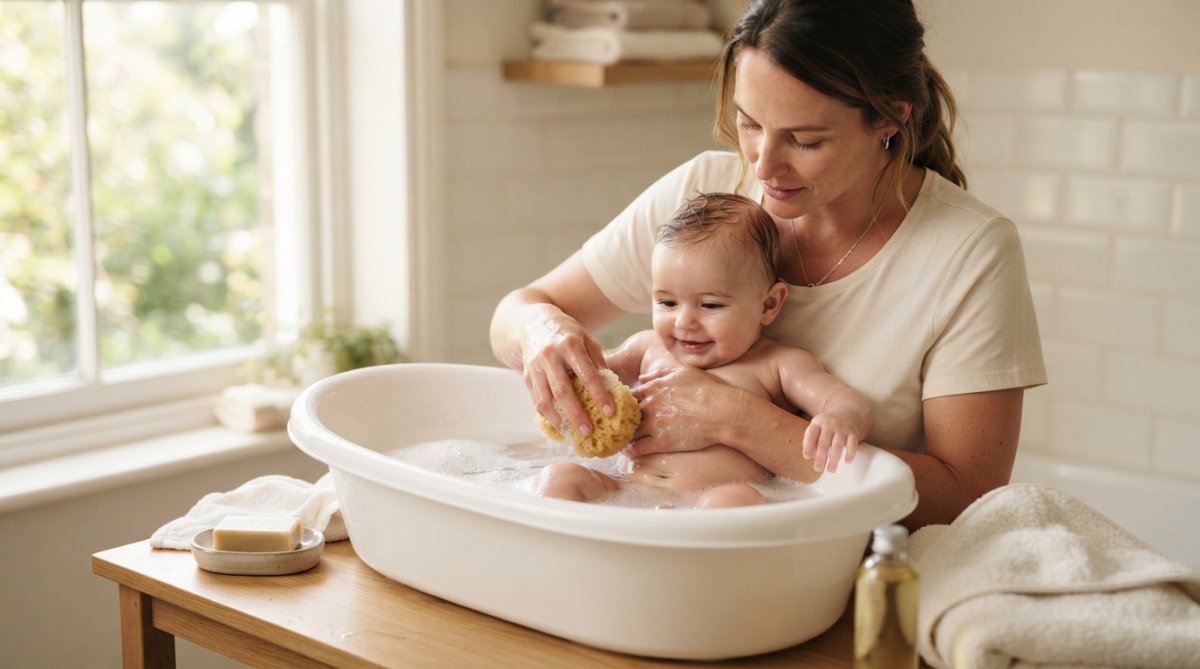
A baby bath routine for sensitive skin should cleanse gently, hydrate immediately, and seal moisture in. It requires discipline to resist adding "beneficial" products that compromise the barrier.
Step-by-Step Daily Care Routine
-
Cleanse with a pH-balanced, fragrance-free wash. Use lukewarm water and minimal soap. Our Olive Oil Soap (50g $7.99, 100g $14.99) creates a gentle lather without SLS or synthetic ingredients. Massage softly for 30-60 seconds, focusing on skin folds. Rinse thoroughly.

Olive Oil Soap, All-Natural , Unscented, 50g -
Pat dry immediately, gently. Don't rub; friction and heat irritate sensitive skin. Use a soft cotton cloth and leave skin slightly damp for the next step.
-
Apply a hydrating product to damp skin. Applying moisturiser to damp skin traps water, dramatically improving hydration. The Soothing Balm Pure Original ($25.99) works well; a pea-sized amount massaged gently across the face and body is sufficient.
-
Seal with an occlusive if needed. For very dry patches or nappy rash, apply the balm a second time to problem areas after the first layer absorbs (2-3 minutes).
-
Complete the routine within 10 minutes of the bath. The window for trapping moisture is short. Delay means evaporation and lost benefits.
Frequency: once daily for most babies, preferably in the evening. If nappy rash or severe dryness is present, a second application after the morning nappy change is justified.
Common Mistakes to Avoid
The most common error is over-cleansing. Babies don't need daily baths; three times weekly is sufficient. Daily bathing strips natural oils and compromises the barrier. If daily washing is necessary, use water alone or a single drop of mild soap.
A second mistake is applying moisturiser to dry skin. Dry skin repels products; applying to damp skin is the difference between a product that sits on the surface and one that hydrates.
A third: using adult skincare or products for older children. The pH and ingredient ratios differ.
Managing Eczema, Dry Skin, and Nappy Rash
Eczema, severe dryness, and nappy rash are interconnected problems rooted in barrier dysfunction. They share a common solution: barrier repair through hydration and occlusion.
pH-Balanced Products and Barrier Protection
A baby's skin is more acidic than adult skin, a pH of approximately 5.5 compared to the adult norm of 7. This acidity is protective; it discourages bacterial overgrowth and supports the natural microbiome. Products with a pH above 7 (alkaline) disrupt this balance, increase bacterial colonisation, and compromise barrier function.
Patch Testing and Introducing New Products Safely
Even when switching to gentle skincare for baby sensitive skin, patch testing is essential. Individual sensitivities vary, and what works for one baby may irritate another. The process is simple but critical.
Frequently Asked Questions
What is the best product for sensitive skin on babies?
Products formulated with gentle, natural ingredients like extra virgin olive oil work best for sensitive baby skin. Look for fragrance-free, hypoallergenic options without sodium lauryl sulphates, parabens, or artificial dyes. A 4-week clinical study showed that using a gentle wash and moisturiser improved irritation, dryness, and overall skin appearance in infants. The Soothing Balm Pure Original is designed specifically for sensitive skin types and can soothe eczema and psoriasis whilst moisturising delicate skin.
Is olive oil safe for baby skin?
Yes, extra virgin olive oil is safe for baby skin when used in properly formulated products. Olive oil contains vitamins A, E, and K, naturally occurring squalene, and antioxidants that strengthen the skin barrier without irritation. Research shows that over 90% of parents found tested natural baby skincare products with olive oil to be mild and gentle. Olive oil absorbs quickly into the skin rather than sitting on the surface, delivering nourishment and hydration effectively.
How often should I bathe a baby with sensitive skin?
Babies with sensitive skin should be bathed 2-3 times per week with lukewarm water, not daily. Over-washing strips the skin's natural protective oils and can worsen irritation. When you do bathe your baby, use a soap-free or gentle cleanser like an all-natural olive oil soap, and keep bath time brief (5-10 minutes). Pat skin dry gently and apply a moisturiser immediately to lock in hydration and support barrier protection.
What ingredients should I avoid in baby skincare products?
Avoid sodium lauryl sulphates (SLS), parabens, synthetic dyes, artificial fragrances, palm oil, and petrochemicals. These can trigger irritation, eczema flare-ups, and damage the skin barrier. Fragrance-free products are safer than scented ones, even if the fragrance is natural. Check labels carefully; many products marketed as 'gentle' still contain irritants. Choose dermatologist-tested and paediatrician-tested formulations without harsh chemicals to minimise the risk of allergic reactions.
