




Table of Contents
- Signs of a Damaged Skin Barrier
- What Causes Skin Barrier Damage
- How to Repair a Damaged Skin Barrier Naturally: Step by Step
- Does Olive Oil Help Skin Barrier Repair?
- Skin Barrier Repair Timeline: What to Expect Week by Week
- Diet, Lifestyle and Environmental Support for Barrier Healing
- Common Mistakes and Troubleshooting Purging vs Reaction
- Conclusion
- Frequently Asked Questions
Last Updated: September 16, 2026
Signs of a Damaged Skin Barrier
A damaged skin barrier announces itself through tightness, redness, flaking and stinging that no amount of moisturiser seems to settle. Learning how to repair damaged skin barrier naturally starts with recognising those signals early, before irritation turns into chronic sensitivity.
Watch for these signs:
- Persistent tightness after cleansing
- Redness and flushing that lingers
- Flaking or rough, uneven texture
- Stinging from products that previously felt fine
- Heightened skin sensitivity to heat, wind or water
What Causes Skin Barrier Damage
Barrier damage almost always traces back to something being done to your skin, not something missing from it. The lipid matrix between your corneocytes, the flattened cells that make up the outermost layer, is what holds water in and irritants out. When that matrix is stripped faster than your skin can rebuild it, transepidermal water loss climbs and reactivity follows.
Over-Exfoliation and Harsh Actives
Layering multiple exfoliating acids and retinoids is one of the most common causes of barrier compromise, according to Trilogy Products' skin barrier guidance. Each product alone may be fine. Stacked together, they strip the lipids that keep skin resilient.
Over-Cleansing and Hot Water
Foaming cleansers built on sodium lauryl sulphate (SLS) and high-foam surfactants lift oils indiscriminately, including the lipids you want to keep. Cleansing twice daily with a stripping formula, or using water hot enough to redden skin, removes the surface lipid film faster than sebaceous glands can replace it. The result is that familiar tight, squeaky feeling people mistake for "clean".
Environmental and Lifestyle Stressors
Wind, UV exposure, hot showers, air conditioning and stress all pull moisture from skin. For anyone working outdoors or in harsh conditions, chapping and cracking become a daily reality rather than an occasional annoyance.
Two mechanisms are worth separating:
- Humidity and temperature. Cold air holds less moisture, and indoor heating plus air conditioning drop relative humidity further. Skin sitting in low-humidity air loses water passively all day.
- UV and pollution. Ultraviolet exposure degrades lipids and damages the proteins that form the barrier's structural scaffold. Particulate pollution generates free radicals that oxidise surface lipids.
Fragrance, Essential Oils and Preservatives
Fragrance is one of the most frequent contact sensitisers in skincare. Natural does not automatically mean gentle, citrus, lavender and eucalyptus essential oils are common triggers, as are some preservatives in water-based formulas. If your barrier is already compromised, even a product you have used for years can start to sting.
Internal and Medication Factors
Barrier function is not purely topical. Essential fatty acid deficiency, low zinc intake, thyroid conditions, diabetes and some medications (including isotretinoin and certain diuretics) all affect how well skin retains water. Stress raises cortisol, which suppresses the lipid synthesis the barrier depends on. If your routine is gentle and your barrier still will not settle, the driver may be internal.
How to Tell Which Cause Is Yours
Work backwards from the pattern:
- Stinging and redness within minutes of applying anything, likely over-exfoliation or a sensitising ingredient.
- Tightness and flaking without redness, usually over-cleansing or low humidity.
- Reactivity that started after a new product, suspect fragrance or a preservative.
- Persistent dryness despite a gentle routine, consider internal or medical factors and speak to a GP or dermatologist.
How to Repair a Damaged Skin Barrier Naturally: Step by Step
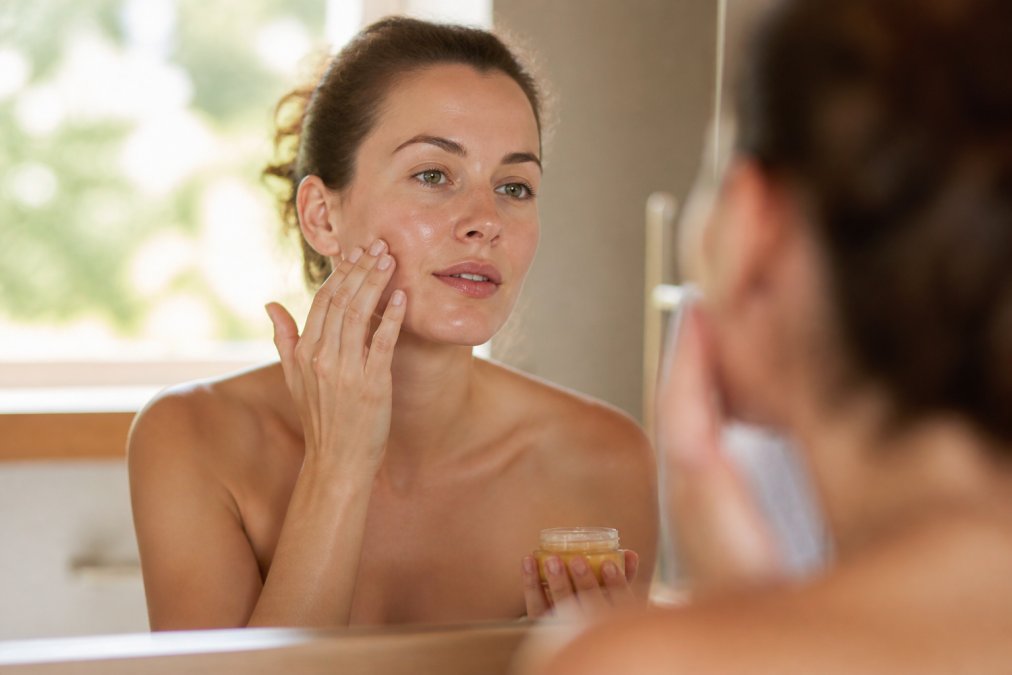
Natural barrier repair works in three stages: strip your routine back, cleanse without stripping, then seal moisture in with lipid-rich ingredients. Most people see meaningful improvement within three to six weeks.
Step 1: Strip Back Your Routine
Remove every active: acids, retinoids, scrubs and treatment serums. Keep only a gentle cleanser and a moisturiser for two weeks. This alone resolves a surprising share of irritation.
Step 2: Cleanse Gently and Apply to Damp Skin
Use a soap-free, non-stripping cleanser and skip hot water. Apply your next product while skin is still damp, which improves absorption and reduces water loss. The Pure Unscented Olive Oil Soap produces a low, creamy lather without sodium lauryl sulphates, so it cleans without leaving skin tight.
Soothing Balm Pure Original 60g →

Step 3: Seal in Moisture with Barrier-Building Ingredients
Look for ceramides, niacinamide and fatty acids, which rebuild the skin's lipid structure. Aesthetic doctor Marco Nicoloso told EXTERNAL_LINK: Vogue | vogue.com to "seek out barrier-building ingredients like ceramides, niacinamide, and fatty acids."
Does Olive Oil Help Skin Barrier Repair?
Yes. Olive oil helps skin barrier repair because it is naturally rich in squalene, fatty acids and antioxidants that support the skin's lipid structure. It works as an occlusive, sealing in moisture while the barrier heals.
Skin Barrier Repair Timeline: What to Expect Week by Week
A gentle, plant-based routine typically repairs a damaged skin barrier within three to six weeks, based on Essance Skincare's 2026 repair guide. Progress is gradual, so track changes weekly rather than daily. The timeline below assumes you have stripped your routine back to a gentle cleanser and a barrier-supporting moisturiser, and paused all actives.
| Phase | Timeline | What You'll Notice | What to Do |
|---|---|---|---|
| Calming | Weeks 1-2 | Less stinging, reduced redness, tightness easing | Cleanser + moisturiser only. No exfoliation, no actives, no hot water. |
| Rebuilding | Weeks 3-4 | Less flaking, improved comfort, skin feels less reactive to water | Keep the routine minimal. Add a balm over moisturiser at night if dryness persists. |
| Strengthening | Weeks 5-6 | Better hydration, fewer reactions, makeup sits more evenly | Begin reintroducing one active, once weekly, if skin stays calm for a full week. |
| Maintenance | Week 7 onward | Stable hydration, predictable skin | Keep actives to one at a time, spaced apart. Reassess every few weeks. |
What Actually Happens Under the Surface
Barrier repair is not linear. In the first fortnight, the priority is stopping further damage, removing the inputs that keep stripping lipids. Around weeks two to four, the skin begins replenishing ceramides and cholesterol, which is why flaking reduces before redness fully fades. By weeks five to six, the lipid matrix is dense enough that water loss normalises, and products that previously stung start to feel neutral again.

Reintroducing Actives Without Relapsing
This is where most people undo their progress. The rule is one active, one frequency, one week at a time:
- Wait until you have had seven consecutive calm days.
- Introduce a single active, for example a low-strength retinoid or a lactic acid, once weekly.
- Hold that frequency for two weeks before increasing.
- If stinging or redness returns, stop for a week and restart at a lower frequency.
When Recovery Stalls
If you are past six weeks with no improvement, the cause is usually one of four things:
- A hidden irritant. Fragrance, essential oils, or a "gentle" cleanser that still foams heavily.
- Over-cleansing. Twice-daily foaming cleansing is often one wash too many during repair.
- An internal driver. Low humidity, poor sleep, high stress, or a medical factor such as thyroid function or essential fatty acid deficiency.
- A misdiagnosis. What looks like a damaged barrier can be rosacea, perioral dermatitis, seborrhoeic dermatitis or eczema, all of which need different management. See a GP or dermatologist if a six-week gentle routine has not helped.
Diet, Lifestyle and Environmental Support for Barrier Healing
Internal support accelerates what you do on the surface. Omega-3 fats, adequate water intake and enough sleep all support the skin's ability to retain moisture. A 2016 study on the epidermal barrier found that a gentle cleanser paired with a well-designed moisturiser improves the epidermal barrier.
Common Mistakes and Troubleshooting Purging vs Reaction
Purging and a reaction look similar but need opposite responses. Purging appears where you normally break out, clears within a few weeks and settles with continued use. A reaction brings redness, stinging and flaking in new areas, and it worsens the longer you persist.
Conclusion
Rebuilding a compromised barrier takes patience, and the temptation to add "one more product" is what usually sets recovery back. Oliveoil Skincare Group formulates with Australian-grown extra virgin olive oil, and every product is cruelty-free, vegan and free from SLS, palm oil, petrochemicals and parabens. Start with the Serenity Face Moisturiser to lock in hydration, add the Juniper Orange Facial Serum for antioxidant support, and keep the Soothing Balm on hand for flare-ups.
Frequently Asked Questions
What are the signs of a damaged skin barrier?
The most common signs include persistent redness, flaking, tightness after cleansing, stinging when you apply products that used to feel fine, and skin that feels rough or reactive. You may also notice increased sensitivity and breakouts that don't follow your usual pattern. These signals mean your protective layer is compromised and transepidermal water loss has increased. If several of these apply at once, pause all exfoliating acids, retinoids and physical scrubs, and switch to a gentle, non-stripping routine while your skin recovers.
How long does it take to restore a damaged skin barrier?
A gentle, plant-based routine is estimated to repair a damaged skin barrier within 3 to 6 weeks. The first week usually brings less stinging and tightness. By weeks two and three, flaking and redness start to settle. By weeks four to six, most people notice normal moisture levels returning. If you keep using the products that caused the damage, the timeline stretches out. Consistency with gentle cleansing and barrier-building moisturisers matters more than any single product.
Can olive oil help repair the skin barrier?
Yes. Olive oil is rich in vitamins A, E and K, naturally occurring squalene, antioxidants and polyphenols, and these nutrients work in harmony with your skin to strengthen its natural barrier. Applied as part of an olive oil-based balm or moisturiser, it absorbs quickly rather than sitting on top of the skin, helping to seal in moisture and reduce transepidermal water loss. For best results, apply to damp skin after a gentle, soap-free cleanse so the oil can lock hydration in.
How do I tell the difference between purging and a reaction?
Purging happens only with products that speed up cell turnover, such as retinoids and exfoliating acids, and it appears in areas you normally break out. It settles within a few weeks. A reaction can happen with any product, shows up as redness, stinging, itching or bumps in new areas, and gets worse the longer you use it. If your skin stings, burns or swells, stop the product immediately and return to a bare, gentle routine until things calm down.
