



Table of Contents
- Why trusting a 'Vegan' Label Isn't Enough
- Vegan vs. Cruelty-Free: Know the Difference
- The Role of Third-Party Certification in Verifying Vegan Claims
- How to Read Skincare Ingredient Labels Like a Pro
- Your Checklist of Animal-Derived Ingredients in Cosmetics
- Practical Steps to Verify Brand Claims & Supply Chain
- Spotting Greenwashing in Skincare Marketing
- Conclusion: Your Path to Confident, Ethical Skincare Choices
- Frequently Asked Questions
Last Updated: September 9, 2026
Why trusting a 'Vegan' Label Isn't Enough
The global vegan cosmetics market is projected to grow at a compound annual rate of 6.94% between 2026 and 2034, according to Fortune Business Insights' vegan cosmetics market forecast. Yet that growth brings a problem: the more products claim to be vegan, the harder it becomes to know which ones actually are. Learning how to verify vegan skincare claims is no longer a niche concern, it is an essential skill for anyone who wants their purchases to match their values. At Oliveoil Skincare Group, we believe informed customers make the best choices, so this guide cuts through the marketing to show you exactly what to look for.
Here is the uncomfortable truth: a label is a promise, not a proof. Marketing teams know that "vegan" and "natural" sell, but the words on the front of a bottle are not held to a single global standard. Greenwashing, where brands exaggerate their ethical credentials, is widespread. Below, we walk through certification logos, ingredient lists, and the specific questions to ask before you trust a claim.
Vegan vs. Cruelty-Free: Know the Difference
A product can be cruelty-free and still contain animal-derived ingredients. This is the single most common point of confusion in ethical skincare. Cruelty-free means the finished product was not tested on animals, whereas vegan means no animal ingredients or by-products are present at all. As SpecialChem's analysis of cosmetic claims notes, a product may avoid animal testing yet still contain beeswax, lanolin, or collagen, making "cruelty-free" claims insufficient for verifying a product is vegan.
Understanding this distinction changes how you shop. When you see the Leaping Bunny or similar cruelty-free logos, you have verified one thing only: the testing policy. To verify vegan skincare, you must look further. The good news is that the regulatory landscape is shifting, with The Vegan Society's global regulatory update reporting that 45 countries have now implemented full or partial bans on cosmetic animal testing as of May 2025. That progress, however, does not address the ingredient question.
The Role of Third-Party Certification in Verifying Vegan Claims
Third-party certification is the most reliable shortcut for verifying vegan skincare claims. Independent bodies audit formulations, supply chains, and manufacturing processes so you do not have to. This matters because consumer trust in labelling remains fragile; a YouGov survey on vegan labelling confidence found that 53% of UK adults lacked confidence in vegan labelling back in 2021, a figure that highlights why independent oversight is so valuable.
Certification schemes exist precisely because self-declared labels are easy to fake. When a brand pays for an independent audit, it signals a genuine commitment rather than a marketing afterthought. For 2026, industry guidance increasingly points to these third-party marks as the primary mechanism for consumers to verify authenticity, with Clinikally's guide to vegan skincare verification emphasising that certifications build trust in product formulations.
Recognising Trusted Certification Logos
Not all logos carry equal weight. The Vegan Trademark, run by The Vegan Society, is one of the most recognised schemes globally and requires annual renewal and full disclosure of ingredients. The Vegan Action logo and Australia's own CHOICE certification are other marks worth knowing. Each scheme has its own auditing standards, so check what the logo actually covers before you rely on it.
Vegan Skincare Certification in Australia
For shoppers in Australia, the certification landscape has its own nuances. While global marks like The Vegan Trademark are recognised here, Australian-made products may also carry local certifications that verify both vegan status and manufacturing standards. When a product carries the 'Made in Australia' symbol alongside a vegan certification, you are getting dual assurance about both origin and ingredients. When a product carries the 'Made in Australia' symbol alongside a vegan certification, you are getting dual assurance about both origin and ingredients. Oliveoil Skincare Group is licensed to carry the 'Made in Australia' symbol.
How to Read Skincare Ingredient Labels Like a Pro
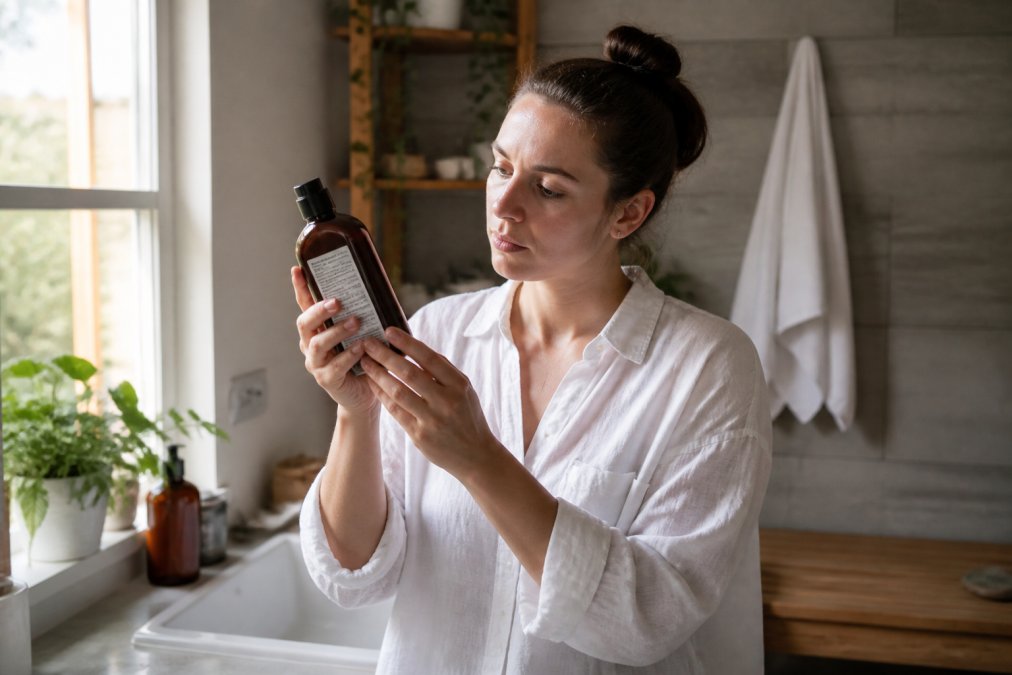
Reading an ingredient label is the most direct way to verify vegan skincare, but only if you know what you are looking at. Ingredient lists are ordered by concentration, with the highest amounts listed first. Most animal-derived ingredients hide in the middle or end of the list, where casual shoppers stop reading.
Starting with the INCI List
The INCI list, short for International Nomenclature of Cosmetic Ingredients, is the standardized naming system used on every legitimate skincare product. Instead of common names like "beeswax," you will see "Cera Alba." Instead of "lanolin," you will see "Lanolin" or "Wool Fat." Learning the INCI names for common animal ingredients is the first step in your verification process. Many apps and databases now allow you to paste an INCI list and flag animal-derived components instantly.
A DIY Ingredient Lookup Workflow
Most guides stop at telling you to 'check the label.' This one gives you a repeatable, database-driven method to cross-reference any INCI list against known animal-derived ingredients, the same technique used by regulatory affairs professionals, simplified for everyday shopping.
Step 1: Transcribe the INCI list. Photograph the back of the pack and zoom in on the ingredient list. Transcribe it into a note-taking app, or copy it directly if the brand publishes it online. Do not rely on the front-of-pack claims.
Step 2: Paste the list into a vegan ingredient database. Two free, consumer-facing tools are particularly useful:
- The Vegan Society's 'Vegan Trademark' search - While primarily a certification lookup, it also lists ingredients that are commonly flagged as non-vegan in certified products.
- INCI Decoder - This is not a vegan-specific tool, but it provides plain-English explanations of every ingredient, including source origins (e.g., 'animal-derived' or 'plant-derived') where known.
Step 3: Flag every ingredient you do not recognise. Do not assume an ingredient is vegan just because you have never heard of it. Paste the full list into the database and look for any of the following markers: 'animal,' 'bee,' 'milk,' 'shellac,' 'wool,' or 'insect.'
Step 4: Cross-reference ambiguous entries. Some ingredients, like glycerin or stearic acid, can be derived from either plant or animal sources. The INCI name alone will not tell you the source. When you encounter these, you must check the brand's website or contact them directly to confirm the source. A brand that cannot confirm the source of its glycerin is not providing full transparency.
Step 5: Keep a personal 'red flag' list. Over time, you will build a mental library of the most common animal-derived INCI names. Save a screenshot of the checklist in the next section to your phone for quick reference while shopping.
This workflow turns a vague 'read the label' instruction into a concrete, repeatable verification process that takes less than five minutes once you have the database open on your phone.
Your Checklist of Animal-Derived Ingredients in Cosmetics
Knowing which ingredients to flag is the practical core of verifying vegan skincare claims. Here is a quick-reference checklist of the most common animal-derived ingredients found in cosmetics:
- Beeswax (Cera Alba): Used as a thickener and emollient in balms and lip products
- Lanolin: Derived from sheep's wool, commonly found in moisturisers
- Collagen and Elastin: Usually sourced from animal connective tissue
- Glycerin: Can be animal-derived, though plant-based versions exist
- Keratin: Often sourced from animal hair, horns, and hooves
- Carmine (CI 75470): A red pigment made from crushed insects
- Hyaluronic Acid: Sometimes derived from animal sources, though microbial versions are common
- Stearic Acid: Can come from animal fat, though vegetable sources are widely used
Practical Steps to Verify Brand Claims & Supply Chain
Once you understand the ingredients, use this repeatable process for every product you consider:
- Check for third-party certification on the packaging before reading anything else
- Scan the INCI list against a database of animal-derived ingredients
- Look up the brand's vegan policy on their website, not just the product page
- Email the brand directly asking for verification of specific ingredients
- Check for supply chain transparency, such as published supplier lists or manufacturing details
Contacting Brands for Transparency
A brand with nothing to hide will answer your questions clearly. Ask specifically: "Which third-party body certifies your vegan claims?" and "Can you confirm that your manufacturing facility is free from animal-derived processing aids?" Companies using laboratory verification services, such as Eurofins Sustainability Services' PCR testing for animal DNA, can point to scientific substantiation rather than vague promises. Similarly, some brands now use completely animal-product-free laboratory environments for testing, as demonstrated by XCellR8's in vitro testing approach, which strengthens both vegan and cruelty-free claims through lab-verified data.
Spotting Greenwashing in Skincare Marketing
Greenwashing is the practice of making a product appear more ethical than it truly is, and the skincare industry is full of it. Common tactics include using earthy packaging colours, leaf imagery, and vague terms like "natural-derived" without any certification to back them up. The word "vegan" itself can be misleading when applied to a product that is vegan but manufactured in a facility that also processes animal ingredients, a distinction that matters to strict vegans.
To spot greenwashing, apply the "three Cs" test: Certification, Clarity, and Consistency. Is there a third-party certification? Does the brand clearly list all ingredients with INCI names? Are their claims consistent across every product, or does only the hero product carry the vegan label? A brand that maintains vegan status at the product level demonstrates the precision that ethical standards require.
The 'Vegan-Washing' Playbook: What to Look For
Beyond the three Cs, brands use specific linguistic and visual tactics to imply vegan status without actually committing to it. Recognising these patterns is the first line of defence.
1. 'Vegan-friendly' or 'vegan-inspired' phrasing. These terms are not regulated definitions. A product described as 'vegan-friendly' may contain animal-derived ingredients, with the brand implying that the product is 'compatible with a vegan lifestyle' rather than actually being vegan. Look for the word 'vegan' as a standalone claim, not a qualifier.
2. 'No animal testing' paired with animal ingredients. This is the classic confusion between cruelty-free and vegan. A brand that prominently displays a Leaping Bunny logo but lists beeswax or lanolin in its ingredients is not making a vegan claim at all. The marketing copy may imply ethical superiority, but the ingredient list tells the real story.
3. 'Plant-based' as a substitute for 'vegan.' 'Plant-based' refers to the primary ingredients, not the entire formulation. A product can be 95% plant-based and still contain shellac or carmine. If a brand uses 'plant-based' instead of 'vegan,' ask why.
4. Eco-packaging as a distraction. A brand that invests heavily in recyclable packaging but has no third-party vegan certification may be using sustainability as a halo to distract from weak ingredient transparency. Packaging claims and ingredient claims are separate issues.
The Regulatory Gap: Why 'Vegan' Means Different Things in Different Markets
A critical layer of greenwashing detection is understanding that the word 'vegan' is not legally defined in cosmetics regulation in most markets, including Australia. The ACCC regulates misleading claims under the Australian Consumer Law, but there is no specific legal definition of 'vegan' for cosmetics. A brand can self-declare 'vegan' without any independent verification, and the claim is only challenged if it is demonstrably false.
In the European Union, the situation is slightly different. The EU Cosmetics Regulation (EC) No 1223/2009 does not define 'vegan' either, but the EU's Unfair Commercial Practices Directive provides a broader framework for challenging misleading claims. The UK's CMA has also published Green Claims Code guidance. However, none of these frameworks provide a single, enforceable definition of 'vegan' for cosmetics.
This regulatory vacuum is precisely why greenwashing thrives. A brand can make a 'vegan' claim based on its own internal definition, which might allow for animal-derived processing aids or trace amounts of animal ingredients. The only way to close this gap is to demand third-party certification, which applies a consistent, audited standard.
A Practical Greenwashing Audit for Your Next Purchase
Before you buy, run this quick mental audit:
- Does the product carry a third-party vegan certification logo? If yes, the claim has been independently audited. If no, proceed to step 2.
- Does the brand publish a full INCI list for this specific product? If the INCI list is missing or incomplete, that is a red flag.
- Does the brand's website have a dedicated vegan policy page? A genuine commitment is usually documented, not just mentioned in a product description.
- Does the brand answer direct questions about ingredient sourcing? Email them and ask about the source of glycerin, stearic acid, or any other ambiguous ingredient. A vague or evasive answer is a warning sign.
Combining the three Cs with an understanding of the regulatory gap and specific linguistic tactics moves you from passive label-reading to active greenwashing detection, the difference between trusting a claim and verifying it.
Conclusion: Your Path to Confident, Ethical Skincare Choices
The process of verifying vegan skincare claims comes down to one principle: never accept a front-of-pack label as sufficient evidence. Check for third-party certification, learn to read the INCI list, and ask brands the hard questions about their supply chain. The market is growing, with Coherent Market Insights' valuation of the vegan cosmetics market estimating it at USD 76.16 billion in 2026, which means more products and more claims than ever before.
At Oliveoil Skincare Group, we make it easy to verify our commitments. Our products are cruelty-free and vegan, free from SLS, palm oil, petrochemicals, parabens, and artificial colorants, and licensed to carry the 'Made in Australia' symbol. Every formulation, from our Olive Oil Soap in Accord of Lavender to our Juniper Orange Facial Serum, is built on Australian-grown olive oil with full ingredient transparency. Browse the full range and see the difference that verifiable, natural skincare makes.


Frequently Asked Questions
What is the difference between vegan and cruelty-free skincare?
Vegan skincare contains no animal-derived ingredients or by-products. Cruelty-free means the final product and its ingredients weren't tested on animals. A product can be cruelty-free yet still contain animal products like honey or lanolin. To genuinely verify vegan skincare claims, you need both: animal-free ingredients and no animal testing throughout the supply chain.
How can I check if a brand is truly vegan-certified in Australia?
Look for logos from recognised certification bodies like The Vegan Trademark. These schemes audit the entire supply chain and formulation. A quick way to start is checking the brand's website for their certification page or contacting them directly to ask for their certificate number, which you can then cross-reference on the certifier's database.
What are the most common hidden animal-derived ingredients in cosmetics?
Common ones include glycerin (often from tallow), stearic acid, lanolin (from sheep wool), collagen, elastin, honey, beeswax, carmine, and shellac. However, plant-based versions of ingredients like glycerin exist. The key is to look for the INCI name and check against a reliable vegan ingredient database to verify the source.
Why is 'vegan' not a regulated term in the cosmetics industry?
In many markets, including Australia, 'vegan' isn't a legally defined term for cosmetics. This means brands can use the label without a standardised legal definition behind it. This gap makes third-party certification and your own label-checking process essential to verify that a product's vegan claims are authentic and not just a marketing tactic.
