




Table of Contents
- Is Olive Oil Good for Face? What the Evidence Shows
- Olive Oil for Dry Skin on Face: When It Works Best
- Can Olive Oil Clog Pores? Understanding the Risks
- Olive Oil on Face Overnight: Application and Precautions
- Olive Oil for Face Wrinkles and Fine Lines
- How to Use Olive Oil on Your Face Safely
- Frequently Asked Questions
Last Updated: October 5, 2026
Is Olive Oil Good for Face? What the Evidence Shows
Olive oil good for face is a common question for anyone tired of expensive skincare.

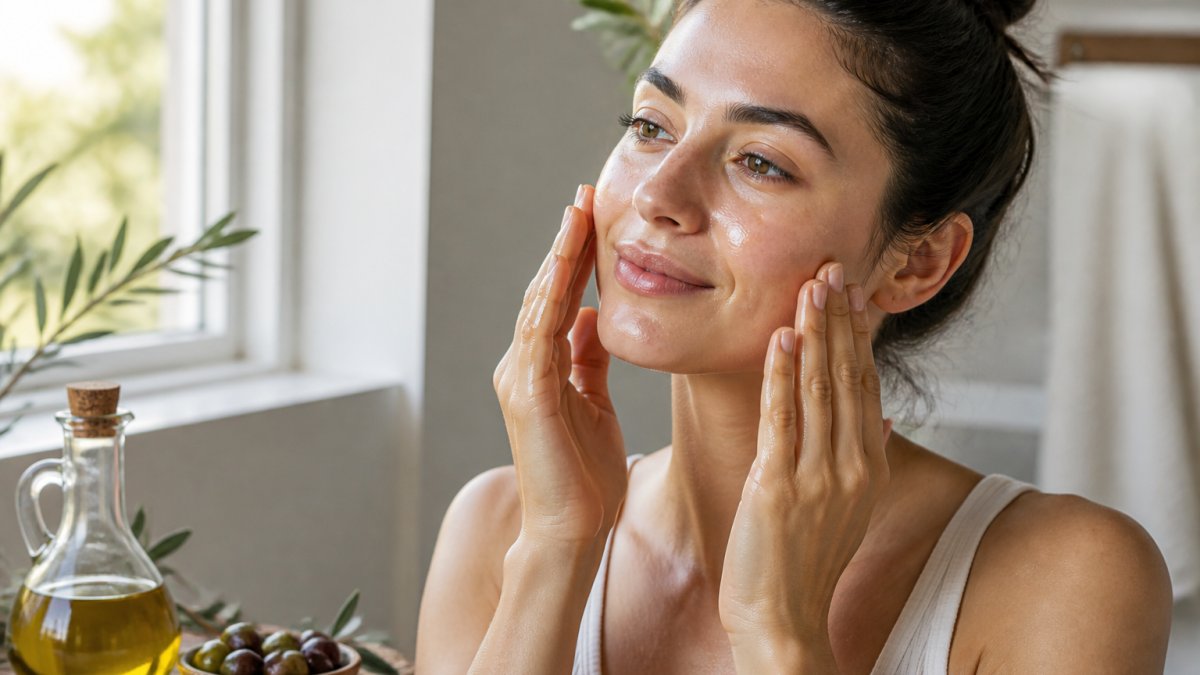
At Oliveoil Skincare Group, we've spent years helping customers navigate natural skincare. Research from PubMed Central studies on olive oil and fibroblasts shows that phenolic compounds in extra-virgin olive oil may contribute to wound healing through effects on skin cells.
The real story is more nuanced: olive oil works brilliantly for some people and causes problems for others.
(/blogs/zeolite-the-ever-surprising-skin-care-ingredient/why-olive-oil-is-great-for-skin-care) works on your face by delivering moisture and protecting your skin's natural barrier.Your skin's moisture barrier keeps water in; when it breaks down, water escapes and irritation sets in. Olive oil locks moisture in by sitting on top of skin and preventing water loss.
Fatty Acids and the Skin Barrier
The key players are monounsaturated fatty acids. These fats mimic your skin's natural oils, so your skin recognises and absorbs them easily.
Squalene is another crucial ingredient. Your skin produces it naturally as part of its protective system, and olive oil contains it too.
The result is a stronger moisture barrier: hydrated skin and less irritation.
Antioxidants and Anti-Aging Properties
Olive oil is packed with antioxidants, especially vitamin E and polyphenols, which protect skin from the free radical damage behind visible ageing.
Research from researchers publishing in Nutrients journal on olive oil phenolic compounds examined how these compounds affect skin cells involved in tissue repair.
Vitamin E is particularly important: one of the few antioxidants that both protects skin and absorbs into it.
That said, olive oil alone won't erase wrinkles, but consistent use can improve elasticity.
Olive Oil for Dry Skin on Face: When It Works Best
Olive oil for dry skin on face is where this ingredient truly shines. If your skin feels tight, flaky, or uncomfortable, it can be transformative.
Dry skin lacks water in the outer layers.
This is especially effective for:
- Winter dryness from cold, dry air
- Eczema-prone skin that needs extra barrier support
- Dehydrated skin from harsh cleansers
For dry skin, olive oil stays on longer and delivers lasting hydration.
However, your skin might be dry because it's sensitive, or actually oily but dehydrated.
Can Olive Oil Clog Pores? Understanding the Risks
Here's the honest part: can olive oil clog pores is a legitimate concern, and the answer depends less on the oil than on your skin's current state.
Olive oil carries a comedogenic rating of 2 on the standard 0-5 scale, where 5 is most pore-clogging. That's relatively low, but "low" is not "none." What matters more is how your skin behaves when oil sits on it.
Why Olive Oil Can Cause Problems for Some Skin
Sebum flows out through your pores. Adding a heavy plant oil adds another lipid layer: on normal or dry skin it reinforces the barrier, but on oily or congested skin it can do three things:
- Trap dead skin cells.
- Feed Cutibacterium acnes.
- Mix with existing sebum.
None of this means olive oil causes acne in everyone, but the risk is real for pores already prone to blocking.
A Skin-Type Decision Framework
Use this as a starting point, then adjust based on how your skin responds over two to four weeks.
| Skin type | Suitability | How to use it |
|---|---|---|
| Dry, flaky | Strong | 3-5 drops nightly on clean skin |
| Normal | Moderate | 2-3 nights per week, or as a cleanser |
| Mature, thinning | Strong | 3-4 drops nightly, pat not rub |
| Oily, no active acne | Cautious | Spot-treat dry patches only |
| Acne-prone, active breakouts | Avoid on face | Use on body or scalp instead |
| Sensitive, reactive | Patch test first | 1 drop diluted in a carrier oil |
| Eczema-prone | Often helpful | Apply to affected patches after bathing |
If You Have Acne-Prone or Oily Skin
You don't have to write olive oil off completely, but you do need to be strategic.
- Spot-treat, don't coat. Apply to dry cheeks or flaky patches only, avoiding the T-zone.
- Dilute it. Mix one drop of olive oil with three drops of a lighter carrier such as jojoba or squalane.
- Use it as a cleanser, not a leave-on. The oil-cleansing method lifts makeup and sunscreen, then you remove it with a warm cloth and follow with a gentle foaming cleanser.
If you are using prescription acne treatments such as tretinoin, adapalene, or benzoyl peroxide, olive oil can reduce their penetration and may increase irritation. Apply the treatment first, wait 20 minutes, then use any oil sparingly, or skip the oil on treatment nights.
What the Evidence Actually Says
Most "olive oil causes acne" claims trace back to the comedogenic scale and small studies on other oils. What is established is that occlusive oils can worsen congestion in those already prone to it. Treat the rating as a caution flag, not a diagnosis.
When to See a Dermatologist
See a GP or dermatologist if you experience:
- Painful, deep nodules rather than surface pimples
- Breakouts that leave dark marks or scars
- Acne that does not improve after 8-12 weeks of consistent care
A dermatologist can assess whether your skin is genuinely acne-prone or whether something else, such as rosacea or perioral dermatitis, is being mistaken for it. That distinction changes the treatment entirely.
Olive Oil on Face Overnight: Application and Precautions
Olive oil on face overnight is popular because it gives the oil time to absorb and work while you sleep.
The process is simple:
- Cleanse your face thoroughly with a gentle cleanser
- Pat skin dry completely
- Apply a small amount of olive oil (3-5 drops) to your fingertips
Overnight application works well because you're not moving, sweating, or exposing skin to environmental stressors, the oil has hours to penetrate and nourish.
However, overnight use comes with precautions:
Facial Cleansing Oil, Naturally Nourished , 30ml →
- Test on a small area first to check for irritation
- Don't use if you have active acne, bacteria thrive in oil-rich environments
- Wash your pillowcase regularly to prevent bacteria buildup
For sensitive skin or eczema-prone skin, overnight olive oil can be incredibly soothing. For oily or acne-prone skin, skip this approach.
Olive Oil for Face Wrinkles and Fine Lines
Olive oil for face wrinkles is where marketing and evidence diverge most sharply. Olive oil won't erase deep wrinkles, and no credible source claims it will. But it can influence fine lines through two reasonably well-understood mechanisms.
What Olive Oil Can Realistically Do
1. Improve hydration, which plumps the skin.
Fine lines look deeper when the outer layer is dehydrated. An occlusive oil slows transepidermal water loss, so skin looks temporarily plumper and lines softer.
2. Deliver antioxidants that may reduce oxidative stress.
Extra-virgin olive oil contains vitamin E (tocopherols) and polyphenols such as hydroxytyrosol and oleuropein, which neutralise free radicals in laboratory settings.
What Olive Oil Cannot Do
- It cannot stimulate collagen production in the way retinoids or peptides do. There is no strong human evidence that topical olive oil increases collagen synthesis.
- It cannot reverse photoageing. Sun damage is cumulative and structural. An oil sits on the surface.
- It cannot replace sunscreen. In fact, relying on olive oil instead of SPF will accelerate the very wrinkles you are trying to prevent.
Think of olive oil as a supporting player, not a treatment. It hydrates and may offer mild antioxidant support. It does not remodel skin.
How It Compares With Proven Anti-Ageing Ingredients
| Ingredient | Mechanism | Evidence strength |
|---|---|---|
| Tretinoin | Increases cell turnover, stimulates collagen | Strong, prescription-only |
| Retinol | Converted to retinoic acid in skin | Strong, over-the-counter |
| Vitamin C (L-ascorbic acid) | Antioxidant, supports collagen synthesis | Moderate to strong |
| Niacinamide | Barrier support, reduces pigment transfer | Moderate |
| Peptides | Signal collagen production | Moderate, varies by peptide |
| Olive oil | Occlusive hydration, antioxidant | Limited for anti-ageing specifically |
Olive oil can sit underneath those products as a moisturising layer, but should not replace them.
A Realistic Routine
To use olive oil in an anti-ageing approach, layer it correctly:
- Morning: Cleanse, apply vitamin C serum if you use one, then a light moisturiser, then SPF 50+.
- Evening: Cleanse, apply retinoid or peptide serum, wait 10 minutes, then 2-3 drops of olive oil to seal in moisture.
- Twice weekly: Skip the active and use olive oil alone as a recovery night.
Give any routine 12 weeks before judging results. Skin turnover slows with age, and visible change takes time.
When to Seek Professional Advice
If fine lines progress quickly, or you notice new pigmentation, texture changes, or lesions that bleed or change shape, see a GP or dermatologist. For deeper wrinkles, in-clinic options such as prescription retinoids, chemical peels, microneedling, or laser resurfacing are worth discussing with a qualified practitioner.
How to Use Olive Oil on Your Face Safely
Using olive oil correctly makes the difference between great results and irritation.
Basic application steps:
- Cleanse first, olive oil works best on clean skin
- Use only 3-5 drops (more isn't better)
- Warm the oil between your palms before applying
The warm-up step matters: cold oil absorbs slowly and feels heavy, while warming helps it spread evenly.
Choosing the Right Olive Oil Product
Not all olive oil is the same. The type you choose affects how your skin responds.
Extra-virgin olive oil is best for facial skin: minimally processed, higher in antioxidants, and not chemically refined.
Refined olive oil is cheaper but loses many beneficial compounds during processing.
Avoid olive oil products with added fragrance or essential oils if your skin is sensitive.
For those who prefer a cleansing approach first, our Naturally Nourished Cleansing Oil with olive, sunflower, and castor oils removes makeup and impurities whilst hydrating your skin.

Patch Testing and Allergy Precautions
Even natural ingredients can trigger reactions. Always patch test before applying olive oil to your entire face.
Patch test process:
- Apply a small amount of olive oil to your inner arm or behind your ear
- Wait 24-48 hours
- Check for redness, itching, or swelling
Some people are allergic to olive oil, though it's rare.
Olive oil is hypoallergenic for most people, but "most" isn't "all."
Olive oil can genuinely improve your skin, but only if you use it correctly and match it to your skin type.
Our Serenity Face Moisturiser combines Australian-grown olive oil with complementary ingredients designed specifically for facial skin.
Frequently Asked Questions
Can you apply olive oil on your face daily?
Yes, you can use olive oil on your face daily if your skin tolerates it well. Start with a small amount, just 2-3 drops, and massage gently over cleansed skin. However, if you have acne-prone or very oily skin, daily use may worsen breakouts. Those with dry, sensitive, or eczema-prone skin often see the best results with daily application. Begin with 3-4 times per week and increase frequency based on how your skin responds. Patch test first to rule out irritation.
Does olive oil help with wrinkles and fine lines?
Laboratory research published in *Nutrients* (2023) found that phenolic compounds in extra-virgin olive oil may support tissue repair through effects on fibroblasts. However, this in-vitro evidence does not prove that applying olive oil to facial skin reduces wrinkles in people. Olive oil does contain vitamin E, polyphenols, and antioxidants that may help protect skin and support hydration, which can make fine lines appear less pronounced. For significant anti-aging results, combine olive oil with sun protection, a consistent routine, and realistic expectations about natural products.
What are the disadvantages of applying olive oil on face overnight?
Overnight application can leave your pillow oily and may trap bacteria or irritants against your skin, especially if you have acne-prone or sensitive skin. Some people wake with congestion or increased breakouts. If you have rosacea or inflamed skin, the occlusive nature of oil overnight may intensify redness. To minimise these risks, use only a small amount, allow it to absorb for 10-15 minutes before bed, and wash your pillowcase regularly. If irritation develops, switch to daytime use or apply only 2-3 times per week at night.
Is olive oil suitable for sensitive or acne-prone skin?
Olive oil can benefit sensitive skin because it is hypoallergenic and contains soothing compounds, but it may not suit all acne-prone skin. Olive oil can clog pores or worsen acne in some people, even though it does provide moisture and reduce dryness. If you have acne-prone skin, patch test on a small area first, use sparingly, and monitor for increased breakouts. For sensitive skin with eczema, psoriasis, or rosacea, olive oil's anti-inflammatory properties and fatty acids often provide relief, but always start with a small amount and discontinue if irritation occurs.
