




Last Updated: October 31, 2026
Quick Summary
A natural moisturiser for sensitive skin is built on plant oils, butters and extracts rather than synthetic additives, and earns its place by strengthening the skin barrier without triggering redness or stinging. Olive oil is a common base because it can be absorbed by the skin rather than sitting on the surface. Check for fragrance-free formulas with short, recognisable ingredient lists.
- There is no legal definition of natural in skincare, so read the ingredient list rather than the front of the jar.
- Patch test on the inner forearm for 24 hours, then repeat on a second day before using widely.
- Moisturise twice a day and apply to slightly damp skin to trap water.
- Give a new natural moisturiser two to four weeks before judging it, changing one product at a time.
- See a doctor if skin is cracked, bleeding, oozing, spreading rapidly or not improving after a few weeks.
Table of Contents
- How to Choose a Natural Moisturiser for Sensitive Skin
- 7 Natural Moisturisers for Sensitive Skin Compared
- Natural Ingredients for Sensitive Skin That Earn Their Place
- Botanical Extracts Can Still Irritate: What to Patch Test
- How Often to Moisturise Sensitive Skin
- Homemade Natural Moisturiser: What It Can and Cannot Do
- When to See a Doctor About Eczema, Psoriasis or Rosacea
- Build Your Sensitive Skin Routine With Olive Oil Skincare
- Frequently Asked Questions
How to Choose a Natural Moisturiser for Sensitive Skin
A natural moisturiser for sensitive skin is built on plant oils, butters and extracts rather than synthetic additives, and earns its place by strengthening the skin barrier without triggering redness or stinging.
Start with honesty about the word "natural". It is not a regulated term, and a product can carry it while still containing fragrance or preservatives that upset reactive skin. What matters is the ingredient list, the absence of known irritants, and how the formula behaves over your first week.
Watch out: assuming "natural" means "hypoallergenic" is the most common mistake we see. Botanical extracts can cause reactions, and a plant oil that suits one person may sting another.
What Natural Actually Means on a Label
There is no legal definition of "natural" in skincare, so the word describes a marketing position rather than a standard. A genuinely natural formula leans on plant oils, pure butters and botanical extracts, and skips synthetic fragrance, artificial colourants and petrochemicals.
Stanford Medicine's guidance on natural skincare and allergies notes that natural products can still be associated with allergic reactions, and the Cleveland Clinic's advice on clean beauty labels points out that "clean" and "natural" claims are largely unregulated. That does not make natural formulas unsafe. It means you should read the ingredient list rather than trust the front of the jar.
For sensitive skin, the practical checklist is simple:
- Fragrance-free or low-fragrance, since scent is a frequent trigger
- No SLS, parabens or artificial colourants
- Short, recognisable ingredient lists
- A base oil your skin has tolerated before, such as olive oil
7 Natural Moisturisers for Sensitive Skin Compared
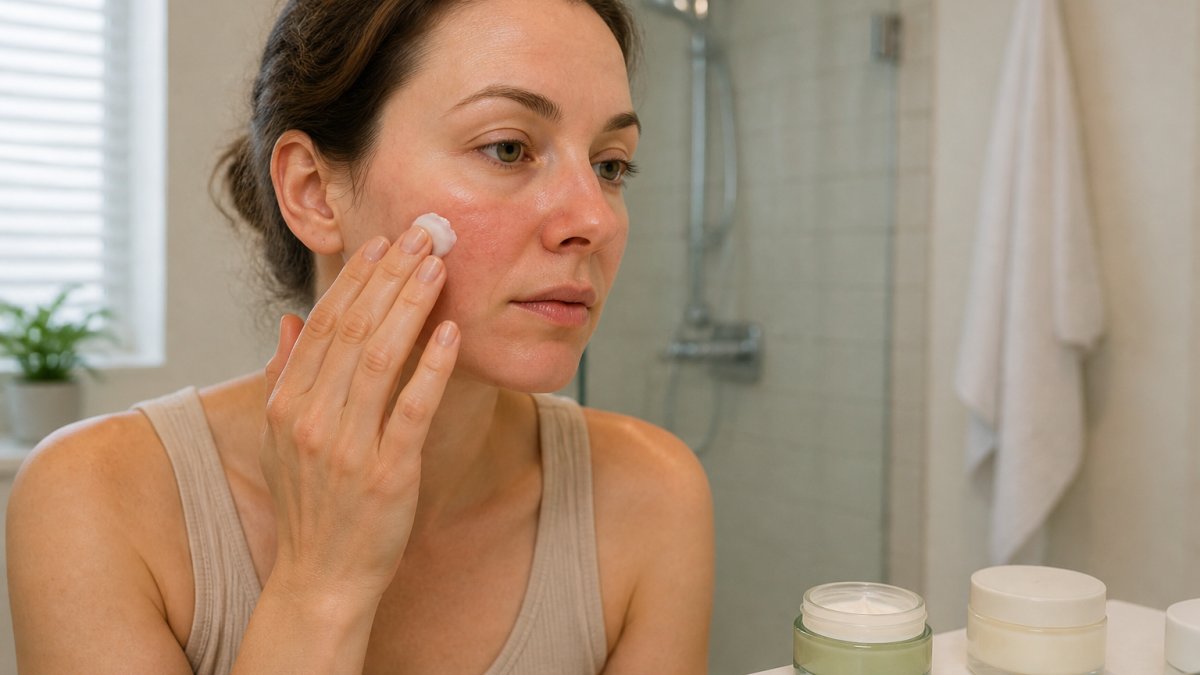
The seven formulas below cover face, body and multi-purpose use, all built on olive oil and all free from SLS, palm oil, parabens and artificial colourants. Prices are in AUD.
| Product | Price | Best For |
|---|---|---|
| Face Moisturiser Serenity | $15.99 / $39.99 | Daily face hydration |
| Soothing Balm Pure Original | $25.99 | Cracked skin, nappy rash, lips |
| Zetox Protective Daily Moisturiser | $79.99 | Dry skin needing day protection |
| Zetox Night Restorative Cream | $79.99 | Overnight repair and fine lines |
| Zetox Enriched Body Lotion | $49.99 | Everyday body hydration |
| Hand and Body Lotion Naturally Nourished | $35.99 | Large-volume body care |
| Body Butter Citrus Revival | $19.99 | Very dry patches, all seasons |
Face Moisturiser Serenity 40ml and 125ml
Serenity is our most straightforward face pick for reactive skin. Its core ingredient is olive oil, rich in vitamins A, E and K, squalene and polyphenols, and it absorbs quickly instead of sitting on top of the skin.
The 40ml jar suits a first trial, while the 125ml suits a settled routine. You can view the full Serenity 40ml details or check the 125ml size before committing.


Best for: daily morning and night use on reactive faces. Skip if: you want a rich overnight cream, which the Zetox range covers better.
Soothing Balm Pure Original 60g
This is the one we reach for when skin is genuinely aggravated. Unscented, with no colouring agents or additives, the balm soothes and moisturises even highly sensitive skin, and is described as helping to calm the effects of psoriasis and eczema. It can be used on cracked heels, cuticles, chafing, nappy rash and dry lips.
See the full Soothing Balm ingredients and directions if you want to check the ingredients before buying.

Best for: targeted relief on angry, cracked or flaking patches. Skip if: you prefer a light lotion for all-over body use.
Zetox Protective Daily Moisturiser 80ml and Night Restorative Cream 60ml
The Zetox pair suits dry skin that also wants protection and anti-ageing support. The daily moisturiser is a light lotion built on zeolite, calendula flower and olive oil, with green tea to help protect skin cells. Zeolite is described as attracting and binding impurities.
The night cream adds vitamins E and K and is designed to hydrate while you sleep. Together they form a complete day-and-night routine. Check the Zetox daily moisturiser for suitability, or review the night cream if you are building the pair.
Best for: dry, mature or pollution-exposed skin wanting a full routine. Skip if: you are after a single, budget-friendly face cream.
Body Options: Enriched Body Lotion, Naturally Nourished Lotion and Citrus Revival Butter
Body skin needs the same care as the face, especially for tradespeople and anyone working outdoors. The Zetox Enriched Body Lotion is a lightweight everyday option with a mandarin, lime and basil scent, and zeolite as a key ingredient. The Naturally Nourished Hand and Body Lotion is a 500ml olive oil formula that absorbs quickly and is hypo-allergenic.
The Citrus Revival Body Butter combines olive oil with shea butter, macadamia oil and camellia seed oil.
Best for: daily body maintenance and hard-working hands. Skip if: you react to essential oils, in which case the unscented balm is safer.
Natural Ingredients for Sensitive Skin That Earn Their Place
Not every botanical deserves its reputation, and "sensitive skin" is not one condition. Dryness, redness, barrier damage and oiliness each call for a different ingredient emphasis, so a map from concern to ingredient helps more than a single hero list.
Olive oil is the base ingredient of our range. It carries vitamins A, E and K, naturally occurring squalene and polyphenols, and is described as working with the skin to strengthen its natural barrier. A review in the Journal of Integrative Dermatology describes natural oils as widely used moisturising ingredients for treating and preventing conditions such as atopic dermatitis.
Shea butter is used in our Body Butter, where it is an ingredient alongside olive oil. Calendula is an ingredient in our Zetox Protective Daily Moisturiser. Green tea is also an ingredient in that formula.
Map the ingredient to the concern:
Face Moisturiser Serenity 40ml →
- Dryness: olive oil, shea butter
- Redness and reactivity: short ingredient lists
- Barrier damage: olive oil's squalene and polyphenols
- Oiliness with sensitivity: lighter olive oil formulas
What most guides miss is that more ingredients is not better.
Botanical Extracts Can Still Irritate: What to Patch Test
Natural ingredients are not automatically gentler. That is the uncomfortable truth the "clean beauty" aisle rarely mentions.
Plant-derived ingredients, including essential oils, can trigger reactions in some people. If your skin reacts to almost everything, scrutinise fragrance and essential oils first. Our Soothing Balm Pure Original is unscented.
Patch testing is the only reliable way to know. Here is how we would do it:
- Apply a small amount to the inner forearm, not the face
- Leave it uncovered for 24 hours
- Check for redness, itching or stinging
- Repeat on a second day before using it widely
- Stop immediately if irritation appears
Watch out: testing on the face first gives you no margin for error. The forearm is far more forgiving.
How Often to Moisturise Sensitive Skin
Twice a day is a common approach: once in the morning and once at night.
In humid summer weather, a lighter formula such as our Face Moisturiser Serenity absorbs quickly and is enough for most reactive faces.
Routine compatibility matters as much as frequency. If you use an active cleanser, astringent toner or exfoliant, moisturising after each use is non-negotiable, because those steps strip lipids and leave the barrier exposed.
For most people, that means a gentle cleanse, a face moisturiser in the morning, and a richer cream or balm at night.
The real difference between a routine that works and one that does not comes down to patience.
Homemade Natural Moisturiser: What It Can and Cannot Do
A homemade natural moisturiser is a blend you make at home from kitchen and pantry ingredients, usually oils, butters and waxes. It can be simple, affordable and free of additives, which is why the idea appeals.
What it can do: deliver basic hydration and let you control every ingredient.
What it cannot do: guarantee stability, sterility or consistent texture, and it offers no protection against contamination. Without preservatives, water-based homemade formulas can spoil quickly. If you have eczema, psoriasis or rosacea, a homemade blend is not a substitute for a formulated product or medical advice.
When to See a Doctor About Eczema, Psoriasis or Rosacea
See a doctor if your skin is cracked, bleeding, oozing, spreading rapidly, or not improving after a few weeks of gentle care. Persistent redness across the cheeks and nose, or patches that thicken and scale, deserve a proper diagnosis rather than another product trial.
Moisturising supports the barrier and eases dryness, but it does not treat a diagnosed condition on its own. A GP or dermatologist can confirm what you are dealing with and rule out triggers you may have missed.
If a product stings, burns or causes a rash, stop using it and seek advice. That reaction is information, not a hurdle to push through.
Build Your Sensitive Skin Routine With Olive Oil Skincare
Building a routine for reactive skin is less about finding a miracle product and more about removing what irritates you. Start with a gentle cleanse, add one moisturiser, patch test it properly, and give it a month. That patience separates calm skin from a cabinet full of abandoned jars.
At Oliveoil Skincare Group, every formula is 100% all-natural, Australian made, cruelty-free and vegan, and free from SLS, palm oil, petrochemicals, parabens and artificial colourants.
Get started with Oliveoil Skincare Group and give reactive skin the gentle, consistent care it has been asking for.
Frequently Asked Questions
Can a natural moisturiser still irritate sensitive skin?
Yes. Natural and organic labels are not regulated as safety claims. Essential oils, fragrance components and some botanical extracts are common triggers. Patch test any new natural moisturiser on your inner forearm for 48 hours before using it on your face, and stop if redness, stinging or swelling appears.
How often should you moisturise sensitive skin?
Twice daily works for most people: once after your morning cleanse and once before bed. If your skin is very dry or you work outdoors, add a mid-day layer on hands and exposed areas. Apply within a few minutes of washing while skin is still slightly damp, which helps trap moisture. Reapply whenever tightness returns rather than waiting for cracking or flaking to start.
What is the best homemade natural moisturiser for sensitive skin?
Simple blends carry the least risk: a plain plant oil such as olive oil, or a mix of olive oil and shea butter with no added essential oils. Homemade formulas have no preservative system, so make small batches and store them in the fridge. They also lack the barrier-support ingredients and stability testing of a formulated product, so treat them as a stopgap rather than a long-term routine.
Which natural ingredients are gentlest on reactive skin?
Look for short ingredient lists built on olive oil, shea butter and glycerin, and favour fragrance-free options. Avoid added fragrance, essential oil blends and exfoliating acids.
How do I patch test a new moisturiser properly?
Apply a pea-sized amount to the inside of your forearm or behind your ear, twice daily for two to three days. Leave it uncovered and avoid washing the area straight away. If you see redness, itching, stinging or swelling, stop and rinse with cool water. Only start full-face use once the test area stays clear, and introduce one new product at a time so you can identify the cause of any reaction.

