




Table of Contents
- Why Your Hands Get Dry and Chapped
- Home Remedies for Dry Hands That Actually Work
- How to Heal Cracked Hands Quickly
- Building a Hand Care Routine for Dry Skin
- Preventing Dry Hands in Winter and Beyond
- When to Seek Professional Care
- Frequently Asked Questions
Last Updated: October 9, 2026
Why Your Hands Get Dry and Chapped
Dry chapped hands develop when your skin loses moisture faster than it can replace it. This happens because the outer layer of skin, called the skin barrier, becomes compromised.
Several factors trigger this problem. Frequent handwashing strips away natural oils. Cold air and low humidity pull moisture from skin. Harsh soaps and chemicals damage the protective layer.
The research is clear on one point: regular hand care matters.
The good news is that natural remedies work. They work because they address the root cause: restoring the skin barrier and locking in moisture.
Home Remedies for Dry Hands That Actually Work
Not every natural remedy is backed by the same level of evidence, and some can irritate already-compromised skin. Below, each remedy is graded on what it actually does, who it suits, and where it can go wrong. Patch-test any new ingredient on the inner forearm for 24 hours before applying it to cracked hands.
Olive oil and olive leaf extract
Olive oil is rich in oleic acid and vitamin E, and it works mainly as an occlusive, it sits on the surface and slows water loss rather than adding water itself. That makes it useful after washing, when the skin is still slightly damp. Olive leaf extract contains polyphenols studied for antioxidant and soothing activity.
- Best for: mild to moderate dryness, overnight use
- Watch for: olive oil is not ideal for very oily or acne-prone skin on the body, and it can feel heavy
- How to use: 2-3 drops massaged into damp hands, twice daily and before bed
Colloidal oatmeal soaks
Colloidal oatmeal is one of the better-evidenced natural ingredients for irritated skin. It contains avenanthramides and beta-glucans that help calm itching and support the skin barrier, and it is widely used in products formulated for eczema-prone skin. It is a reasonable choice when dryness comes with redness or itch.
- Best for: itchy, irritated or eczema-prone hands
- Watch for: it can make the bath or basin slippery; rinse thoroughly
- How to use: blend plain rolled oats to a fine powder, stir 2 tablespoons into lukewarm water, soak 10-15 minutes, pat dry, then moisturise while damp. Once or twice weekly is enough for most people.
Shea butter and coconut oil
Shea butter is a rich emollient high in fatty acids that melts at body temperature and stays on the skin, making it a strong overnight option. Coconut oil is also occlusive and contains lauric acid, which has some antimicrobial activity in laboratory studies.
- Best for: overnight occlusion, especially in winter
- Watch for: coconut oil is comedogenic for some people and can cause irritation or clogged pores; shea butter is generally better tolerated on sensitive skin
- How to use: warm a small amount between palms, massage in, cover with cotton gloves, leave overnight, rinse gently in the morning
Honey and aloe vera
Honey is a humectant, it draws water into the skin, and raw honey also has mild antibacterial properties. Aloe vera gel is soothing and light, and is often used for minor burns and irritation.
- Best for: sensitive skin, mild dryness, daytime use
- Watch for: some people react to aloe; raw honey is not suitable for infants and should not be used on deep open wounds without medical advice
- How to use: mix 1 tablespoon raw honey with 2 tablespoons aloe vera gel, apply to clean damp hands, leave 10 minutes, rinse with lukewarm water, then moisturise. Two to three times weekly.
What the evidence actually supports
If you want the shortest evidence-based shortlist: colloidal oatmeal for itch and irritation, shea butter or olive oil for occlusion, and honey or aloe as gentle adjuncts. No single natural remedy outperforms a consistent barrier-repair routine, the routine matters more than the ingredient.
How to Heal Cracked Hands Quickly
Cracks that bleed or sting are small wounds, not just dry skin. Healing them means sealing the split, preventing infection, and protecting the area from the things that caused it. The routine below is what most dermatology guidance converges on.
Step 1: Clean without stripping
Wash with lukewarm water and a fragrance-free, soap-free cleanser. Hot water and foaming soaps strip lipids and slow healing. Pat, do not rub, with a soft towel, leaving skin slightly damp.
Step 2: Seal the fissure
Apply a thick ointment or balm while the skin is still damp. Ointments (petroleum jelly, olive-oil-based balms, shea butter) hold water in better than lotions because they contain little or no water to evaporate. For a deep crack, a thin layer of a protective balm over the split reduces stinging when water or sanitiser touches it.
Step 3: Occlude overnight
Cover hands with clean cotton gloves for at least 6-8 hours. This is the single most effective step for cracked hands because it keeps the product in contact with the skin and stops it transferring to bedding. Wash gloves weekly and rotate pairs.
Step 4: Reapply through the day
Reapply a thick cream or balm every 2-3 hours and immediately after every handwash. If you work in healthcare, food handling or cleaning, this is non-negotiable, frequent washing will undo an overnight treatment within a morning.
Step 5: Protect the crack from irritants
- Wear gloves for wet work, cleaning and dishwashing
- Avoid alcohol-based sanitiser on open cracks where possible; wash with soap and water instead
- Keep hands out of cold wind and dry indoor air
- Do not pick or peel loose skin around the crack
Realistic timeline
| Stage | What to do | Frequency | Expected timeline |
|---|---|---|---|
| Acute, painful cracks | Thick balm or ointment, cotton gloves overnight | 3-4 times daily plus overnight | Noticeable softening in 3-5 days |
| Healing phase | Rich cream, gloves at night | Twice daily | 1-2 weeks for cracks to close |
| Maintenance | Regular fragrance-free hand cream | After every wash | Ongoing |
If a crack has not improved after two weeks of consistent treatment, or if it keeps reopening in the same spot, the cause is usually ongoing exposure rather than the product you are using.

When a crack is more than dry skin
Seek medical advice if you notice any of the following:
- Increasing redness, warmth, swelling or pain around the crack
- Pus, yellow crusting, or a foul smell
- A crack that bleeds repeatedly or will not close
- Fever, or red streaks spreading up the arm
- Dryness that spreads to other parts of the body, or a rash, blistering or severe itching
- Symptoms that worsen despite consistent barrier-repair treatment
These signs can indicate infection or an underlying condition such as eczema, psoriasis or contact dermatitis, which need different treatment. A pharmacist can advise on minor infected cracks; a GP or dermatologist is appropriate for persistent or spreading symptoms.
dermatology guidance on hand care
Building a Hand Care Routine for Dry Skin
A consistent routine prevents problems before they start. Your hands need protection during the day and intensive repair at night.
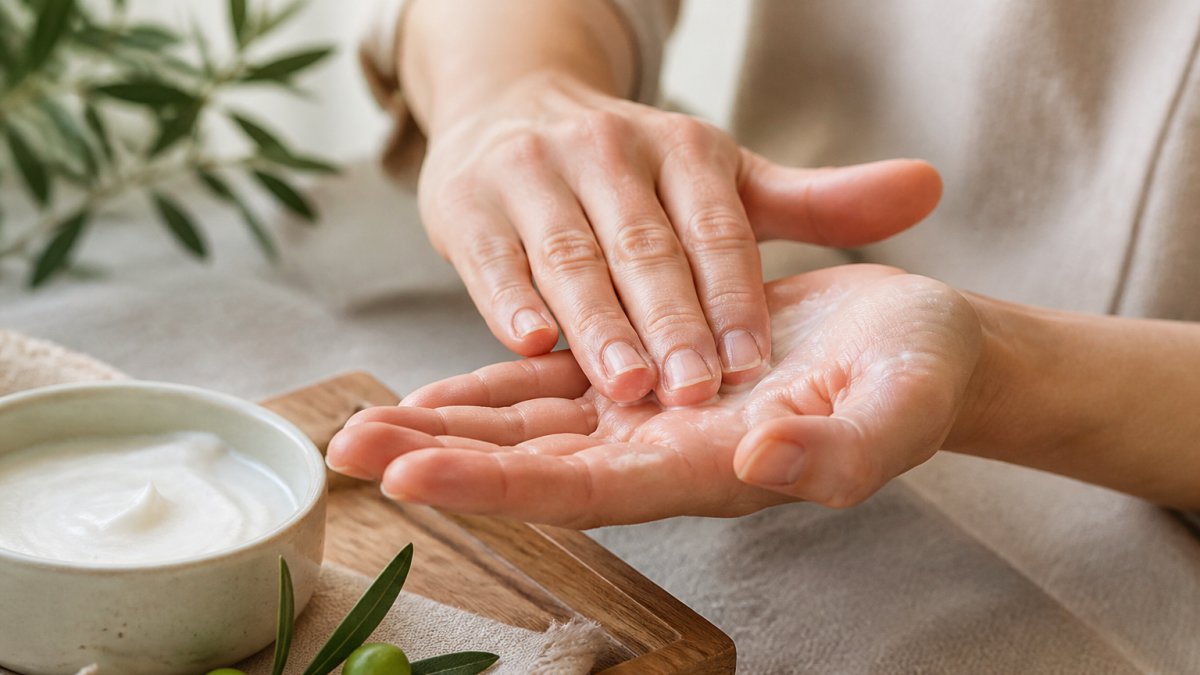
Daytime hand care steps
During the day, your hands face constant challenges. Water, soap, cold air and friction all damage the skin barrier.
Follow these steps:
- Wash hands with a gentle cleanser, not harsh soap
- Pat skin dry completely
- Apply hand cream to damp skin immediately
- Reapply cream after each wash
- Wear gloves when cleaning or doing wet work
- Protect hands from cold wind and dry air
Choose a lightweight hand cream that absorbs quickly. You'll reapply it frequently, so it shouldn't feel sticky.
Hand Cream Naturally Nourished 125ml →
Keep a small tube at work, in your bag and at home. When cream is accessible, you're more likely to use it consistently.
Overnight treatments and cotton glove protection
Overnight is when real healing happens. Your hands aren't exposed to water or harsh conditions. Moisture stays on skin longer.
Before bed, apply a thick product to clean hands:
- Olive oil for deep hydration
- Shea butter for rich moisture
- Our Hand and Body Lotion Naturally Nourished for a balanced treatment
- Our Soothing Balm for sensitive or cracked skin
After applying, put on cotton gloves. Cotton allows skin to breathe while keeping moisture in.

Leave gloves on for at least 6-8 hours overnight. Your skin absorbs the product and repairs itself. Wake up with softer, more hydrated hands.
For best results:
- Use the same thick product every night
- Wear gloves consistently for 2-3 weeks
- Gradually reduce frequency once skin improves
- Return to nightly treatment during winter or if dryness returns
Preventing Dry Hands in Winter and Beyond
Prevention is easier than healing. A few simple habits stop dryness before it becomes painful.
The biggest risk factor is winter weather. Cold air and low humidity create perfect conditions for dry skin.
Practical prevention steps:
- Wear gloves outdoors in cold weather
- Use a humidifier indoors during winter
- Avoid prolonged water exposure
- Wear gloves when cleaning or doing wet work
- Use gentle, fragrance-free cleansers
- Apply moisturiser within seconds of washing
- Stay hydrated by drinking water regularly
People who work with water, chemicals or harsh materials need extra protection.
Switch products seasonally if needed. Winter might require a thicker cream than summer.
When to Seek Professional Care
Most dry hands respond to home remedies within 2-3 weeks.
Seek professional care if:
- Cracks become infected (increasing redness, warmth, pus)
- Dryness spreads to other areas of your body
- Skin develops a rash, blistering or severe itching
- Symptoms worsen despite consistent treatment
- You suspect contact dermatitis or eczema
A dermatologist can distinguish simple dryness from conditions like eczema, psoriasis or contact dermatitis. These require different approaches.
Home remedies may not be sufficient for every case of dry hands. According to dermatology guidance on hand care, the best treatment combines thick moisturisers and gentle cleansers with professional care when needed.
If your job involves harsh chemicals or constant water exposure, talk to your doctor about workplace-related skin damage.
Dry, chapped hands are frustrating but fixable.
Our Hand Cream Naturally Nourished contains olive oil and olive leaf extract to repair skin and lock in moisture.

Start with a simple routine tonight. You'll notice softer, more hydrated skin within days. Shop Now and begin your hand care routine today.
Frequently Asked Questions
What is the best natural remedy for dry chapped hands?
Olive oil is among the most effective natural remedies for dry chapped hands. It contains vitamins A, E and K, squalene, and polyphenols that restore moisture and strengthen your skin barrier. Colloidal oatmeal has also been shown to soothe and protect irritated skin through its anti-inflammatory properties. For best results, combine a thick moisturiser like a hand cream or balm with consistent application, especially after handwashing and before bed.
How can I heal cracked hands quickly at home?
Start with frequent, gentle moisturising using thick creams or ointments immediately after washing your hands while skin is still slightly damp, this locks in moisture. Apply an overnight treatment with cotton gloves to create an occlusive barrier that allows deeper absorption. Avoid harsh soaps and hot water, which strip natural oils. If cracks are painful or show signs of infection, see a healthcare provider, as home remedies alone may not be sufficient for severe cases.
Does olive oil help dry hands?
Yes, olive oil is highly beneficial for dry hands. It absorbs quickly into the skin rather than sitting on the surface, delivering essential nutrients that repair damage and improve skin flexibility. Products formulated with olive oil and olive leaf extract work together to restore hydration and assist in regenerating skin cells. Regular application helps prevent age spots and keeps hands feeling soft and silky smooth.
How often should I moisturise dry hands?
Apply moisturiser to your hands at least after every handwashing, especially if you wash frequently due to work or daily activities. For severely dry or cracked hands, aim for 3-5 applications daily, plus an intensive overnight treatment. If your hands are exposed to harsh conditions like cold weather or frequent wet work, increase frequency and use a thicker cream or balm. Consistency matters more than the product type, regular application prevents dryness from returning.
