




Last Updated: October 22, 2026
Quick Summary
Natural skincare for rosacea works best with barrier-repair ingredients like panthenol and niacinamide, soothing botanicals such as centella asiatica and green tea, and strict avoidance of fragrance, alcohol, and irritating essential oils. A simple routine of gentle cleansing, hydration, and daily sunscreen prevents flare-ups and supports healing.
- Panthenol and niacinamide strengthen the skin barrier and reduce inflammation severity in rosacea-prone skin.
- Green tea, chamomile, and centella asiatica are the three most reliable soothing botanicals backed by dermatological guidance.
- Fragrance, denatured alcohol, benzoyl peroxide, and physical scrubs are primary triggers that worsen rosacea symptoms.
- Patch test new products on a small area for 24 hours before applying to your full face.
- A complete natural skincare routine takes about five minutes: cleanse, hydrate, moisturise, and apply sunscreen daily.
Table of Contents
- Natural skincare for rosacea: what works and why
- Best natural ingredients for rosacea-prone skin
- Rosacea skincare ingredients to avoid
- Building a natural skincare routine for rosacea
- How to patch test skincare for sensitive skin
- Natural skincare products for rosacea relief
- When natural skincare isn't enough
- Frequently Asked Questions
Natural skincare for rosacea: what works and why
Rosacea causes persistent facial redness, flushing, and irritation that can significantly impact quality of life. If you have rosacea-prone skin, you've likely found that many conventional products trigger flare-ups rather than soothe them. The good news: natural skincare for rosacea doesn't mean settling for ineffective remedies.
At Oliveoil Skincare Group, we understand the challenge of finding products that calm inflammation without harsh chemicals or fragrance. This guide covers the ingredients dermatologists recommend, the botanicals that genuinely help, and the natural ingredients to avoid because "natural" doesn't always mean safe for reactive skin.

Best natural ingredients for rosacea-prone skin
Effective natural skincare for rosacea starts with ingredients that reduce inflammation and support your skin barrier. Research from the National Center for Biotechnology Information shows dermatologists consistently recommend gentle cleansers and calming moisturisers containing panthenol or liquorice root.
The most effective natural ingredients fall into two categories: those that repair your skin barrier and those that calm active inflammation. Because your barrier is compromised when you have rosacea, supporting it matters more than treating surface redness alone.
Panthenol and niacinamide for barrier repair
Panthenol and niacinamide are two of the most scientifically validated natural ingredients for rosacea-prone skin. Panthenol (provitamin B5) helps retain moisture without leaving a greasy residue, making it ideal for sensitive skin that reacts to heavy creams. Niacinamide (vitamin B3) strengthens the skin barrier by increasing ceramide production and reducing inflammation.
These ingredients work synergistically: when your barrier is compromised, irritants penetrate more easily and trigger flare-ups. Supporting it with panthenol and niacinamide reduces the frequency and severity of redness and stinging. A 2022 review in PubMed Central confirms barrier-supportive cosmetic ingredients are essential for rosacea management.
They're gentle enough for daily use.
Soothing botanicals: green tea, chamomile, and centella asiatica
Natural botanicals with anti-inflammatory properties offer real relief for rosacea-prone skin when chosen carefully. Green tea, chamomile, and centella asiatica (also called cica or tiger grass) are the three most reliable soothing botanicals backed by dermatological guidance.
Green tea is rich in polyphenols and antioxidants that reduce redness and calm inflammation, and it doesn't trigger flare-ups in most people with rosacea. Chamomile has been used for centuries to soothe irritated skin, with modern research supporting its calming properties. Centella asiatica strengthens the skin barrier while reducing redness, and dermatologists often recommend it for sensitive skin.
These botanicals work best in serums or moisturisers rather than as standalone products.
Why natural doesn't always mean safe
Many people assume "natural" equals "safe for rosacea," but that's dangerously wrong. Some botanicals that sound soothing, lavender, tea tree oil, peppermint, actually irritate rosacea-prone skin for most people. The Cleveland Clinic specifically cautions that lavender and tea tree oil can trigger flare-ups despite their gentle reputation.
Natural ingredients contain volatile compounds and essential oils that can irritate at any concentration. Your rosacea-prone skin doesn't distinguish between a synthetic irritant and a natural one, it reacts to the irritation itself.
That's why patch testing is non-negotiable and why you should scrutinise ingredient lists rather than marketing language. "Soothing botanical blend" sounds lovely until it contains five ingredients known to irritate rosacea-prone skin.
Rosacea skincare ingredients to avoid
Your skin barrier is already compromised if you have rosacea, so avoiding known irritants is as important as adding helpful ingredients. The most common culprits are fragrance, alcohol, and certain essential oils.
Fragrance is the primary trigger, and synthetic fragrance and essential oils are equally irritating to rosacea-prone skin. Products labelled "unscented" may still contain fragrance-masking ingredients, so look for "fragrance-free" instead.
Alcohol (especially denatured and isopropyl) strips your skin barrier and triggers immediate flushing and stinging, so avoid products listing it in the first five ingredients. Benzoyl peroxide, common in acne products, is too harsh for rosacea and often worsens symptoms.
Exfoliating acids (AHAs and BHAs) should be avoided entirely during active flare-ups, though some people with mild rosacea tolerate very gentle, infrequent use.
Witch hazel, despite its reputation as a gentle astringent, contains alcohol and can trigger flare-ups. Sodium lauryl sulphate (SLS) and other harsh surfactants strip your skin barrier, look for sulphate-free cleansers specifically.
| Ingredient | Why to Avoid | Safe Alternative |
|---|---|---|
| Fragrance (synthetic or essential oils) | Triggers immediate stinging and flushing | Fragrance-free products only |
| Denatured alcohol | Strips skin barrier and causes irritation | Alcohol-free moisturisers and serums |
| Benzoyl peroxide | Too harsh; worsens rosacea symptoms | Azelaic acid (gentler alternative) |
| Physical scrubs | Damage compromised skin barrier | Enzymatic exfoliants (occasional use only) |
| Sodium lauryl sulphate | Harsh surfactant that strips skin | Gentle, sulphate-free cleansers |
Building a natural skincare routine for rosacea
A successful routine for rosacea-prone skin follows a simple principle: gentle cleansing, hydration, barrier support, and sun protection. This isn't complicated, but it requires consistency and the right products.
Step 1: Gentle cleansing without stripping
Your cleanser must remove daily grime and excess oil without disrupting your skin barrier or triggering irritation.
The Oliveoil Skincare Group Facial Cleansing Oil, Naturally Nourished at $25.99 is formulated for most skin types.
Alternatively, the Face Wash, Castile Style, Juniper Orange at $25.99 is a popular product, containing olive oil and natural essential oils. Use lukewarm (not hot) water and massage gently in circular motions rather than scrubbing.
Cleanse twice daily: morning and evening. In the morning, you can rinse with lukewarm water alone if your skin feels sensitive. At night, use your chosen cleanser to remove the day's grime.
Step 2: Hydration and barrier support
After cleansing, apply a hydrating serum or toner while skin is still slightly damp to lock in moisture, then follow with a moisturiser containing barrier-supporting ingredients like ceramides, niacinamide, or panthenol.
Olive Oil Soap, All-Natural, Unscented, 100g →
The Face Moisturiser Serenity at $15.99 contains olive oil, vitamins B, and E and Olive Leaf Extract. It absorbs quickly, and it's hypo-allergenic, meaning it's formulated to minimise allergic reactions. Apply a small amount to your entire face and neck, morning and night.

For additional barrier support, the Soothing Balm Pure Original at $25.99 can be applied as an extra layer at night. It's unscented, contains no colouring agents, and is known to calm the effects of sensitive skin conditions. Use it sparingly, a little goes a long way.
Step 3: Soothing serum and sun protection
A soothing serum before your moisturiser adds calming benefits. The Facial Serum, Juniper Orange at $49.99 contains olive oil, olive leaf extract, juniper berry and bitter orange oils, and absorbs quickly for easy layering.
Sun protection is non-negotiable: UV exposure triggers flare-ups and worsens redness. Use a mineral sunscreen (zinc oxide or titanium dioxide) with SPF 30 or higher every day, even when cloudy. Mineral formulas are gentler for sensitive skin than chemical sunscreens, which can irritate rosacea.
Your complete routine takes about five minutes:
- Cleanse with lukewarm water and a gentle cleanser (1 minute)
- Apply hydrating serum or toner (30 seconds)
- Apply moisturiser (1 minute)
- Apply soothing serum (optional, 1 minute)
- Apply sunscreen (morning only, 1 minute)
Consistency matters more than complexity. A simple routine you follow every day will produce better results than an elaborate routine you skip half the time.
How to patch test skincare for sensitive skin
Patch testing is essential before introducing any new product to rosacea-prone skin. This simple process prevents full-face reactions and identifies irritants before they trigger a flare-up.
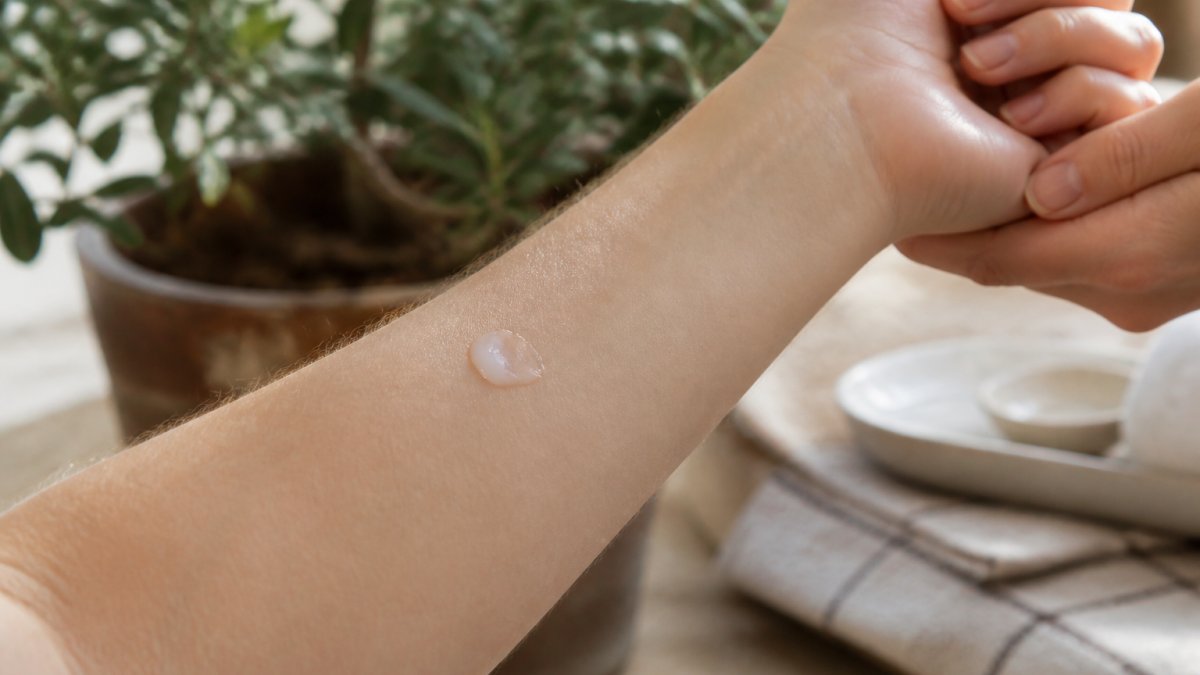
Choose a small, inconspicuous area, the inner forearm or behind your ear are ideal.
After 24 hours, observe for any reaction: redness, stinging, itching, or swelling. If your skin is clear, apply the product to your full face the next evening.
This gradual introduction is the only reliable way to identify irritants without triggering a full flare-up.
If you react during patch testing, discontinue use immediately, wash the area gently with lukewarm water, and apply your trusted moisturiser.
Natural skincare products for rosacea relief
When selecting products, prioritise those formulated specifically for sensitive skin with barrier-supporting and soothing ingredients.
The Olive Oil Soap, All-Natural, Unscented at $14.99 is another gentle option for cleansing hands and body. It's made from olive oil, lye, and water with no palm oil, parabens, or sulphates.

The Zetox Protective Daily Moisturiser at $79.99 is formulated for dry skin types with zeolite, calendula flower, and olive oil. Zeolite attracts, binds, and removes impurities, whilst the green tea leaf helps protect skin cells.
When evaluating any product, check the ingredient list for fragrance, alcohol, and known irritants, and look for products that explicitly state they're fragrance-free (not just unscented).
When natural skincare isn't enough
Natural skincare is powerful for managing rosacea symptoms, but it has limits.
Rosacea is a chronic condition with multiple subtypes, and what works for one person may not work for another. A dermatologist can identify your subtype and recommend tailored treatments.
Natural skincare is most effective as part of a comprehensive approach that includes identifying and avoiding your personal triggers. Common triggers include spicy food, hot beverages, extreme temperatures, stress, and certain skincare ingredients.
Also recognise that results take time.
Finding the right natural skincare for rosacea requires patience, consistency, and honest evaluation of what actually works for your skin.
Oliveoil Skincare Group's range of all-natural products is formulated to nourish, moisturise, and improve skin resilience, making them suitable for most skin types and ages.
Frequently Asked Questions
What is the best natural skincare for rosacea?
The best natural skincare for rosacea focuses on gentle cleansing, barrier support, and calming ingredients. Dermatologists recommend a routine that includes a non-foaming cleanser, ceramide-rich moisturiser, and mineral sunscreen. Ingredients such as panthenol, niacinamide, and soothing botanicals like green tea and chamomile help reduce redness and inflammation without triggering flare-ups. Patch test any new product first, as rosacea-prone skin reacts differently to each person.
Which natural ingredients are suitable for rosacea-prone skin?
Natural ingredients with proven calming effects include green tea, chamomile, centella asiatica (cica), oat extract, and panthenol. A 2024 review published in PubMed Central noted that dermatologists recommend gentle cleansers and calming moisturisers containing panthenol or liquorice root for rosacea skincare. Always introduce these slowly and test on a small area first.
What skincare ingredients should people with rosacea avoid?
Avoid fragrance, alcohol, essential oils, and harsh actives. Fragrance-free (not unscented) products reduce irritation risk. Steer clear of tea tree oil, lavender, and other botanical extracts that may trigger sensitivity, even though they are natural. Skip physical scrubs, strong acids, and foaming cleansers that strip the skin barrier. Hot water and sudden temperature changes also worsen rosacea, so use lukewarm water when cleansing.
How should you patch test a new skincare product?
Apply a small amount of the product to a discreet area, behind your ear, inner arm, or jawline, and wait 24-48 hours before using it on your face. If no redness, itching, or stinging occurs, it's likely safe. For rosacea-prone skin, introduce new products one at a time, waiting a week between additions to identify any triggers. Stop immediately if irritation develops and rinse with cool water.
Is olive oil suitable for rosacea-prone skin?
Olive oil can benefit rosacea-prone skin when used correctly. It contains vitamins A, E, and K, squalene, and polyphenols that support the skin barrier and reduce inflammation. Formulated products blending olive oil with lightweight carriers, such as the Facial Cleansing Oil, Naturally Nourished, which combines olive, sunflower, and castor oils with essential oils, work well for facial use.

