




Table of Contents
- What non-toxic skincare actually means
- Natural skincare for sensitive skin: why ingredients matter
- Sensitive skin ingredients to avoid
- Patch testing skincare products safely
- Best moisturiser for sensitive skin: olive oil as the foundation
-
Top non-toxic skincare products for sensitive skin
- 1. Olive Oil Soap, All-Natural, Unscented, 50g, for gentle daily cleansing
- 2. Soothing Balm Pure Original 60g, for eczema, psoriasis and inflammation
- 3. Face Moisturiser Serenity 40ml, for daily facial hydration
- 4. Facial Cleansing Oil, Naturally Nourished, 30ml, for makeup removal and deep cleanse
- 5. Olive Oil Soap, All-Natural, Naturally Nourished, 100g, for scent-free cleansing with essential oils
- 6. Face Moisturiser Serenity 125ml, for long-term facial care
- 7. Lip Balm Pure/Unscented 30g, for delicate lip protection
- 8. Olive Oil Soap, All-Natural, Unscented, 100g, for full-body gentle cleansing
- How to build a minimal non-toxic routine for sensitive skin
- Frequently Asked Questions
Last Updated: October 13, 2026
What non-toxic skincare actually means
Non-toxic skincare refers to products formulated without synthetic chemicals, harsh preservatives, or ingredients known to irritate or damage skin.
When we talk about non-toxic skincare for sensitive skin, we mean formulations that prioritise barrier protection over aggressive cleansing or quick results.
A truly non-toxic product excludes sodium lauryl sulphates (harsh detergents), parabens (synthetic preservatives), petrochemicals, and artificial colorants.
The real test isn't the label claim, it's the ingredient list.
Natural skincare for sensitive skin: why ingredients matter
Sensitive skin reacts to irritants because the skin barrier is compromised.

Natural ingredients work differently than synthetic ones. Olive oil contains vitamins A, E, and K, plus squalene and polyphenols, which actively reinforce the skin barrier.
The global natural skin care products market reached $25.44 billion in 2026 and is projected to reach $39.24 billion by 2030, at a reported CAGR of 11.4%, according to The Business Research Company's Natural Skin Care Products Market Report.
Soothing ingredients like chamomile, aloe vera, and calendula have been used for centuries. These are documented effects, not marketing claims.
"Natural" doesn't automatically mean "gentle." Some essential oils can irritate sensitive skin; rose hip oil, for instance, suits many skin types but can trigger reactions in severe sensitivity.
Sensitive skin ingredients to avoid
This is the non-negotiable list. If you see these in the ingredient list, skip the product.
Parabens are synthetic preservatives that mimic hormones and accumulate in skin.
Alcohol (especially denatured alcohol) dries skin aggressively.
Synthetic Dyes and Colorants add no benefit and exist purely for appearance. They're common irritants.
Petrochemicals (mineral oil, petrolatum, dimethicone) sit on skin rather than absorbing.
Palm Oil damages rainforests and irritates skin in some people.
| Ingredient | Why It's Problematic | What To Use Instead |
|---|---|---|
| Sodium Lauryl Sulphate | Strips natural oils, damages barrier | Gentle plant-based cleansers |
| Parabens | Synthetic preservatives, irritant | Vitamin E, rosemary extract |
| Synthetic Fragrance | Triggers reactions, irritates | Unscented or essential oil-based |
| Denatured Alcohol | Over-dries skin | Glycerin, plant-derived humectants |
| Synthetic Dyes | No benefit, common irritant | Natural product colour |
| Petrochemicals | Don't absorb, trap bacteria | Olive oil, plant butters |
Patch testing skincare products safely
Even the gentlest natural product can trigger a reaction if your skin is sensitised to a specific ingredient.
Patch testing takes five days minimum.
Sensitive skin can react hours or even days after application: a single use might seem fine while cumulative irritation builds.
If you have severe sensitivity or have reacted to multiple products, extend the patch test to seven days.
For people with eczema, psoriasis, or rosacea, patch testing is non-negotiable. These conditions mean your skin barrier is already compromised. What might irritate normal skin will trigger a flare in yours.

Best moisturiser for sensitive skin: olive oil as the foundation
Olive oil is the single best base ingredient for sensitive skin moisturisers, used since ancient Minoan times because it works.
Extra virgin olive oil contains vitamins A and E, squalene (which skin produces naturally), and polyphenols (antioxidants that reduce inflammation).
The key difference between a good olive oil moisturiser and a mediocre one is absorption speed.
For daily facial hydration, a lightweight moisturiser works best. The Face Moisturiser Serenity 40ml ($15.99) combines olive oil with vitamins B and E, absorbing quickly for all-day hydration without heaviness.

Moisturisers are formulated to absorb; balms sit on skin as a protective barrier.
Top non-toxic skincare products for sensitive skin
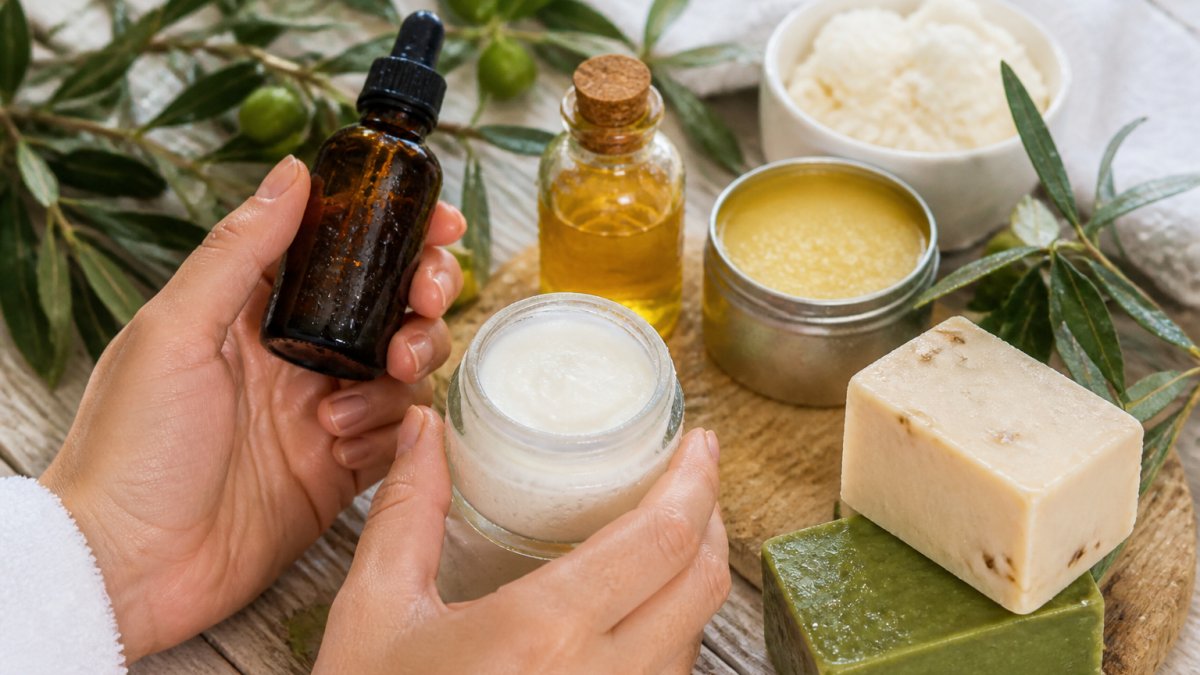
1. Olive Oil Soap, All-Natural, Unscented, 50g, for gentle daily cleansing
Start here if you're new to non-toxic skincare.
For sensitive skin, this soap respects your barrier: olive oil provides moisture while the soap cleanses, so skin doesn't feel tight or dry afterwards.
It's also excellent for shaving: razors glide smoothly and skin is left moisturised.
Best for: Anyone with sensitive skin who wants to replace conventional soap immediately. Parents introducing children to natural skincare.
2. Soothing Balm Pure Original 60g, for eczema, psoriasis and inflammation
Reach for this when your skin is actively inflamed.
Despite its richness, the balm absorbs quickly: nutrients penetrate within minutes rather than sitting on top of skin, leaving it nourished and hydrated.
The 60g size ($25.99) lasts longer than you'd expect: a pea-sized amount covers the entire face, and it's equally effective on cracked heels, chaffed skin, and nappy rash.
Best for: People with active eczema, psoriasis, or severe sensitivity. Anyone whose skin barrier is compromised and needs intensive repair.
3. Face Moisturiser Serenity 40ml, for daily facial hydration
This is your daily workhorse. Serenity combines olive oil with vitamins B and E.
Olive Oil Soap, All-Natural, Unscented, 100g →
The formulation is balanced for sensitive skin: enough oil to nourish, enough water-based ingredients to prevent greasiness, and no fragrance or irritants.
It suits most skin types but is particularly good for sensitive skin because it strengthens the barrier.
Best for: Daily facial care for sensitive skin. People looking for a simple, effective moisturiser without unnecessary ingredients.
4. Facial Cleansing Oil, Naturally Nourished, 30ml, for makeup removal and deep cleanse
Cleansing oils are underrated for sensitive skin: they dissolve makeup and impurities without stripping, leaving skin hydrated rather than tight.
The essential oils are present in small amounts, enough for aromatherapy and skin benefits without irritation.
Use 2-3 drops, massage over a dry face for 30 seconds, then wipe with a warm wet towel.
Best for: Makeup removal for sensitive skin. People with dry or dehydrated skin who want cleansing that nourishes rather than strips.
5. Olive Oil Soap, All-Natural, Naturally Nourished, 100g, for scent-free cleansing with essential oils
This is the unscented soap's more luxurious sibling: olive oil infused with essential oils of bergamot, cedarwood, rose geranium, orange, and petitgrain, plus vitamin E.
The larger 100g size ($14.99) is better value than the 50g and lasts longer.
The essential oil blend is calming, which matters if skincare is part of your self-care routine.
Best for: People with sensitive skin who want gentle cleansing with therapeutic essential oils. Daily body and face washing.
6. Face Moisturiser Serenity 125ml, for long-term facial care
The larger Serenity is the better choice if you're committing to a consistent routine.
The formulation is identical to the 40ml version: olive oil, vitamins B and E, and olive leaf extract. No difference in quality or results, just quantity.
Best for: People establishing a long-term routine with a moisturiser they trust. Anyone looking for better value on a product they'll use daily.
7. Lip Balm Pure/Unscented 30g, for delicate lip protection
Lips are often overlooked but are the most vulnerable area: the skin is thinner and has fewer oil glands, making it prone to dryness and cracking.
The balm absorbs quickly and hydrates without the waxy residue of many conventional lip balms. It comes in a purse-size container ($22.99) that fits anywhere.
For severe lip sensitivity, it's gentle enough to use preventatively without triggering reactions.
Best for: Anyone with dry, chapped, or sensitive lips. People looking for a natural alternative to conventional lip balms.
8. Olive Oil Soap, All-Natural, Unscented, 100g, for full-body gentle cleansing
This is the full-size version of the gentle unscented soap.
It produces a rich, smooth lather and leaves skin moisturised rather than tight.
It's also excellent for very dry skin or skin recovering from harsh routines, gentle enough for twice-daily use without drying skin out.
Best for: Full-body cleansing for sensitive skin. Families with multiple members who have sensitive skin. People transitioning from conventional soap.
| Product | Price | Best For | Key Benefit |
|---|---|---|---|
| Olive Oil Soap Unscented 50g | $7.99 | Travel, testing | Gentlest entry point |
| Soothing Balm Pure Original | $25.99 | Eczema, psoriasis | Inflammation relief |
| Face Moisturiser Serenity | $15.99 | Daily hydration | Quick absorption |
| Facial Cleansing Oil | $25.99 | Makeup removal | Deep cleanse |
| Olive Oil Soap Naturally Nourished | $14.99 | Aromatherapy | Essential oils included |
| Face Moisturiser Serenity | $39.99 | Long-term routine | Better value |
| Lip Balm Unscented | $22.99 | Lip care | Delicate protection |
| Olive Oil Soap Unscented 100g | $14.99 | Full-body use | Entire family |
How to build a minimal non-toxic routine for sensitive skin
The best routine for sensitive skin is the simplest one that works. More products mean more potential irritants.
Evening routine (5 minutes): Use the Facial Cleansing Oil to remove makeup and grime: massage for 30 seconds, wipe with a warm wet towel, then follow with the Olive Oil Soap to remove residue.
If inflammation flares: Switch to the Soothing Balm for cleansing and moisturising until the flare subsides.
This routine addresses the core needs of sensitive skin: gentle cleansing, barrier protection, and inflammation reduction.
The key is consistency.
Building a non-toxic skincare routine for sensitive skin doesn't require expensive products or complex steps.
Frequently Asked Questions
What exactly does 'non-toxic skincare' mean?
Non-toxic skincare refers to products free from harmful chemicals such as sodium lauryl sulphates, parabens, petrochemicals and artificial colorants. Rather than a regulated term, it describes formulations that prioritise natural or plant-derived ingredients and avoid synthetic substances known to irritate or damage skin. For sensitive skin, non-toxic products typically exclude fragrance, essential oils in high concentrations, and harsh surfactants that strip the skin barrier.
How do I patch test skincare products before full use?
Apply a small amount of the new product to a discreet area, the inner forearm or behind the ear, and wait 24 to 48 hours. Watch for redness, itching, stinging or swelling. If no reaction occurs, apply it to a small facial area and monitor for a week before incorporating it into your full routine. This approach is especially important for sensitive skin prone to delayed reactions. Always patch test even 'gentle' products, as individual sensitivities vary.
What ingredients should people with sensitive skin avoid?
People with sensitive skin should avoid sodium lauryl sulphates (harsh foaming agents), parabens, fragrance and essential oils in high concentrations, petrochemicals, and artificial colorants. Palm oil production often involves environmental concerns and can trigger sensitivity in some individuals. Additionally, avoid products with alcohol denat, benzoyl peroxide, and strong exfoliants like salicylic acid unless recommended by a dermatologist. Reading ingredient lists carefully and choosing products with minimal, recognisable ingredients reduces the risk of flare-ups.
Is natural skincare always better for sensitive skin?
Not necessarily. 'Natural' does not automatically mean safe or effective for sensitive skin. Some plant-derived ingredients, such as certain essential oils, citrus extracts and high-dose botanicals, can irritate reactive skin. What matters most is the specific formulation, concentration of ingredients and individual tolerance. Olive oil-based products, for example, are natural and generally well-tolerated by sensitive skin because olive oil strengthens the skin barrier rather than disrupting it. Choose products tested for hypoallergenicity and free from common irritants, whether natural or synthetic.
How long does it take to see results from non-toxic skincare?
Visible improvements typically appear with consistent use, though some people notice calming effects, reduced redness or less stinging, within days. For chronic conditions like eczema or rosacea, meaningful changes may take time as the skin barrier gradually strengthens. Consistency matters more than speed; using products twice daily as directed yields better results than sporadic application. If irritation worsens or no improvement occurs, discontinue use and consult a dermatologist.
