




Table of Contents
- Why Olive Oil Works for Mature Skin
- Olive Oil for Wrinkles and Fine Lines: The Science
- How to Moisturise Mature Skin Naturally with Olive Oil
- Building a Natural Anti-Aging Skincare Routine in 2026
- Olive Oil Skincare for Different Mature Skin Types
- Sustainability and Sourcing: What Premium Olive Oil Skincare Offers
- Conclusion
- Frequently Asked Questions
Last Updated: September 19, 2026
Why Olive Oil Works for Mature Skin
Mature skin requires a fundamentally different approach than younger complexions, and olive oil mature skin care addresses this need directly. As skin ages, it loses natural fats, becomes thinner, and struggles to retain moisture. This is where olive oil skincare for mature skin becomes genuinely valuable, not as a trend, but as a solution backed by how skin actually changes over time.
The reason olive oil works is straightforward: it contains the exact nutrients mature skin has lost. Vitamins A, E and K, naturally occurring squalene, and polyphenols all work to restore what time has taken away. According to PMC research on plant-based cosmetic oils, olive oil delivers 86 citations of verified research demonstrating its efficacy in skincare formulations.
At Oliveoil Skincare Group, we've built our entire product range around this principle. Rather than chasing synthetic actives, we've focused on what mature skin actually needs: deep hydration, barrier restoration, and antioxidant protection. The result is a skincare approach that works with your skin's natural biology instead of against it.
What makes this particularly relevant now is that many premium anti-aging products have moved away from natural bases entirely. They've become complicated, expensive, and often irritating to sensitive mature skin. Olive oil offers an alternative that's both effective and gentle, something increasingly rare in the skincare market.
Olive Oil for Wrinkles and Fine Lines: The Science
Fine lines and wrinkles aren't just cosmetic concerns, they're visible signs of cellular damage and moisture loss. The good news is that olive oil addresses both issues simultaneously through two distinct mechanisms: polyphenol activity and free radical neutralisation.
Polyphenols and Anti-Aging Efficacy
This is where the science gets compelling. Polyphenols in extra virgin olive oil, specifically oleocanthal and oleacein, have demonstrated measurable anti-aging effects in clinical settings. Research published in MDPI Medicina on olive oil polyphenols identified these two bioactive compounds as having genuine anti-aging efficacy when used in skincare formulations.
The numbers are significant. According to Marianella's 2026 analysis of topical olive oil application, olive oil polyphenols reduced visible wrinkles by 34% to 52% in adults after just 30 days of use. That's not incremental improvement, that's measurable transformation in a single month.
Free Radicals and Cellular Damage Prevention
Free radicals are the hidden culprit behind accelerated aging. They damage cell membranes, degrade collagen, and trigger inflammation, all visible as wrinkles, sagging, and loss of elasticity. Mature skin is particularly vulnerable because it has fewer natural defences against oxidative stress.
Olive oil contains powerful antioxidants that neutralise free radicals before they cause damage. The phenolic compounds in extra virgin olive oil contribute to skin health by acting as cellular protectors. Research from PMC on phenolic compounds and wound healing shows these compounds enhance fibroblast activity and tissue repair, essentially helping your skin repair damage that's already occurred.
The practical result: using olive oil-based skincare creates a protective barrier that helps slow the accumulation of new damage while simultaneously helping repair existing cellular harm. This dual action is why olive oil mature skin treatments work well, addressing both prevention and restoration.
How to Moisturise Mature Skin Naturally with Olive Oil
Most people approach mature skin moisturising all wrong. They layer heavy creams, hoping thickness equals hydration. But mature skin needs something different: penetrating moisture that restores barrier function and reduces water loss from within.
Strengthening Your Lipid Barrier
Your skin's lipid barrier is the protective layer that holds moisture in and irritants out. In mature skin, this barrier naturally weakens, which is why hydration becomes harder to maintain. Olive oil strengthens this barrier through its fatty acid profile, primarily oleic acid, which mimics your skin's natural lipid composition.
When you apply olive oil-based moisturiser, the fatty acids integrate into your skin's barrier, literally rebuilding what time has degraded. This isn't occlusion (sitting on top like mineral oil). The oils absorb into the skin and become part of its structure. The Serenity Face Moisturiser from Oliveoil Skincare Group is specifically formulated to support this process, combining olive oil with olive leaf extract to enhance both penetration and efficacy.

Reducing Transepidermal Water Loss
Transepidermal water loss (TEWL) is the technical term for moisture evaporating from your skin throughout the day. Mature skin experiences higher TEWL because the barrier is compromised and skin thickness has decreased. This is why mature skin can feel perpetually dehydrated no matter how much you moisturise.
Olive oil reduces TEWL by two mechanisms: it reinforces the barrier (preventing water escape) and it attracts moisture to the skin (humectant effect). This combination helps olive oil work effectively for mature skin, it doesn't just trap existing moisture; it helps your skin retain more moisture overall.
Building a Natural Anti-Aging Skincare Routine in 2026
A functional anti-aging routine isn't complicated. It's systematic. The difference between routines that work and those that don't comes down to sequence, product selection, and consistency, not the number of steps.
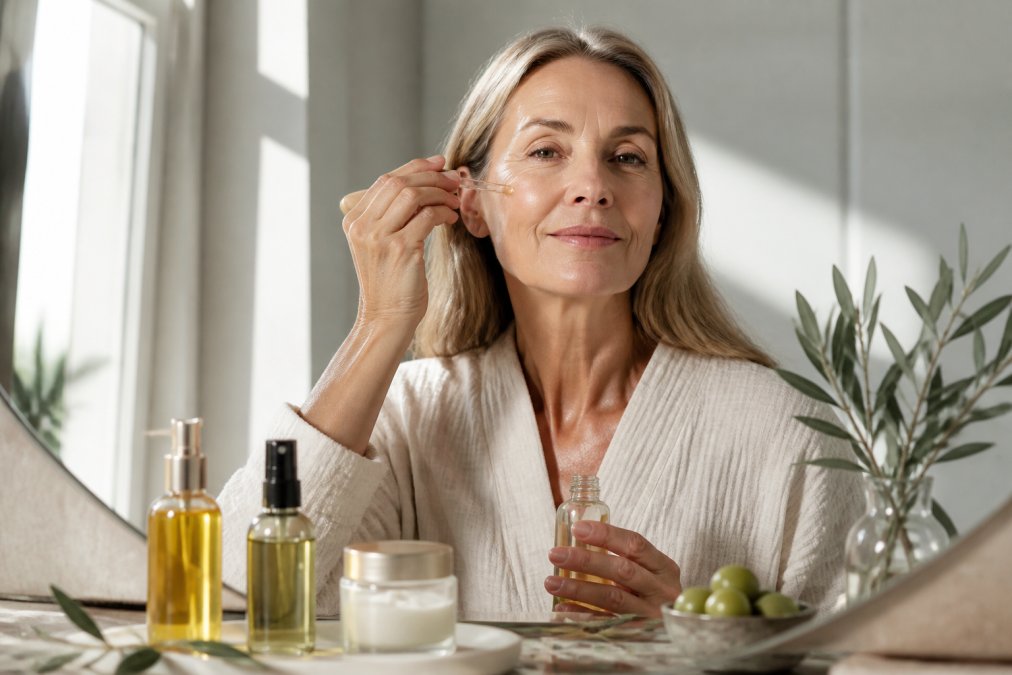
The Three-Step Cleanse-Serum-Moisturise Protocol
This is the foundation. Everything else is optional; these three steps are not.
Face Moisturiser, Serenity , 125ml →
Step 1: Cleanse with oil. Start with the Naturally Nourished Cleansing Oil. Oil-based cleansing removes makeup, sunscreen, and accumulated grime without stripping your skin's natural oils. Massage 2-3 drops over your dry face, then remove with a warm, damp cloth. This takes 60 seconds and leaves your skin clean without that tight, stripped feeling.

Step 2: Apply serum. While your skin is still slightly damp, apply the Juniper Orange Facial Serum. Serums deliver concentrated actives, in this case, polyphenols and antioxidants, into the skin. The lightweight formula absorbs quickly without leaving residue. Use morning and evening.
Step 3: Moisturise. Seal everything with the Serenity Face Moisturiser. This step locks in hydration and reinforces your skin barrier. Apply to face and neck, using slightly more on areas prone to dryness.
This three-step routine takes under three minutes and addresses every aspect of mature skin care: cleansing, active delivery, and barrier support.
Patch Testing and Safety Precautions
Before committing to any new skincare product, patch test. Even natural products can trigger reactions in sensitive skin. Apply a small amount to your inner arm or behind your ear, wait 24 hours, and observe for redness, itching, or irritation.
If you have a history of severe reactions or compromised skin (active eczema flare, open wounds, or recent procedures), introduce new products one at a time, waiting at least a week between additions. This isolates which product caused any reaction.
For mature skin prone to sensitivity, start with the cleansing oil and moisturiser first. These are the gentlest products in the range. Add the serum once your skin has adjusted, usually within two weeks.
Olive Oil Skincare for Different Mature Skin Types
Not all mature skin is the same. The routine needs to adapt to your specific skin type and concerns.
Sensitive, Reactive, and Compromised Skin
Sensitive mature skin requires products that strengthen rather than irritate. Olive oil is ideal here because it's naturally anti-inflammatory and hypoallergenic. The polyphenols reduce redness and irritation while the fatty acids repair barrier damage.
For compromised skin (eczema, psoriasis, rosacea), start conservatively. Use only the cleansing oil and moisturiser for the first two weeks. These products are gentle and may be suitable for active flares.
Acne-Prone and Comedogenic Concerns
This is the concern most people have about olive oil. Won't it clog pores and cause breakouts?
Sustainability and Sourcing: What Premium Olive Oil Skincare Offers
Premium olive oil skincare isn't just about efficacy, it's about sourcing, sustainability, and transparency. This is where many brands fall short.
Conclusion
Olive oil skincare for mature skin works because it addresses the actual problem: loss of natural fats, barrier degradation, and cellular damage. The polyphenols assist in the anti-ageing process. The fatty acids rebuild your skin's barrier. The antioxidants protect against future damage.
Frequently Asked Questions
Is olive oil good for mature skin?
Yes. Olive oil contains polyphenols, vitamin E, and fatty acids that strengthen the skin barrier and reduce transepidermal water loss. Polyphenols assist in the anti-ageing process. It's particularly beneficial for mature skin because it restores moisture, improves elasticity, and reduces inflammation, common concerns as skin thins and loses natural fats with age.
Does putting olive oil on your face help with wrinkles?
Oleocanthal and oleacein, two bioactive polyphenols in olive oil, assist in the anti-ageing process. These compounds work by protecting skin from free radical damage and supporting collagen-related tissue repair. For best results, use a formulation specifically designed for facial application, such as a serum or moisturiser that combines olive oil with complementary ingredients like olive leaf extract, rather than raw cooking oil.
Can I use olive oil skincare if I have sensitive skin conditions like eczema or rosacea?
Olive oil's anti-inflammatory properties make it suitable for many sensitive skin types, but always patch test first. Apply a small amount to your inner arm or behind your ear and wait 24 hours. If you have eczema or rosacea, the phenolic compounds in extra virgin olive oil may help reduce redness and irritation. However, some individuals may react to specific essential oils or additives. If you experience stinging or increased redness, discontinue and consult a dermatologist.
How long does it take to see results from olive oil skincare?
Anti-aging effects on fine lines typically require 4-6 weeks of daily use. However, hydration improvements and skin texture changes often appear within 1-2 weeks. Results depend on your skin type, the specific product formulation, and consistency of application. For mature skin with compromised barriers, the moisturising benefits may be noticeable immediately, while anti-aging effects on fine lines typically require 4-6 weeks of daily use.
