




Table of Contents
- Why Olive Oil Remains the Gold Standard in Skincare
- The Science Behind Olive Oil Skincare Benefits
- Olive Oil Skincare for Sensitive Skin
- Anti-Ageing and Skin Resilience
- How to Use Olive Oil in Daily Skincare Routine
- Where to Buy Natural Olive Oil Body Lotion and Face Products
- What to Know Before Using Olive Oil on Your Skin
- Frequently Asked Questions
Last Updated: September 27, 2026
Why Olive Oil Remains the Gold Standard in Skincare
Olive oil has been the cornerstone of skincare for over 5,500 years. Its use traces back to the ancient Minoan culture on Crete around 3500 BC, and for good reason: the science backs up what history has long known. The Australian olive oil market is projected to advance at a compound annual growth rate of 7.68% from 2026 through 2034, driven largely by consumer demand for natural, effective skincare solutions (Deep Market Insights market outlook). Extra virgin olive oil now accounts for the highest share of the Australian olive oil market, reflecting a clear shift toward premium, nutrient-dense products.
At Oliveoil Skincare Group, we've built our product range around this principle: the best skincare comes from understanding what nature has already perfected. What makes olive oil skincare benefits remarkable is the density of active compounds that repair and protect skin. The same polyphenols, vitamins, and fatty acids that make olive oil heart-healthy also make it one of the most effective topical treatments for skin barrier repair, hydration, and anti-ageing.
The shift toward natural skincare reflects recognition that synthetic ingredients often irritate rather than heal. For people with eczema, psoriasis, rosacea, or sensitive skin, olive oil skincare benefits offer efficacy without side effects.
The Science Behind Olive Oil Skincare Benefits
Olive oil works because its molecular structure mirrors your skin's natural sebum, allowing nutrients to penetrate rather than sit on the surface. The polyphenols, vitamins, and fatty acids deliver compounds your skin can actually use for repair and protection.
Antioxidants and Polyphenols
Polyphenols are where olive oil's anti-ageing power really lives. A 2023 study documented 54 citations for research regarding the wound healing potential of phenolic compounds in extra virgin olive oil (PMC National Center for Biotechnology Information wound healing research). These compounds work by neutralising free radicals, unstable molecules that damage collagen and elastin, the proteins responsible for skin elasticity and firmness.
Free radicals from UV exposure, pollution, and stress accumulate and degrade skin's structural integrity. Polyphenols neutralise them before damage occurs. As you age, your skin's natural antioxidant defences weaken, making topical polyphenols essential.
Cold-pressed extra virgin olive oil has significantly higher polyphenol levels than refined versions. Oliveoil Skincare Group uses Australian-grown olive oil.
Vitamin E and Fatty Acids
Vitamin E protects cell membranes directly by embedding in lipid membranes and shielding them from oxidative damage. This keeps cells intact longer, improves barrier function, and decreases transepidermal water loss (moisture loss to evaporation).
Fatty acids, particularly oleic and linoleic acid, are equally essential. They're structural components of your skin barrier. When your barrier is compromised, water escapes and irritants penetrate. People with eczema, psoriasis, and rosacea typically have impaired barrier function. Topical fatty acids help restore it. Research from Bond University documented 51 citations for the OLIVAUS study, which examined the impact of high-polyphenol extra virgin olive oil on antioxidant status in adults (Bond University Research Repository OLIVAUS study). The findings showed measurable improvements in systemic antioxidant markers, indicating that olive oil skincare benefits extend beyond surface-level hydration.
Squalene and Skin Barrier Support
Squalene is a lipid naturally produced by your skin as part of its protective acid mantle. As you age, production declines. Olive oil contains naturally occurring squalene, directly replenishing what your skin loses.
A compromised barrier is the root cause of most chronic skin conditions. Eczema, psoriasis, and rosacea all involve barrier dysfunction. Squalene addresses the barrier component directly.
Consistent use addresses underlying structural problems: the barrier strengthens, water loss normalises, and irritant penetration decreases. Over weeks and months, chronic conditions often improve noticeably.
Olive Oil Skincare for Sensitive Skin
Sensitive skin is a symptom of barrier dysfunction. Conventional "gentle" products with minimal ingredients lack repair capacity. Olive oil provides the exact compounds your barrier needs: fatty acids, squalene, and antioxidants.
That said, one important caveat: while olive oil is generally well-tolerated, some 2026 research notes that topical olive oil may disrupt the skin barrier for certain individuals, specifically those with conditions like eczema (Sidrstone analysis of olive oil contraindications). This is rare, but it happens. If you have active eczema, start with patch testing. Apply a small amount to your inner arm and wait 24 hours. If no irritation occurs, it's safe to use on your face.
For rosacea, anti-inflammatory compounds can help reduce redness and stinging, while polyphenols may calm inflammation and fatty acids strengthen the barrier.
Parents seeking gentle, chemical-free skincare for sensitive children find olive oil valuable. It's non-toxic, fragrance-free, and free from SLS, parabens, and petrochemicals, making it suitable for reactive skin.
Anti-Ageing and Skin Resilience
Most anti-ageing products promise to erase wrinkles. Wrinkles are structural and reflect decades of damage.
Olive oil skincare slows further damage and improves the appearance of existing lines. Polyphenols prevent new free radical damage, vitamin E protects collagen, fatty acids improve hydration to soften fine lines, and squalene strengthens the barrier.
Over months of consistent use, skin can look more resilient: fine lines may soften, tone can even, and texture may improve. You're giving your skin the raw materials to maintain itself optimally.
Research indicates that topical application of olive oil in skincare can improve skin hydration, reduce redness and flakiness, and enhance skin barrier function (Marianella 2026 research summary on olive oil skincare). For mature adults, this translates to visible improvements in skin elasticity and resilience. The skin can look plumper because it's holding more moisture. It can feel smoother because the barrier is functioning properly.
Facial Serum, Juniper Orange, 40ml →
Consistency is key. Olive oil skincare is a maintenance system, not a quick fix. Daily use can produce cumulative improvement.
How to Use Olive Oil in Daily Skincare Routine
The way you apply olive oil matters as much as the product itself. Application technique determines absorption, efficacy, and whether you experience any pilling or greasiness.
Morning Application Steps
Start with cleansed skin using the Juniper Orange Face Wash. Pat skin dry but leave it slightly damp for better product absorption.
Apply the Juniper Orange Facial Serum ($49.99) using 2-3 drops, pressing gently upward on face and neck. Wait 30 seconds for absorption.

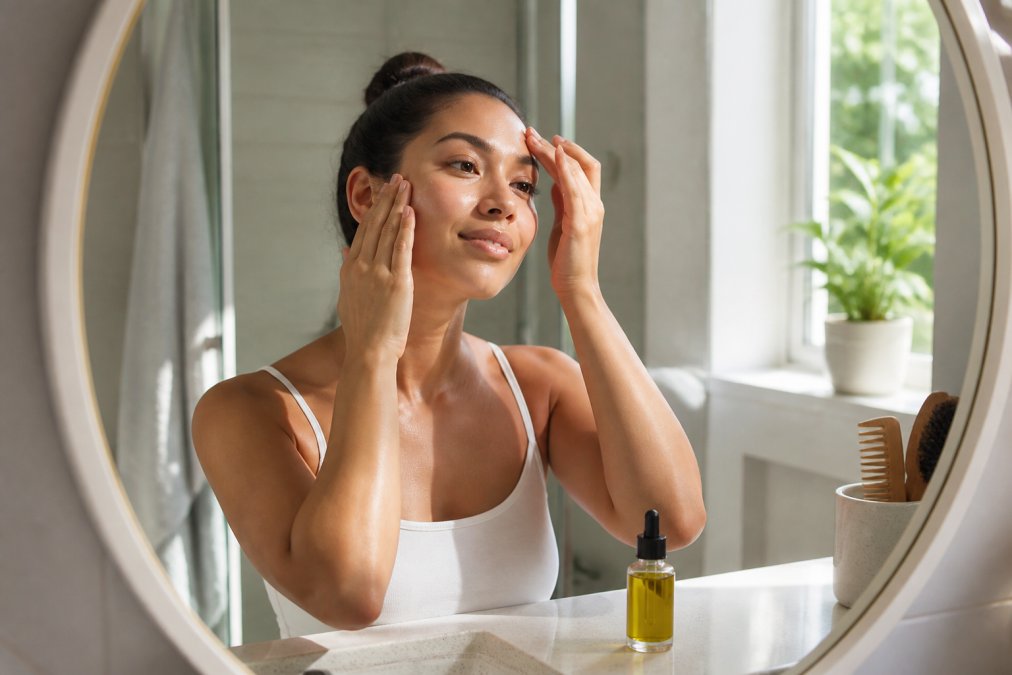
Follow with the Serenity Face Moisturiser ($39.99) using a pea-sized amount, pressing it in. Your morning routine takes 2-3 minutes total.
If you're heading out in the sun, apply SPF after your moisturiser has set (about 2 minutes). You still need dedicated sunscreen.
Evening Routine and Layering
Your evening routine can be more elaborate. If you've worn makeup, use the Cleansing Oil first to dissolve impurities, then follow with the Face Wash.
Apply serum using 4-5 drops in the evening. Wait for absorption.
Layer moisturiser using a chickpea-sized amount, pressing it in thoroughly for overnight absorption.
Once weekly, use the Citrus Revival Facial Scrub ($29.99) after cleansing. Massage gently for 60 seconds to remove dead skin cells, allowing better serum and moisturiser penetration.
Wait for each product to absorb before applying the next.
Where to Buy Natural Olive Oil Body Lotion and Face Products
Quality matters enormously.
Oliveoil Skincare Group formulates every product with high-quality, Australian-grown olive oil as the primary active ingredient. Licensed to carry the 'Made in Australia' symbol, all products are cruelty-free, vegan, and free from SLS, palm oil, petrochemicals, parabens, and artificial colorants.
The Juniper Orange Facial Serum ($49.99) reduces fine lines and wrinkles whilst providing intensive hydration. The Serenity Face Moisturiser ($39.99) is your daily workhorse, hypoallergenic and suitable for most skin types.

The Face Wash, Castile Style, Juniper Orange ($25.99) provides gentle cleansing for reactive skin.
What to Know Before Using Olive Oil on Your Skin
Olive oil skincare is a maintenance system, not a medical treatment. If you have severe eczema or psoriasis, consult your doctor if your condition is severe or worsening.
Frequently Asked Questions
Is olive oil good for face skincare?
Yes. Olive oil contains vitamins A, E, and K, polyphenols, and naturally occurring squalene, all essential for maintaining healthy, hydrated skin. Research shows extra virgin olive oil high in polyphenols improves antioxidant status in adults (Bond University, 2022). It absorbs quickly into the skin rather than sitting on the surface, making it suitable for most skin types. However, individuals with eczema or very oily, acne-prone skin should patch-test first, as some people may experience sensitivity.
Can olive oil help with skin resilience and anti-ageing?
Absolutely. Olive oil's polyphenols and vitamin E support cell regeneration and reduce transepidermal water loss, helping improve skin elasticity and reduce fine lines. The phenolic compounds in extra virgin olive oil contribute to wound healing through action on fibroblasts related to tissue repair (PMC, 2023). When used consistently in a daily routine, olive oil-based products can help tighten loose skin and encourage cell growth, making them effective for mature skin seeking anti-ageing benefits.
Is olive oil suitable for sensitive skin types?
Olive oil is hypoallergenic and generally suitable for sensitive skin, including conditions like rosacea and eczema. Its natural anti-inflammatory properties help soothe redness and calm irritated skin. Always start with a small amount, apply to clean, slightly damp skin, and monitor for reactions. If you experience increased redness or stinging, discontinue use and consult a dermatologist.
How long does it take to see results from olive oil skincare?
Improved hydration and smoother skin texture may be noticed within 2-4 weeks of consistent daily use. Anti-ageing benefits, such as reduced fine lines and improved skin elasticity, may become visible after 6-8 weeks. Results can depend on your skin type, the severity of dryness or ageing, and how well you layer products. For optimal outcomes, use morning and evening as part of a complete routine, and ensure skin is clean and slightly damp before application.
