




Last Updated: October 25, 2026
Quick Summary
Olive oil skincare delivers hydration and skin barrier support through fatty acids, squalene, and polyphenols that lock moisture into skin rather than sitting on the surface. Choosing the right formula depends on your specific skin condition, lifestyle demands, and budget, with simpler formulations best for reactive skin and more complex options for targeted results.
- Skincare-grade olive oil differs from culinary oil and must meet stricter standards for contaminants, acidity, and microbial safety.
- Manuka honey is particularly valuable for sensitive skin because it has anti-bacterial and anti-inflammatory properties without harshness.
- Patch testing requires 24-48 hours on a small area like the inner forearm before expanding to larger areas.
- Extra virgin olive oil retains more polyphenols and antioxidants than refined olive oil and costs more to produce.
- Australian-made olive oil skincare products often cost more due to quality control, fresher products, and local manufacturing standards.
Table of Contents
- What sets olive oil skincare apart from other natural options
- Olivella skincare reviews: product range and formulation approach
- Ojaioil ingredients and what they deliver for different skin types
- Olive oil skincare for sensitive skin: what the evidence shows
- How to patch test skincare before committing to a routine
- Ingredient purity, sourcing, and what you're paying for
- Choosing the right formula for your skin condition and lifestyle
- Frequently Asked Questions
What sets olive oil skincare apart from other natural options
Olive oil skincare delivers hydration and skin barrier support that many natural alternatives struggle to match. The difference comes down to formulation: olive oil contains fatty acids, squalene, and polyphenols that work together to lock moisture into the skin rather than sitting on the surface. This matters especially for people with eczema, psoriasis, rosacea, or other chronic skin conditions where the barrier is already compromised.
Most natural skincare relies on single-ingredient extracts or essential oils. They smell better and feel lighter, but they often lack the emollient depth that damaged skin actually needs. Olive oil-based formulas bridge that gap: they're still natural and gentle, but they're engineered to penetrate and restore elasticity.
The catch is sourcing. Not all olive oil is created equal for skincare. Culinary olive oil and skincare-grade olive oil are different products. Culinary oils may contain residues, higher acidity, or processing methods that compromise skin safety. The Journal of the American Academy of Dermatology conducted a systematic literature review examining topical olive oil as a sole active ingredient in dermatology, restricting inclusion to human clinical studies where the ingredient quality could be verified. This distinction matters: you're not just buying "olive oil skincare", you're buying a formulation backed by ingredient purity and sourcing standards.
At Oliveoil Skincare Group, we source Australian-grown extra virgin olive oil and combine it with complementary ingredients like manuka honey, lavender oil, or zeolite depending on skin condition. The result is a product range designed for specific needs rather than a one-size-fits-all approach.
Olivella skincare reviews: product range and formulation approach
One limitation: Olivella's product range, while solid, doesn't include as many skin-condition-specific variants as some competitors. If you have severe eczema or rosacea, you may find the range addresses general sensitivity but not your specific condition's needs.
Ojaioil ingredients and what they deliver for different skin types
The trade-off: more ingredients mean a higher risk of triggering sensitive skin if you're reactive to multiple botanicals. Someone with severe eczema might find Ojaioil's complexity overwhelming, while someone with mature skin looking for anti-aging benefits might appreciate the extra actives.
Olive oil skincare for sensitive skin: what the evidence shows
Sensitive skin requires careful ingredient selection because the barrier is already compromised. Learn more about olive oil skincare for sensitive skin: what the evidence shows. Olive oil itself has been used traditionally for skin care for centuries, but evidence quality matters. Clinical research on topical olive oil in dermatology should be assessed through human studies rather than assumed from brand claims, according to recent systematic reviews. This means testimonials and ingredient lists alone aren't enough, you need formulations tested on actual sensitive skin.
For people with eczema, psoriasis, or rosacea, olive oil skincare works best when:
- The formulation is simple (fewer ingredients reduce reaction risk)
- The olive oil is verified as skincare-grade, not culinary
- It's combined with soothing ingredients (manuka honey, lavender) rather than irritating actives
- You've patch tested it first
Manuka honey is particularly valuable for sensitive skin because it has anti-bacterial and anti-inflammatory properties without the harshness of synthetic actives. Zeolite, a volcanic mineral, can help trap pollutants and reduce inflammation in acne-prone or irritated skin.
The evidence gap is real: many olive oil skincare brands rely on traditional use and customer testimonials rather than published clinical trials. This doesn't mean the products don't work, it means the marketing often outpaces the research. If you have chronic skin conditions, expect results to emerge over weeks, not days, and be prepared for a patch-test period before committing to a full routine.
How to patch test skincare before committing to a routine
Patch testing is non-negotiable for sensitive skin. It's the only way to know whether a product will trigger a reaction before you use it on your face or body.
The process is simple but requires patience:
-
Choose a test area. The inner forearm or behind the ear works best, skin there is thin and reactive, so if a product will cause problems, you'll see it here first.
-
Apply a small amount. Use roughly the size of a pea. Don't dilute it or mix it with anything else; you want to test the product as-is.
-
Wait 24-48 hours. Don't wash the area, don't apply other products, and don't expose it to direct sunlight. This gives your skin time to react if it's going to.
-
Observe for signs of reaction. Redness, itching, burning, swelling, or a rash means stop immediately and rinse the area. Even mild discomfort is a signal to avoid the product.
-
If no reaction, expand gradually. After 48 hours with no issues, try the product on a larger area (a small section of your face or a patch of your body). Wait another 24 hours.
-
Full introduction takes a week. Only after a full week of no reaction should you incorporate the product into your regular routine.
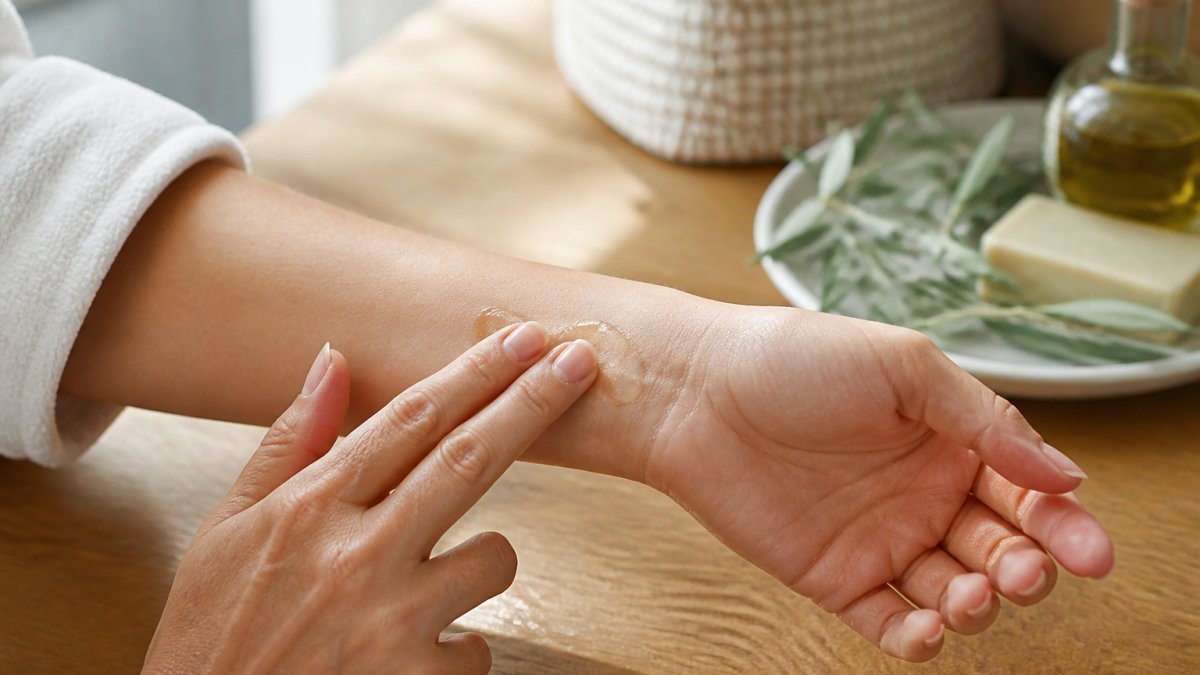
Many people skip patch testing because they're eager to see results. This is exactly when reactions happen, and they're often worse because you've applied the product to a larger area or your face. The extra week upfront saves weeks of dealing with irritation later.
Ingredient purity, sourcing, and what you're paying for
When you compare olive oil skincare brands, the price difference often puzzles buyers. Why does one soap cost AUD $14.99 and another AUD $19.99? The answer lies in ingredient sourcing, processing, and formulation specificity.
Olive oil grade matters. Extra virgin olive oil (cold-pressed, unrefined) retains more polyphenols and antioxidants than refined olive oil. It costs more to produce and source, but it delivers better skin benefits.
Processing and purity. Skincare-grade olive oil must meet stricter standards than culinary oil. It's tested for contaminants, acidity levels, and microbial safety. This testing and verification adds cost. You're paying for assurance, not just the oil itself.
Complementary ingredients. A soap with just olive oil costs less than one blended with manuka honey, lavender oil, or zeolite. These additions aren't filler, they're chosen to address specific skin concerns. Manuka honey adds antibacterial and healing properties. Lavender provides anti-inflammatory benefits. Zeolite offers detoxifying action. Each addition increases the formulation's cost and its targeted efficacy.
Manufacturing origin and heritage. Australian-made olive oil skincare products often cost more than imports because local production ensures quality control, fresher products (shorter supply chains), and compliance with local standards. You're also supporting local agriculture and manufacturing, which carries a sustainability premium.
Consider the skincare ingredient checklist for natural care to evaluate what you're actually paying for. The most expensive product isn't always the best, but the cheapest often reflects lower ingredient standards or less rigorous sourcing.
Choosing the right formula for your skin condition and lifestyle
Selecting between olive oil skincare options depends on three factors: your skin condition, your lifestyle demands, and your budget.
For severe eczema or psoriasis: Choose simpler formulations with fewer botanical additions. Manuka honey is a strong choice because it combines soothing with mild antimicrobial action. Avoid products with multiple essential oils or complex botanical blends, they increase reaction risk. Start with the olive oil soap with manuka honey, which combines proven soothing ingredients without unnecessary complexity.
For oily or acne-prone skin: Look for formulations that include natural astringents or detoxifying ingredients. Lemon myrtle essential oil has antibacterial properties, and zeolite actively traps pollutants. These address the underlying condition rather than just moisturising. The Zetox Olive Oil Soap with zeolite is designed for this profile.
For mature skin seeking anti-aging benefits: Choose formulations that emphasise elasticity and cell regeneration. Citrus-based essential oils can help reduce the appearance of fine lines and uneven skin tone. The Citrus Revival soap targets this demographic specifically.
For manual workers or tradespeople: Your hands endure harsh conditions, drying, chapping, exposure to chemicals or dirt. You need a moisturiser that absorbs quickly but lasts through a full work day. Olive oil skincare with high-quality emollients (squalene, polyphenols) will outperform lighter natural products.
For parents seeking gentle products for children: Simplicity is your priority. Fewer ingredients mean fewer potential irritants. Unscented formulations or those with gentle essential oils like lavender work best. Manuka honey adds a mild antimicrobial layer without harshness.
| Skin Condition | Best Formula Type | Key Ingredient | Product Example | Price Range |
|---|---|---|---|---|
| Severe eczema/psoriasis | Simple, soothing | Manuka honey | Manuka Honey Olive Oil Soap | AUD $14.99 |
| Acne-prone/oily skin | Detoxifying, astringent | Zeolite or lemon myrtle | Zetox Olive Oil Soap or Lemon Myrtle Soap | AUD $14.99-19.99 |
| Mature skin | Anti-aging, elasticity-focused | Citrus oils, polyphenols | Citrus Revival Soap | AUD $14.99 |
| Sensitive skin (general) | Hypoallergenic, minimal | Lavender or unscented | Accord of Lavender or Manuka Honey | AUD $14.99 |
| Manual workers | Moisturising, durable | Extra virgin olive oil with high squalene | Any formulation with high oil content | AUD $14.99-19.99 |
The real decision comes down to this: simpler formulations suit people with reactive skin or those new to olive oil skincare. Learn how to build an olive oil skincare routine tailored to your needs. More complex formulations suit people whose skin has stabilised and who want targeted results. Budget accordingly, quality olive oil skincare is an investment.
Choosing the right olive oil skincare means matching the product to your specific skin condition and lifestyle, not just picking the cheapest option or the most popular brand. Start with a patch test, observe how your skin responds over a week, then commit to a routine that actually works for you. Shop Now and discover which formula suits your skin best.
Frequently Asked Questions
How does olive oil skincare compare with Olivella and Ojaioil products?
Both brands use extra virgin olive oil as a core ingredient, but differ in formulation approach. The key difference lies in sourcing, manufacturing origin, and additional ingredients.
Is olive oil skincare suitable for sensitive skin, and how do I know if it will work for me?
Olive oil is generally well-tolerated by sensitive skin because it contains fatty acids, vitamins A and E, and polyphenols that support the skin barrier. However, individual reactions vary. The best approach is patch testing before full use. Apply a small amount to your inner arm or behind your ear, wait 24-48 hours, and watch for redness, stinging, or irritation. This is especially important if you have eczema, rosacea, or a history of reactions to natural products. Many people with sensitive skin find olive oil-based soaps like the Manuka Honey variant ($14.99) or Accord of Lavender ($14.99) suitable because they exclude sodium lauryl sulphates, parabens, and artificial additives.
How long should I try a new olive oil skincare product before deciding if it works?
Most skincare changes take 4-6 weeks to show measurable results because skin cells turn over on that cycle. If you experience irritation, stinging, or worsening of your condition within the first week, discontinue use. For chronic conditions like eczema or psoriasis, give the product at least 3-4 weeks of consistent use before judging efficacy. Keep a simple log of how your skin feels and looks to track progress objectively.
What ingredients should I compare when choosing between olive oil skincare options?
Focus on three areas: the olive oil grade (extra virgin is preferred for its higher antioxidant content), any added actives targeting your specific concern (manuka honey for antibacterial action, zeolite for detoxification, lavender for calming), and what is deliberately excluded (sodium lauryl sulphates, parabens, palm oil, artificial colours). Check the full ingredient list for potential allergens, especially essential oils if you have sensitive skin. Compare the price per unit (100g soaps range from $14.99-$19.99) against the formulation complexity and any certifications like vegan or cruelty-free status if those matter to you.

