




Table of Contents
- Why Natural Skincare Causes Stinging
- Signs of a Damaged Skin Barrier
- How to Patch Test Skincare Products
- How to Soothe Stinging Skin After Skincare
- Stinging Versus Active Ingredients: What's Actually Working
- Product Layering and Environmental Triggers
- Choosing Natural Skincare That Won't Sting
- When to See a Dermatologist
- Frequently Asked Questions
Last Updated: September 18, 2026
Why Natural Skincare Causes Stinging
Why natural skincare causes stinging is because many natural ingredients are potent irritants.
Stinging happens when your skin barrier is compromised, irritants penetrate deeper than they should, or you're reacting to a specific ingredient. Essential oils, botanical extracts, and plant-based actives trigger inflammation just as easily as synthetic chemicals, sometimes more easily.
This guide covers exactly why your natural skincare stings, how to identify the real cause, and what to do about it.
The Natural Fallacy: Why 'Natural' Doesn't Mean Non-Irritating
According to British Association of Dermatologists research on contact dermatitis, allergies to specific natural skincare ingredients have increased significantly. Skin allergy to an ingredient found in many natural skin products has more than doubled since 2007. The research is clear: natural does not equate to non-allergenic.
Natural ingredients contain bioactive compounds that provide benefits but can also trigger irritation, inflammation, or allergic reactions in sensitive skin.
Botanical actives are concentrated doses of plant chemistry. Your skin doesn't distinguish between a "natural" irritant and a synthetic one.
Botanical Actives and Essential Oils as Common Culprits
Essential oils are where most stinging reactions begin. A single drop contains the equivalent of dozens of plant leaves, and your skin doesn't have time to adjust.
Common culprits include:
- Lavender oil
- Tea tree oil
- Lemon oil
- Peppermint oil
- Eucalyptus oil
- Rose hip oil
- Citrus extracts
Stanford Medicine research on natural skincare and contact dermatitis confirmed that dermatology experts identified botanical allergens as a primary cause of irritation in natural products. These aren't weak ingredients. They're powerful plant compounds.
Botanical actives work by penetrating the skin and triggering cellular response. In sensitive skin, this same mechanism causes stinging, redness, and inflammation.
Concentration matters: a product with 2% lavender oil behaves differently from one with 15%. Higher concentrations amplify both efficacy and stinging risk.
Signs of a Damaged Skin Barrier
Your skin barrier is a protective layer. It keeps moisture in and irritants out. When it's compromised, everything stings.
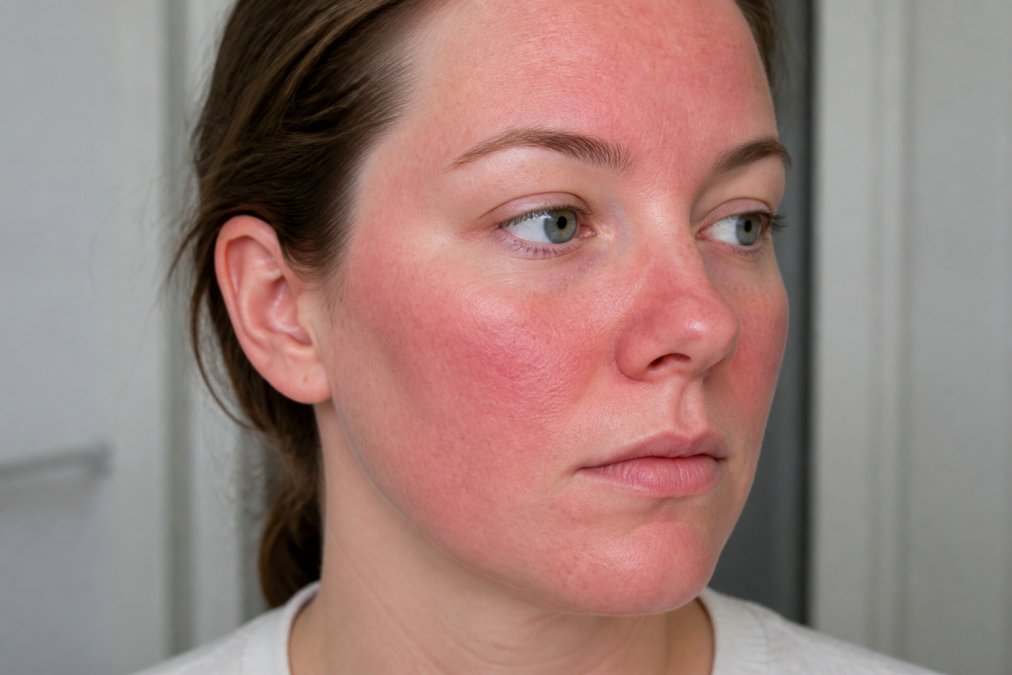
Compromised Lipid Barrier and Transepidermal Water Loss
A damaged skin barrier loses its ability to retain moisture through transepidermal water loss. Your skin dries out, becomes inflamed, and everything you apply stings.
The lipid barrier contains ceramides, cholesterol, and fatty acids that lock moisture in place. When it breaks down, water evaporates faster and your skin becomes more reactive.
Signs of a compromised lipid barrier include:
- Tight, dry skin that feels uncomfortable
- Increased sensitivity to products you've used before
- Visible redness or flushing
- A rough texture despite moisturising
- Stinging when you apply any product
Natural skincare can damage the barrier if it contains high concentrations of essential oils or exfoliating botanicals. The stinging you feel is your skin telling you the barrier is compromised.
Contact Dermatitis and Allergic Reactions
Contact dermatitis is an allergic reaction to a specific ingredient. Your immune system identifies it as a threat, triggering inflammation, stinging, itching, and redness.
Natural products trigger contact dermatitis more frequently than many people realise. PMC analysis of cosmetic product health impacts identified 88 chemicals in more than 73,000 cosmetic products as toxins causing skin irritation. Many of these are botanical extracts and essential oils.
Reactions can be immediate or delayed. Your skin is telling you the ingredient isn't compatible.
True contact dermatitis requires stopping use immediately. Continuing application worsens the barrier damage and extends healing time.
How to Patch Test Skincare Products
Patch testing is your first line of defence. It's simple, takes minutes, and prevents severe reactions.
Step-by-Step Patch Testing Protocol
Follow this protocol before applying any new natural skincare product to your face:
-
Choose a test area. Use the inside of your forearm or behind your ear. These areas have sensitive skin and are easy to monitor.
-
Apply a small amount. Use a patch about the size of a coin. Don't dilute the product. Test it as you'd use it.
-
Wait 24 hours. Leave the patch undisturbed. Don't wash it. Don't cover it. Let your skin react naturally.
-
Observe for reactions. Check after 24 hours. Look for redness, itching, swelling, or stinging. Even mild reactions mean the product isn't right for you.
-
If no reaction, proceed cautiously. Apply the product to a small area of your face, perhaps just one cheek, for 3-5 days before full use.
-
Monitor daily. Track how your skin responds. Keep a simple log: date, product, any reactions observed.
Most reactions appear within 24-48 hours. If you see any sign of irritation, stop using the product immediately.
Olive Oil Soap, All-Natural, Unscented →
Identifying True Sensitivity Before Full Application
A positive patch test, any redness, itching, or stinging, tells you to avoid that product.
Skipping patch testing escalates stinging reactions. You apply an irritating product across your entire face, damage your barrier, and spend weeks repairing it.
How to Soothe Stinging Skin After Skincare
Your skin is stinging. You need relief now. Here's what actually works.
Immediate Relief Steps
Stop using everything except water. Your barrier is compromised, and any new ingredient risks making things worse.
Follow these steps:
-
Rinse with lukewarm water to calm inflammation without shocking your skin.
-
Pat dry gently. Don't rub.
-
Apply nothing for 2 hours to let your skin settle.
-
Use a barrier repair product with ceramides and minimal ingredients.
Oliveoil Skincare Group's Soothing Balm Pure Original is formulated without fragrance or essential oils, making it ideal for irritated skin.

Barrier Repair and Long-Term Soothing
Once immediate stinging subsides, focus on barrier repair. This takes days or weeks depending on severity.
Use products with these ingredients:
- Ceramides, restore the lipid barrier
- Hyaluronic acid, draw moisture into the skin
- Squalene, mimic your skin's natural lipids
- Glycerin, humectant that binds water to skin
Avoid all botanical actives and essential oils during repair.
Stinging Versus Active Ingredients: What's Actually Working
The myth that stinging means the product is working is false.
Why Stinging Is Not a Sign of Efficacy
Stinging is a sign of irritation. Full stop. It's your skin's alarm bell. It means something is wrong, not that something is working.
Over-Exfoliation and pH Imbalance
Over-exfoliation is a common cause of stinging. Many natural exfoliants like ground seeds, fruit acids, or enzyme powders are aggressive.
Signs of over-exfoliation:
- Stinging that worsens over time
- Increased sensitivity to all products
- Visible texture damage or micro-tears
- Redness that doesn't fade
Product Layering and Environmental Triggers
Stinging isn't always about individual products. Sometimes it's about how you're combining them.
How Combining Products Can Amplify Stinging
Layering multiple natural products creates a perfect storm of irritation.
Environmental Factors That Worsen Skin Sensitivity
Your environment affects how your skin reacts to products. Cold, dry air increases sensitivity; heat and humidity amplify irritation.
Choosing Natural Skincare That Won't Sting
Not all natural skincare causes stinging. The key is choosing formulations designed for sensitive skin.
What to Look For in Formulations
Choose products with minimal ingredient lists, no essential oils, no fragrance, ceramides or lipids, and no high-concentration botanicals.
Fragrance-Free and Hypoallergenic Options
Fragrance-free products are your safest bet. Fragrance, even natural fragrance from essential oils, is irritating.
| Product | Key Features | Best For |
|---|---|---|
| Unscented Olive Oil Soap (100g) | No fragrance, no essential oils, olive oil base | Daily cleansing for sensitive skin |
| Unscented Olive Oil Soap (50g) | Travel-friendly, same formula as 100g | Portable sensitive-skin cleansing |
| Soothing Balm Pure Original | Fragrance-free, ceramide support, barrier repair | Irritated or stinging skin |
| Olive Oil Lip Balm | Minimal ingredients, no fragrance, hydrating | Sensitive lips, barrier repair |
When to See a Dermatologist
Some stinging requires professional help. Know when to stop treating it at home.

See a dermatologist if:
- Stinging persists beyond 2 weeks of stopping the irritating product
- Redness, swelling, or blistering appears
- Itching is severe or prevents sleep
- Signs of infection develop (warmth, pus, crusting)
- You suspect an allergic reaction (facial swelling, difficulty breathing)
Frequently Asked Questions
Is it normal for natural skincare to sting upon application?
No. Stinging is a sign of irritation, inflammation, or a compromised skin barrier, not product effectiveness. The British Association of Dermatologists confirms that botanical allergens in natural skincare products can trigger contact dermatitis, causing stinging sensations. If your natural skincare stings, your skin is reacting negatively, not benefiting. Discontinue use and allow your skin barrier to recover.
Why does my skin sting even when using organic products?
Allergies to specific natural skincare ingredients have increased significantly since 2007, with skin allergy rates more than doubling. Essential oils and botanical actives, common in organic formulations, are frequent culprits. Natural ingredients like lavender, tea tree, and citrus extracts can cause micro-tears in your skin barrier and trigger contact dermatitis. The term 'organic' does not guarantee safety or hypoallergenic properties; it only describes sourcing, not safety profile.
How can I tell the difference between a reaction and an active ingredient working?
Active ingredients cause mild warmth or tingling, not stinging or burning. True irritation involves redness, itching, visible inflammation, or a compromised skin barrier. If you experience stinging, stop using the product immediately. Dermatological consensus confirms stinging indicates a problem, not progress. Effective skincare should feel comfortable on application. If you're unsure, perform a patch test on a small area of skin behind your ear for 24 hours before full application.
What should I do immediately if my skincare causes a burning sensation?
Stop using the product and rinse your face thoroughly with lukewarm water. Apply a fragrance-free, hypoallergenic balm containing ceramides or squalene to help restore your skin barrier. Avoid further skincare products for 24 hours, and protect your skin from sun exposure and environmental triggers. If burning persists beyond a few hours or you develop rash or severe redness, contact a dermatologist. Our Soothing Balm Pure Original contains olive oil and olive oil wax to soothe and moisturise even the most aggravated and sensitive skin types.
