




Last Updated: November 19, 2026
Quick Summary
An olive oil moisturiser can soften dry patches and add slip during baby massage, but research on newborns found oil improved hydration while lipid-lamella structure lagged the no-oil group. Use it on calm, intact skin, avoid the face and broken skin, and patch test first.
- Apply moisturiser within three minutes of patting dry after a lukewarm bath.
- Skip oil on active flares that are red, itchy, weeping or broken.
- Patch test over three days, checking at 24 and 48 hours.
- For newborns, the default should be no oil unless a health professional advises it.
- Choose unscented products free from SLS, parabens, artificial colours and petrochemicals.
Table of Contents
- What the Evidence Says About Olive Oil on Children's Skin
- Olive Oil for Baby Dry Skin: What It Can and Cannot Do
- Olive Oil and Eczema in Children: Managing Flares Carefully
- Olive Oil vs Baby Moisturiser: How the Formulations Differ
- How to Patch Test Moisturiser on a Child
- Age-by-Age Guidance: Newborns, Infants, Toddlers and Older Children
- Choosing an Olive Oil Moisturiser for Your Child
- Frequently Asked Questions
What the Evidence Says About Olive Oil on Children's Skin
Olive oil moisturiser for children is a popular choice for parents who want a natural, simple way to treat dry skin, but the research on olive oil and infant skin is more mixed than most product pages admit.
That matters because a baby's skin barrier is still developing. At Oliveoil Skincare Group, we think parents deserve that context before they buy anything, including our own products.
The 2016 Newborn Oil Trial and Its Lipid-Lamella Finding
The lipid lamellae are the layered fats between skin cells that keep water in and irritants out. The trial's authors reported that the oil groups improved hydration but lagged the no-oil group on this structural measure. University of Manchester researchers, as summarised by DermNppa went further, reporting that applying olive or sunflower oil to newborn skin can damage the skin barrier.
Olive Oil for Baby Dry Skin: What It Can and Cannot Do
Olive oil for baby dry skin is best understood as a temporary comfort measure rather than a barrier repair treatment.
The practical takeaway is to use olive oil thoughtfully rather than automatically:
- Good for: softening dry patches on arms, legs and torso, and adding slip during baby massage
- Less suited to: the face, broken skin, or any area already red and inflamed
- Not a substitute for: a formulated moisturiser when the barrier is genuinely damaged
Oil is generally applied to slightly damp skin and baths are best kept short and lukewarm.
Olive Oil and Eczema in Children: Managing Flares Carefully
Parents often receive conflicting advice about olive oil and eczema in children. Eczema is a barrier disorder: the skin is short of the ceramides and structured lipids that hold water in and keep irritants out, and the lipid lamellae between corneocytes are already disorganised before a flare even becomes visible.
That does not mean olive oil is forbidden in an eczema household. It means the decision should be driven by the state of the skin on the day, not by the label on the bottle.
Matching the Product to the Skin State
- Calm, intact skin between flares: a patch-tested, unscented olive oil balm is reasonable for dry patches and massage, since the barrier is not acutely compromised.
- Active flare (red, itchy, weeping or broken): skip oil and use the emollient or topical treatment in your child's diagnosed eczema plan. Oil on broken skin can sting, trap heat and make it impossible to judge whether the flare is settling.
- Post-flare, healing skin: a formulated, fragrance-free moisturiser with a humectant and emollient balance is usually the better bridge than pure oil, because it can both draw water in and hold it there.
- Eczema with suspected infection (crusting, oozing, spreading warmth): this is a GP matter, not a moisturiser matter. Do not patch test over infected skin.
The Three-Minute Rule and Why It Matters More in Eczema
Apply moisturiser within three minutes of patting dry after a lukewarm bath. Damp skin holds more water at the surface, and an emollient applied while that water is present slows its loss. In eczema the skin loses water faster than usual, so the same three-minute window buys more. Keep baths short, lukewarm and infrequent enough that the skin is not stripped between applications.
Watch out: applying a new oil or balm directly to an active flare makes it impossible to tell whether the product helped or the flare simply settled, and it can sting broken skin. Test on calm skin first, and introduce only one new product at a time.
What to Do If Olive Oil Seems to Make Eczema Worse
Stop the product, wash the area with lukewarm water, and note the product and date. If the skin is no better within a few days, or if it is cracked, weeping, spreading or painful, see a GP.
For a fuller routine, our gentle skincare for babies with eczema step-by-step guide walks through cleansing, moisturising and flare management in order. If you want the deeper evidence on olive oil specifically, read what the research says about olive oil and eczema.
Olive Oil vs Baby Moisturiser: How the Formulations Differ
The olive oil vs baby moisturiser question comes down to formulation, not marketing. Pure oil is a single ingredient, while a formulated baby moisturiser combines several ingredients.
| Format | What it does well | Where it falls short | Best for |
|---|---|---|---|
| Pure olive oil | Softens, adds massage slip | Weak barrier support in newborns | Massage, occasional dry patches |
| Olive oil balm (anhydrous) | Occlusive, long-lasting, few ingredients | Can feel heavy, no water-binding | Nappy rash, heels, elbows, lips |
| Olive oil lotion | Light, spreads easily, absorbs fast | Less occlusive than a balm | Daily all-over use, older children |
| Olive oil soap | Gentle cleansing, low lather | Cleanses only, does not moisturise | Bath time for sensitive skin |
Quick Comparison: Olive Oil Balms, Lotions and Soaps
| Product | Format | Price | Best for |
|---|---|---|---|
| Soothing Balm Pure Original 60g | Unscented balm | $25.99 | Nappy rash, dry patches, lips |
| Hand and Body Lotion Naturally Nourished 500ml | Lotion | $35.99 | Daily all-over moisturising |
| Zetox Enriched Body Lotion 200ml | Light lotion | $49.99 | Everyday use, older children |
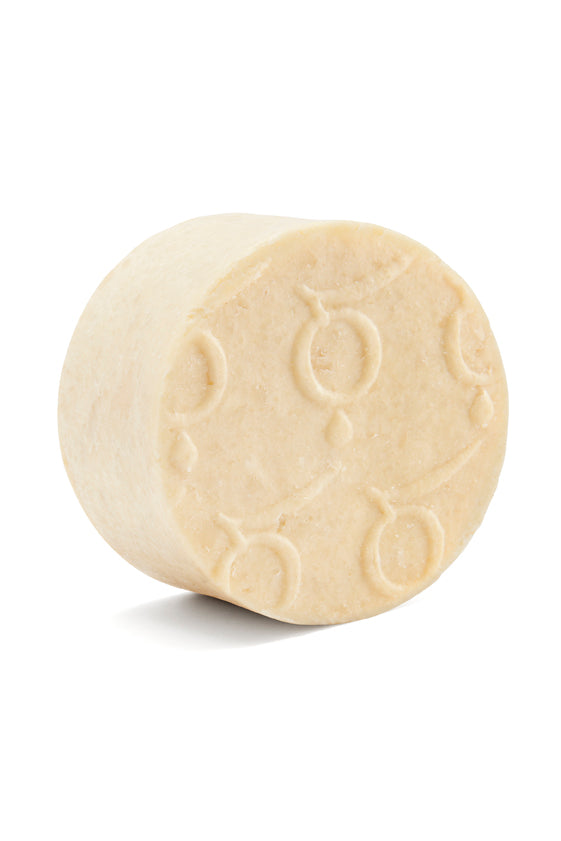
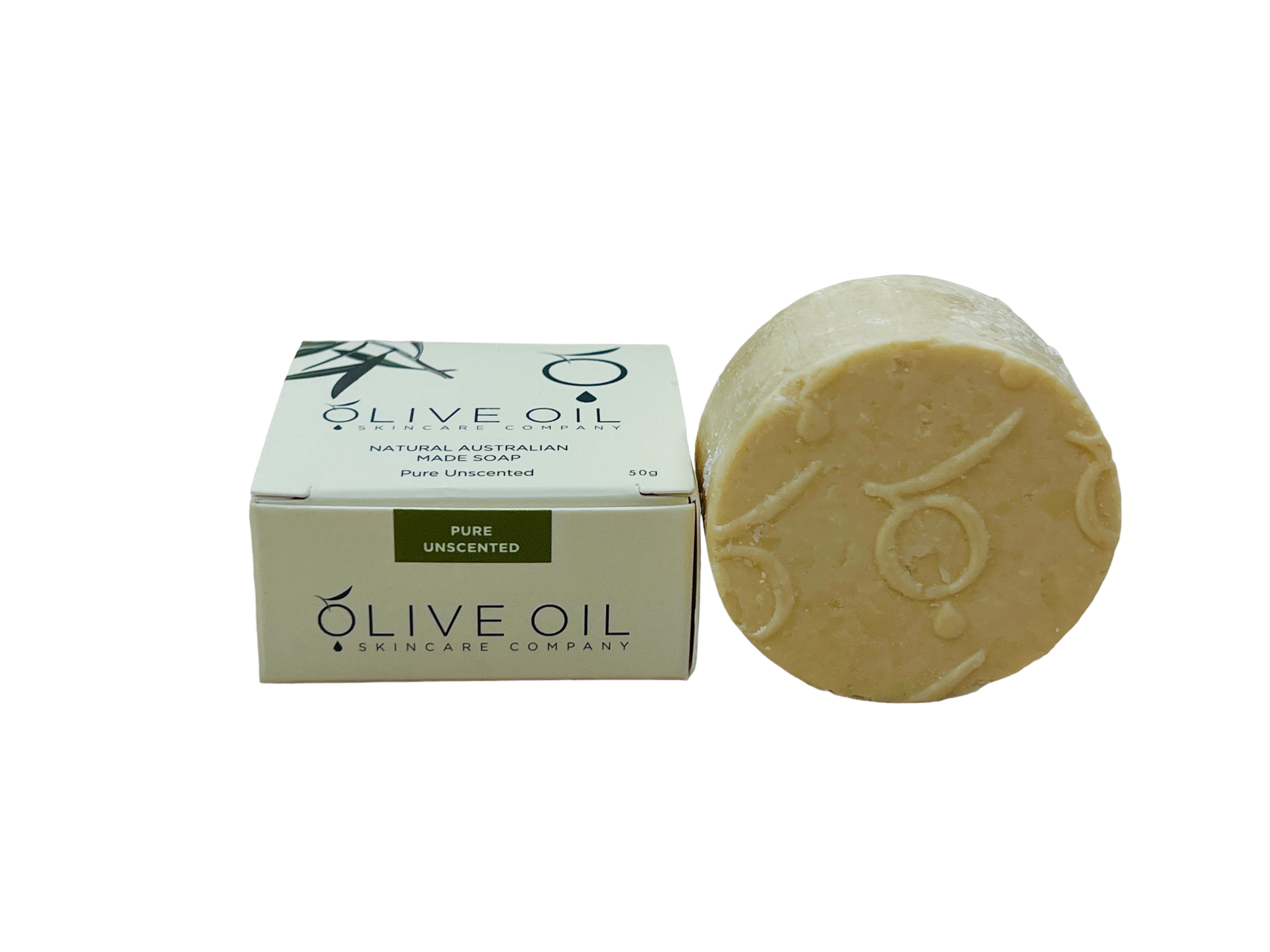
| Olive Oil Soap, Unscented, 100g | Soap bar | $14.99 | Bath time, all ages |
| Olive Oil Soap, Unscented, 50g | Soap bar | $7.99 | Travel, shaving, trial size |
Price
How to Patch Test Moisturiser on a Child
Patch testing takes a few days and is a sensible step before introducing any olive oil moisturiser to a child.
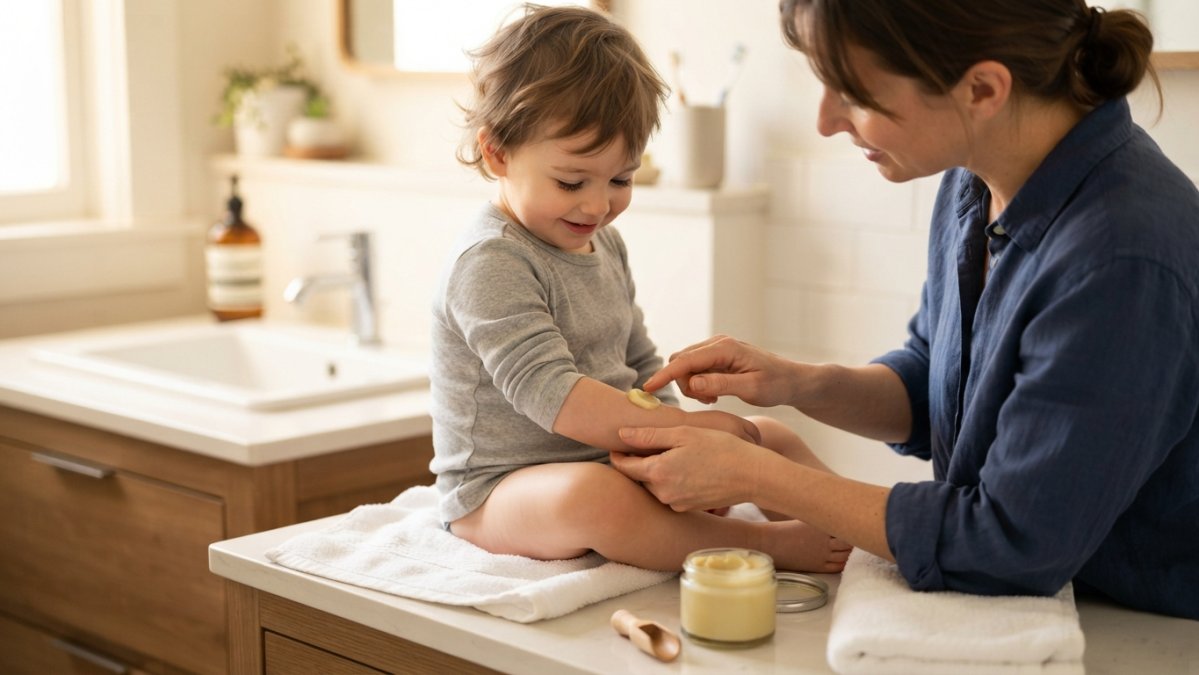
- Day one: apply a pea-sized amount to the inner forearm or behind the knee. Leave it uncovered.
- Wait 24 hours: check for redness, swelling, itching or small bumps.
- Day two: if clear, apply again to the same spot and wait another 24 hours.
- Day three: if still clear, apply a thin layer to a larger area and monitor for 48 hours.
- Stop immediately if any reaction appears, wash the area with lukewarm water, and note the product and date.
A reaction can be immediate or delayed up to 72 hours, so do not rush the timeline. If your child has a known allergy or eczema, ask your pharmacist or GP before testing.
Age-by-Age Guidance: Newborns, Infants, Toddlers and Older Children
Age changes the answer because the skin changes. A newborn's stratum corneum is thinner, more permeable and still building its lipid lamellae, while a school-age child's skin behaves much more like an adult's.
Newborns (0-3 months)
Keep it minimal. Plain water handles most cleansing, and the newborn evidence does not support routine oil use: the 2016 trial found oil groups improved hydration but lagged the no-oil group on lipid-lamella structure, so the default should be no oil unless a midwife, child health nurse or GP has advised otherwise for a specific dry patch. If a product is used, choose an unscented balm with a short ingredient list and patch test first.
Infants (3-12 months)
A patch-tested, unscented balm on dry patches and for nappy rash is reasonable. Avoid fragranced products and essential oils entirely: fragrance mix and essential-oil components are among the more common contact irritants on young skin, and the benefit of scent is zero. A light lotion starts to make sense for daily all-over use after bath, applied to slightly damp skin within three minutes.
Toddlers (1-3 years)
A daily lotion after bath works well, and this is the age where baby massage with a light oil is most practical because the child is mobile and the routine can be built into wind-down. A lotion is the better daily format than a balm: it spreads easily, absorbs fast and is less likely to be wiped off or transferred to clothing. Keep a balm for targeted dry patches on elbows, knees and lips.
Older children (4+)
Skin is more resilient, so a lotion or balm can be used as needed, especially after swimming or in winter when indoor heating and cold outdoor air combine to dry the skin. Children this age can be taught to apply their own moisturiser, which improves consistency. The format matters less than the habit: a lotion used daily beats a balm that sits in the cupboard.
What Changes With Age, and What Does Not
What changes is permeability, barrier maturity and the practical format that suits the routine. What does not change is the principle: patch test every new product, avoid fragrance and essential oils, apply to damp skin, and treat persistent or worsening skin as a clinical question rather than a product question. If your baby has sensitive skin, our guide to gentle baby skincare for sensitive skin covers cleansing, bathing and product selection by age.
Choosing an Olive Oil Moisturiser for Your Child
Choosing well means reading the ingredient list before the front label.
Our criteria, in order of importance:
- Unscented or fragrance-free. Artificial fragrances and essential oils are common irritants on young skin.
- No harsh additives. Avoid sodium lauryl sulphates, parabens, artificial colours and petrochemicals.
- A clear oil base. Extra virgin olive oil should appear early in the list, not as a token inclusion.
- A format that matches the job. Balm for occlusive protection, lotion for daily all-over use, soap for cleansing only.
- A patch test completed. No exceptions, even for products marketed for babies.
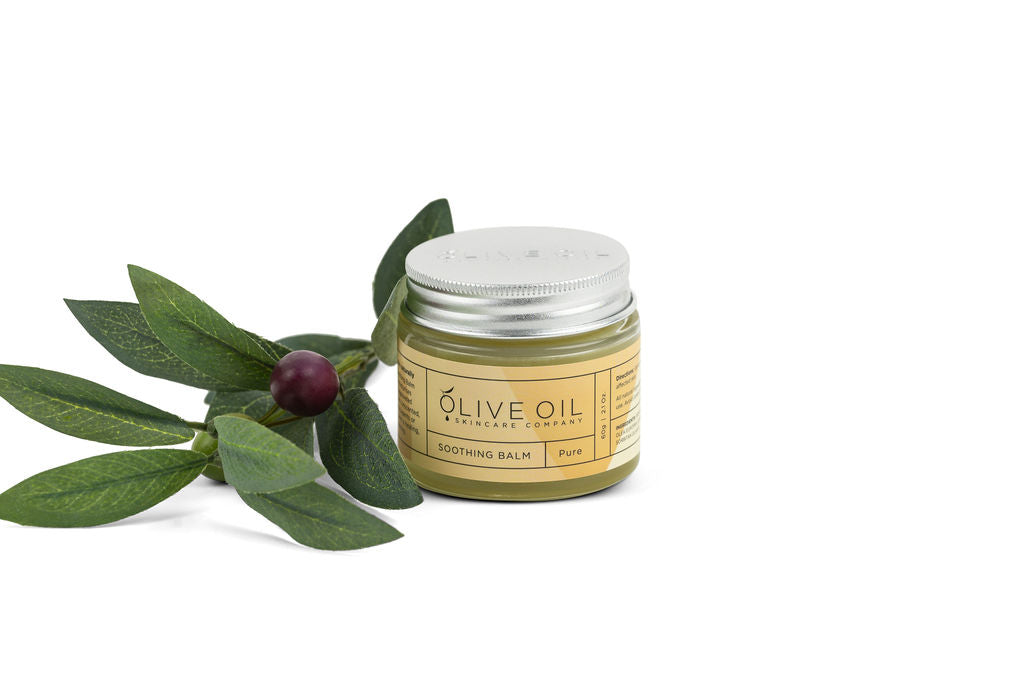
Our Soothing Balm Pure Original 60g at $25.99 is unscented, free from colouring agents and additives, and built on extra virgin olive oil with olive oil wax. The Hand and Body Lotion Naturally Nourished 500ml at $35.99 is a lotion for all-over body use.
One honest limitation: no balm or lotion replaces medical care. If your child's skin is cracked, weeping, spreading or painful, see a GP.
Dry, reactive skin in children is rarely solved by one product. It is solved by a short, consistent routine built on ingredients you can actually read.
Frequently Asked Questions
Can you use olive oil as a moisturiser on children?
You can, but the evidence calls for care. Parents who want to use olive oil on a child's skin should check the ingredient list and patch test first, and speak to a GP or child health nurse if the skin is broken or inflamed.
Is olive oil safe for a child's sensitive skin?
Sensitive skin deserves a patch test first. Apply a small amount of the olive oil moisturiser to the inner forearm and leave it for 24 to 48 hours, checking for redness, itching or swelling. Stop if a reaction appears. Children with atopic eczema or a diagnosed allergy should have any new product cleared by their GP or dermatologist before regular use, since a reaction on compromised skin can be harder to spot early.
Can olive oil make eczema or dry skin worse?
If dry patches spread, weep or itch more after starting an oil, stop using it and speak to your GP or pharmacist about a fragrance-free emollient instead.
What is the difference between olive oil and a children's moisturiser?
Plain olive oil is a single ingredient with no preservatives, emulsifiers or humectants. A children's moisturiser combines an oil phase with water-binding ingredients such as glycerin and panthenol, plus emulsifiers that hold it together and a preservative system to keep it stable. That structure affects how quickly it absorbs and how long it stays on the skin. The Hand and Body Lotion Naturally Nourished 500ml ($35.99), for example, pairs olive oil with glycerin, panthenol and a preservative system rather than being oil alone.
What ingredients should parents avoid in children's moisturisers?
Watch for sodium lauryl sulphates, parabens, palm oil, artificial colours and added fragrance, particularly on eczema-prone skin. The Soothing Balm Pure Original 60g ($25.99) is unscented. Read the full ingredient list rather than the front label, and introduce one new product at a time so you can trace any reaction back to its source.

