




Last Updated: November 21, 2026
Quick Summary
To build a skincare routine for sensitive skin, keep it short and gentle: a low-lather cleanser, one simple moisturiser, daily sunscreen and few or no harsh actives. Introduce one new product at a time using a patch test, and give any new routine at least four weeks before judging it.
- Patch test new products behind the ear or on the inner forearm for three days before the jawline.
- Introduce one product at a time, with at least a week between each new item.
- Avoid fragrance, essential oils in high amounts, SLS, high-concentration alcohol and physical scrubs.
- Apply moisturiser within a minute of cleansing and reapply at night if skin feels tight.
- Stop all new products immediately when a reaction appears and skip actives until skin settles.
Table of Contents
- Start With What Sensitive Skin Actually Needs
- How to Patch Test Skincare Products Before They Touch Your Face
- Ingredients to Avoid for Sensitive Skin
- Your Morning and Evening Skincare Routine for Sensitive Skin
- Building a Skincare Routine for Dry and Sensitive Skin
- Telling Sensitivity Apart From Eczema, Rosacea and Contact Dermatitis
- What to Do When Your Skin Reacts
- Choosing Your First Gentle Essentials
- Frequently Asked Questions
Start With What Sensitive Skin Actually Needs
Sensitive skin is a skin type that reacts to products or environmental triggers with redness, stinging, itching or tightness. Building a skincare routine for sensitive skin starts with one principle: do less, and do it gently.
People with reactive skin often buy more products, not fewer. That usually makes things worse.
A 2023 expert consensus review on holistic skin care notes that a simple, consistent routine supports the skin barrier better than a complex one. The barrier is your skin's outer layer. It holds moisture in and keeps irritants out.
So the goal is not a ten-step routine. It is a short, steady routine your skin can tolerate.
What sensitive skin usually needs:
- A gentle, low-lather cleanser
- One simple moisturiser for barrier support
- Daily sun protection
- Few or no harsh actives at the start
That is the whole foundation. Everything else is optional.
How to Patch Test Skincare Products Before They Touch Your Face
A patch test is a small trial of a new product on a tiny area of skin before you use it on your face. It is the single best way to avoid a full reaction, but the test is only as good as the schedule you follow and the notes you keep.
Here is the schedule we recommend:
- Day 1: Apply a small amount behind your ear or on your inner forearm. Use the same amount you would use on your face.
- Days 1-3: Leave it and check twice daily for redness, itching or stinging. Take a photo in consistent lighting so you can compare.
- Day 4: If there is no reaction, apply a small amount to your jawline.
- Days 4-7: Watch that area closely, especially after cleansing and before bed.
- Day 8: If all is clear, start using it on your full face, every second day at first.
Watch out: testing three new products at once tells you nothing. If a reaction appears, you will not know which product caused it. Introduce one product at a time, with at least a week between each.
A practical product-introduction schedule
Most people rush this step. A slower plan is easier to follow and gives clearer answers.
Week |
What to do |
What to watch |
|---|---|---|
1 |
Patch test the new cleanser only |
Redness, tightness after washing |
2 |
Use the cleanser daily; patch test the moisturiser |
Itching or stinging within 30 minutes of applying |
3 |
Use cleanser and moisturiser; patch test the sunscreen |
Breakouts, stinging around the eyes |
4 |
Use all three; add no new products |
Overall comfort, flaking, new bumps |
Keep a simple note on your phone: product name, date started, and any change in redness, itching or texture. A reaction can be delayed by a day or two, so a written record is more reliable than memory.
When a patch test is inconclusive
Sometimes the test area looks fine but your face still reacts. That can happen because the skin behind the ear is thicker than facial skin, or because a product only irritates when layered with another. If that occurs, stop the product, let your skin settle for a week, then repeat the test on the jawline only. If the jawline reacts, treat the product as unsuitable and do not retry it.
If you are testing an active ingredient such as a low-strength retinoid or a mild acid, patch test it on its own, not after a moisturiser, so you can tell which product caused any sting.
Ingredients to Avoid for Sensitive Skin
The fastest way to calm reactive skin is to remove common irritants. Check labels before you buy, not after.
Ingredients to avoid or limit:
- Fragrance and essential oils in high amounts, a common trigger for redness and stinging
- Sodium lauryl sulphate (SLS), a harsh foaming agent that strips the skin
- Alcohol in high concentrations, which adds to dryness
- Harsh actives such as strong acids and high-strength retinoids
- Physical scrubs with rough grains that scratch the surface
If SLS has been irritating your skin, our guide to gentler daily cleansing explains what to use instead.
Look for fragrance-free, alcohol-free formulas with a short ingredient list. Fewer ingredients means fewer chances of a reaction.
Your Morning and Evening Skincare Routine for Sensitive Skin
A morning and evening skincare routine for sensitive skin should take minutes, not hours. Keep the steps the same each day so your skin settles.

Morning routine:
- Rinse with lukewarm water, or use a gentle cleanser if skin feels oily.
- Apply a simple moisturiser while skin is still slightly damp.
- Finish with sunscreen.
Evening routine:
- Massage a cleansing oil over dry skin to lift makeup and grime.
- Wipe away with a warm, wet towel.
- Follow with a low-lather cleanser if needed.
- Apply moisturiser.
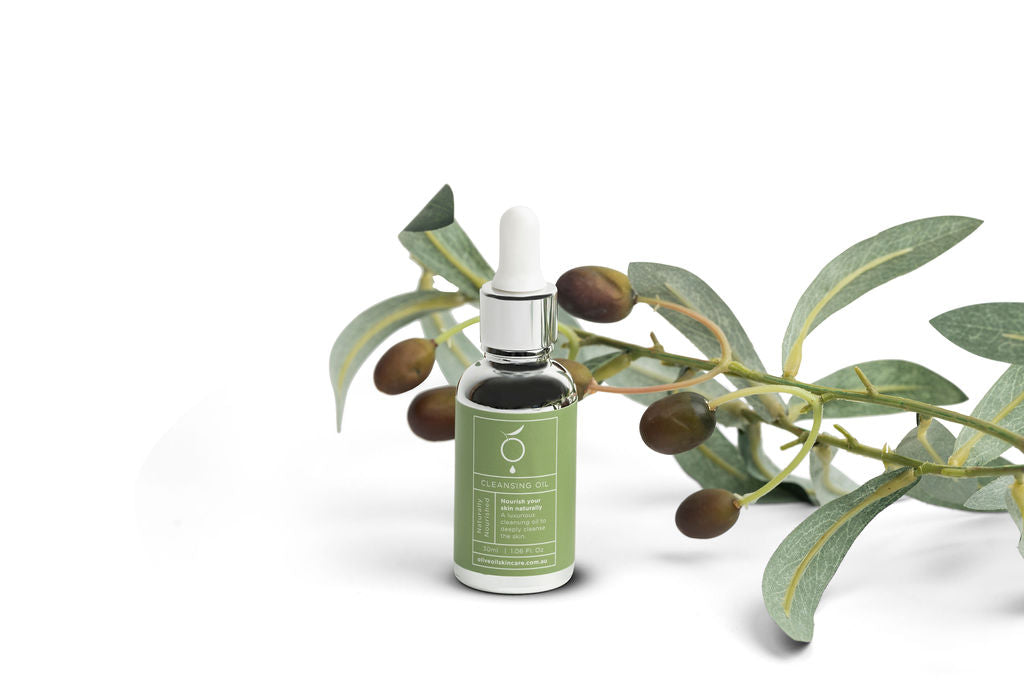
Our Naturally Nourished Cleansing Oil is built for exactly this first step. It blends olive, sunflower and castor oils, along with essential oils, to cleanse and hydrate the skin.
How to tell whether the routine is working
Most people change products too soon. Give a new routine at least four weeks before you judge it, because the skin barrier takes time to settle. Look for these signs:
- Improving: less stinging when you apply products, fewer red patches in the morning, skin feels comfortable rather than tight after cleansing.
- Not improving: the same redness or itching persists after four weeks, or new bumps appear.
- Worsening: burning, swelling or spreading rash, stop the routine and see a doctor.
A common pattern is a brief adjustment period in the first week, then steady improvement. If nothing changes by week four, simplify further rather than adding products.
Adjusting the routine for your climate and triggers
A routine that works in a humid summer may feel too light in a dry winter. In cooler, drier months, apply moisturiser twice at night and consider a richer formula. In humid weather, a lighter moisturiser and a single cleanse in the morning may be enough. If your skin reacts to heat, keep the morning rinse cool rather than lukewarm. If it reacts to wind or air conditioning, apply moisturiser before you go outside, not after.
Watch out: do not add a new product to fix a problem in the first four weeks. Change one thing at a time, or you will not know what helped.
Building a Skincare Routine for Dry and Sensitive Skin
A skincare routine for dry and sensitive skin adds one thing: more moisture, layered gently. Dry skin and sensitive skin often appear together, and both improve when the barrier is supported.
A gentler approach is often more effective than a heavier cream: applying moisture to damp skin and sealing it in.
Steps that help dry, sensitive skin:
- Cleanse with lukewarm water, never hot
- Apply moisturiser within a minute of cleansing
- Choose oils rich in squalene and polyphenols, which help skin hold water
- Reapply moisturiser at night if skin feels tight
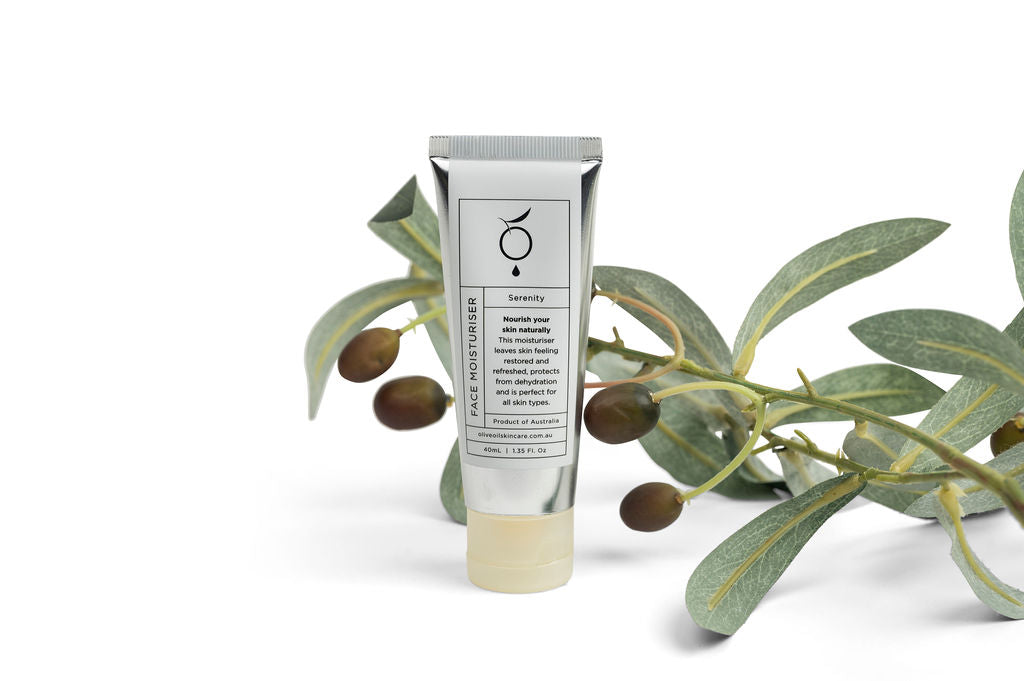
Our Serenity Face Moisturiser uses olive oil, vitamins B and E, and olive leaf extract, and is described as hypo-allergenic and suitable for most skin types. For dry skin, the Zetox Protective Daily Moisturiser is formulated with zeolite, calendula and olive oil.
Telling Sensitivity Apart From Eczema, Rosacea and Contact Dermatitis
Sensitivity is a reaction pattern. Eczema, rosacea and contact dermatitis are diagnosed conditions, and they need different care. Knowing which one you have changes everything.
Condition |
Common signs |
What helps |
|---|---|---|
Sensitive skin |
Mild stinging, redness after products |
Gentle, simple routine |
Eczema |
Dry, itchy, cracked patches |
Barrier repair, medical advice |
Rosacea |
Flushing, visible veins, bumps |
Trigger avoidance, gentle care |
Contact dermatitis |
Rash where a product touched skin |
Stop the product, identify trigger |
If your skin is itchy, cracked or painful, see a doctor or dermatologist before self-treating. A gentle routine supports these conditions but does not replace medical care.
If your sensitivity looks more like rosacea, our guide to natural skincare for rosacea covers ingredients and a routine in more depth. For dermatitis-type reactions, this piece on soothing ingredients for dermatitis goes further.
What to Do When Your Skin Reacts
Stop the new product first. Do not add more products to fix the reaction. Most mild reactions settle within a few days once the trigger is removed.
A simple reaction plan:
- Stop all new products immediately
- Wash with lukewarm water only
- Apply a plain moisturiser you already tolerate
- Skip actives, scrubs and fragrance until skin settles
- See a doctor if swelling, blistering or pain appears
Watch out: do not "push through" a reaction hoping skin adapts. It usually gets worse, and the barrier takes longer to recover.
Once skin is calm, restart one product at a time using the patch test schedule above.
Choosing Your First Gentle Essentials
Start with three products, not ten: a gentle cleanser, a simple moisturiser and a sunscreen. That is enough to support the barrier while you learn what your skin tolerates.
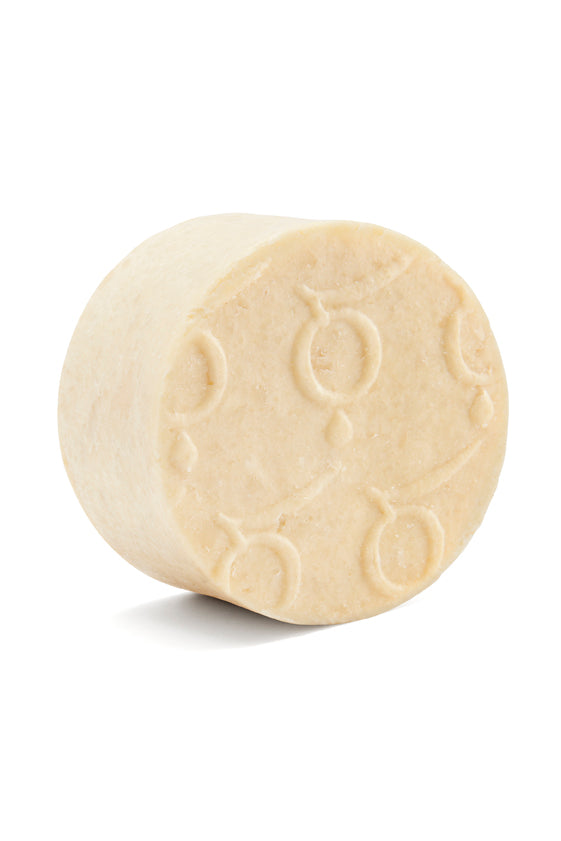
Our unscented olive oil soap is a good starting cleanser. It is made without SLS, palm oil, parabens or artificial colours, and is suitable for all ages and skin types. The business is licensed to carry the 'Made in Australia' symbol.
If you want specific product picks, browse our list of natural moisturisers for sensitive skin or our non-toxic skincare range for sensitive skin.
Best for: anyone starting a minimal routine who wants few, gentle products. Skip if: your skin is currently reacting. Calm it first, then start.
Reactive skin does not need a complicated routine. It needs fewer products, chosen carefully, introduced slowly. That is where we can help. Oliveoil Skincare Group products are formulated with Australian-grown olive oil, and are cruelty-free and vegan, and free from SLS, parabens and artificial colourants. Start with our unscented soap and Serenity moisturiser, patch test as you go, and give your skin time to settle. Get started with Oliveoil Skincare Group and build a routine your skin can actually tolerate.
Frequently Asked Questions
What should a basic skincare routine for sensitive skin include?
Keep it to four steps: a gentle low-lather or oil cleanser, a fragrance-free moisturiser, sunscreen in the morning, and nothing else until your skin settles. A holistic routine built on tolerability is generally considered better for sensitive skin than a complex one. Add a serum or exfoliant only after four weeks of calm skin, and introduce one product at a time so you can trace any reaction back to its source.
How do you introduce new products to sensitive skin without a reaction?
Patch test first: apply a small amount behind your ear or on your inner forearm, twice daily for three to five days, and watch for redness, itching or stinging. If it stays calm, move to the jawline for another three days before using it on your full face. Add one new product per fortnight, never two at once, so a reaction points to a single culprit you can remove.
What ingredients should sensitive skin avoid?
Watch for fragrance and essential oil blends high on the list, drying alcohols, SLS and other sulphates, and harsh actives such as high-strength retinol, AHAs and vitamin C used daily. Complex routines and misinformation can make sensitive skin harder to manage. Read labels for paraben-free, fragrance-free and low-lather claims, and patch test anything new regardless of how gentle it claims to be.
When should you see a dermatologist about sensitive skin?
Book a review if redness, itching or stinging persists past two weeks, if your skin cracks, weeps or bleeds, or if a reaction spreads beyond where you applied the product. Sensitivity that comes with flushing across the cheeks and nose, or patches on the elbows and knees, may point to rosacea or eczema rather than plain sensitivity. A GP or dermatologist can confirm the difference and rule out contact dermatitis.

