




Last Updated: November 4, 2026
Quick Summary
Olive oil skincare softens the look of fine lines through hydration, barrier support and antioxidants rather than erasing deep wrinkles. A 2024 study found olive oil compounds oleocanthal and oleacein significantly reduced wrinkle count in adults aged 45 to 79. Use three to four drops on damp skin at night after a patch test.
- A 2025 study found extra virgin olive oil improved skin barrier function and reduced redness.
- Patch test behind the ear or inner forearm for 24 to 48 hours before facial use.
- Apply three to four drops of olive oil to clean, slightly damp skin at night.
- Skip facial olive oil if you have acne-prone, rosacea-prone or sensitive skin.
- Daily SPF 50+ does more for fine lines than any serum.
Table of Contents
- Olive Oil Skincare for Fine Lines: What the Evidence Shows
- The Benefits of Olive Oil for Face and Skin Barrier Health
- Best Natural Ingredients for Collagen Production Alongside Olive Oil
- How to Prevent Fine Lines Naturally: Daily Habits That Support Skin
- How to Apply Olive Oil to the Face: A Safe Step-by-Step Routine
- Who Should Avoid Facial Olive Oil: Sensitive and Acne-Prone Skin
- Olive Oil Compared With Evidence-Backed Wrinkle Treatments
- Building Your Olive Oil Skincare Routine With Oliveoil Skincare Group
- Frequently Asked Questions
Olive Oil Skincare for Fine Lines: What the Evidence Shows
Olive oil skincare for fine lines has real research behind it, but the evidence is narrower than most marketing suggests. A 2024 study published via the National Library of Medicine's PubMed Central found that oleocanthal and oleacein, two compounds in extra virgin olive oil, significantly reduced wrinkle count in men and women, particularly those aged 45 to 79. Here at Oliveoil Skincare Group, we think that's worth knowing, and worth understanding properly before you commit to a routine.
So what does olive oil actually do for fine lines? It hydrates, supports the skin barrier, and delivers antioxidants. It softens the look of fine lines rather than erasing deep wrinkles. That distinction matters, and most guides skip it.
Below, we'll show you exactly how to use olive oil skincare for fine lines safely, who should avoid it, and how it compares with treatments that have stronger clinical backing.
The Benefits of Olive Oil for Face and Skin Barrier Health
The benefits of olive oil for face care come down to three things: moisture retention, barrier support and antioxidant content. A 2025 study in the same PubMed Central database found that extra virgin olive oil improved skin barrier function by increasing stratum corneum hydration and reducing redness and skin temperature. That is a barrier result, not a wrinkle result, and it's worth keeping the two separate.
Olive oil contains fatty acids, vitamin E and polyphenols, which are antioxidant compounds.
If barrier repair is your main concern, our guide on whether olive oil helps the skin barrier goes deeper, and how to repair a damaged skin barrier naturally covers the practical steps.
Best Natural Ingredients for Collagen Production Alongside Olive Oil
No topical ingredient rebuilds collagen on its own, and anyone telling you otherwise is selling something. What you can do is supply the skin with ingredients that support its own repair processes, and be honest about how strong the evidence is for each. That distinction is where most guides fall down, so here is a graded view rather than a shopping list.
Olive oil earns its place through vitamin E and polyphenols, which help limit the oxidative stress that breaks collagen down. That is a supportive role, not a rebuilding one.
Ingredients with the strongest topical evidence
- Retinoids (including retinal and retinol). The best-studied topical for collagen remodelling and fine lines. Start two nights a week and build up; expect months, not weeks.
- Vitamin C (L-ascorbic acid or a stable derivative). Supports normal collagen formation and pairs well with olive oil's vitamin E. Use in the morning under sunscreen.
- Sunscreen. Not an "ingredient" in the marketing sense, but UV exposure breaks down collagen and elastin faster than any cream can rebuild them. Daily SPF 50+ does more for fine lines than any serum.
Ingredients with plausible but weaker evidence
- Olive leaf extract. Adds antioxidant support and appears in several of our formulations, but topical collagen claims are preliminary.
- Squalane. Naturally present in olive oil, it softens and conditions without heaviness. Good for tolerance, not a collagen active.
- Vitamin A-rich plant oils. Support cell turnover when used at night, though at far lower potency than a formulated retinoid.
If you want to build these ingredients into a sequence, our natural anti-ageing skincare routine guide walks through a full daily order, and our olive oil guide for mature skin covers the age-related side in more detail.
How to Prevent Fine Lines Naturally: Daily Habits That Support Skin
Prevention matters, and the habits that matter most cost nothing. Sun protection is the single biggest lever, UV exposure breaks down collagen and elastin faster than any cream can rebuild them. Daily sunscreen, hats and shade do more for fine lines than any serum.
Beyond sun protection, four habits carry most of the weight:
- Cleanse gently. Harsh cleansers strip the barrier and leave skin tight and irritated. A cream or oil cleanser at night and a water rinse in the morning suits most dry and mature skin.
- Moisturise morning and night. Consistent hydration plumps the skin and softens the look of fine lines. Apply to slightly damp skin to help lock in water.
- Sleep and hydrate. Skin repair happens overnight, and dehydrated skin shows lines more sharply. Most adults need seven to nine hours; there is no cream that substitutes for it.
- Patch test anything new. Apply a small amount behind the ear or on the inner forearm, wait 24 to 48 hours, and check for redness, itching or irritation before using it on the face.
Where olive oil fits, and where it doesn't
Olive oil is a moisturising and antioxidant step. Used at night, three to four drops pressed into damp skin, it helps keep skin hydrated. It does not replace sunscreen.
When to stop and seek advice
Facial Serum, Juniper Orange, 40ml →
Stop using a new product and speak to a pharmacist, GP or dermatologist if you develop persistent redness, swelling, itching or breakouts that do not settle within a few days.
Once those habits are in place, a structured routine makes them stick. Our natural anti-ageing skincare routine guide walks through a full daily sequence you can follow, and our guide on whether olive oil helps the skin barrier explains why the moisturising step matters more than the marketing suggests.
How to Apply Olive Oil to the Face: A Safe Step-by-Step Routine
Applying olive oil to the face safely takes about three minutes and starts with a patch test, not a full application. Follow these steps:
- Patch test first. Apply a small amount behind your ear or on your inner forearm. Wait 24 to 48 hours and check for redness, itching or irritation.
- Start with clean, slightly damp skin. Cleansing first helps the oil absorb rather than sit on top.
- Use three to four drops. Warm them between your fingertips.
- Press, don't rub. Pat the oil over your face and neck, avoiding the immediate eye area.
- Apply at night to begin with. Nighttime use lets you assess tolerance before adding daytime application.
- Layer under moisturiser if your skin is dry. Oil alone may not be enough in winter.
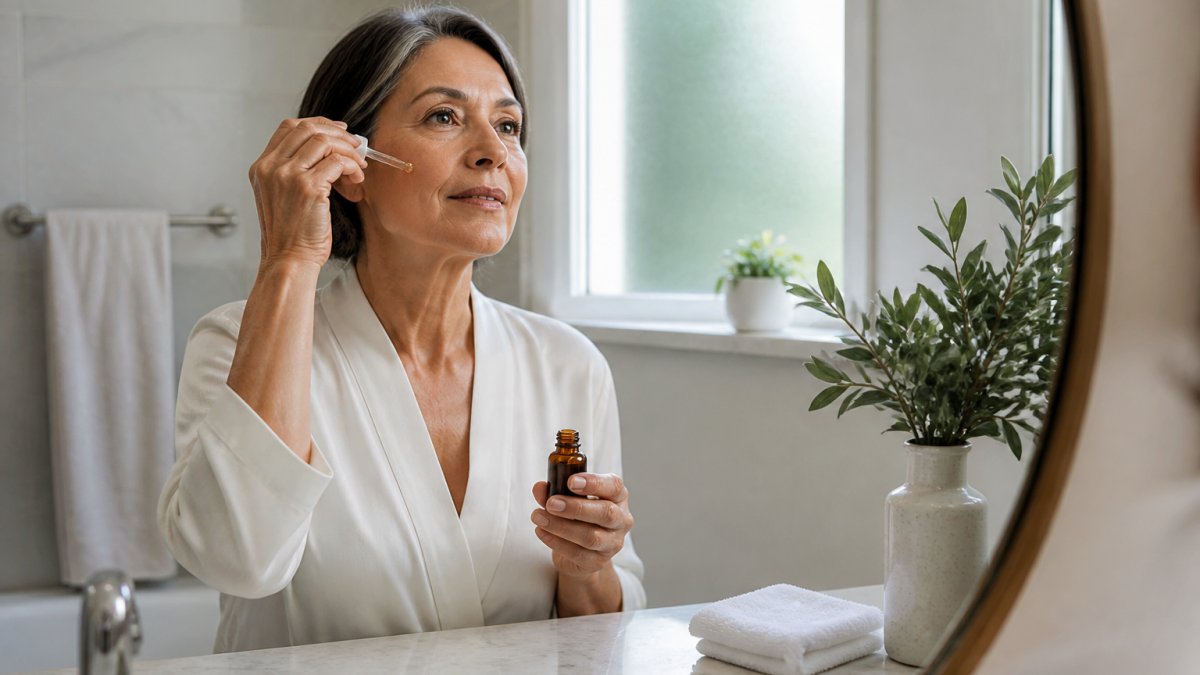
Watch out: applying undiluted oil to a large area without a patch test is the most common mistake we see. A reaction on the full face is far harder to manage than one behind the ear.
Who Should Avoid Facial Olive Oil: Sensitive and Acne-Prone Skin
Not everyone should put olive oil on their face, and the Cleveland Clinic's guidance on olive oil for skin is clear that overuse may clog pores or worsen acne-prone skin.
Skip facial olive oil, or test it very carefully, if you have:
- Acne-prone skin with active breakouts or frequent clogged pores
- Rosacea that flares with rich or occlusive products
- Sensitive skin that has reacted to plant oils before
- Seborrhoeic dermatitis, where excess oil can aggravate the condition
If your skin is reactive, a formulated product with olive oil lower in the ingredient list is usually gentler than neat oil. Our olive oil guide for mature skin covers the age-related side of this in more detail.
Olive Oil Compared With Evidence-Backed Wrinkle Treatments
Olive oil softens fine lines through hydration; prescription retinoids and in-clinic treatments work on wrinkles through collagen remodelling. Those are different jobs. Topical olive oil will not match a retinoid for deep wrinkles, and it isn't trying to.
| Approach | How it works | Best for | Realistic timeline |
|---|---|---|---|
| Olive oil skincare | Hydration, barrier support, antioxidants | Fine lines, dryness, dullness | Several weeks of consistent use |
| Retinoids | Supports collagen remodelling | Deeper wrinkles, texture | Months |
| Vitamin C serums | Antioxidant protection, collagen support | Prevention, brightness | Weeks to months |
| In-clinic treatments | Resurfacing, collagen stimulation | Established wrinkles | Weeks, with downtime |
One more distinction worth making: eating olive oil and applying it are not the same thing.
Building Your Olive Oil Skincare Routine With Oliveoil Skincare Group
A routine built around olive oil skincare works best when each step has a clear job. Here's how we'd structure it:
- Cleanse: Naturally Nourished Cleansing Oil ($25.99) lifts makeup and grime without stripping
- Treat: Juniper Orange Facial Serum ($49.99) is our pick for fine lines, with olive oil, olive leaf extract and vitamins A, E and K
- Moisturise: Serenity Face Moisturiser ($39.99 for 125ml, or $15.99 for the 40ml trial size) seals in hydration
- Night: Zetox Night Restorative Cream ($79.99) supports overnight repair
Every product is Australian made, vegan and cruelty free, and free from SLS and parabens. If you're ready to start, our Serenity Face Moisturiser is the simplest entry point.


Frequently Asked Questions
Does olive oil actually help with fine lines and wrinkles?
It can soften how fine lines look, mainly through hydration. Neither study proves olive oil erases deep wrinkles, so treat it as a supporting step rather than a stand-alone treatment.
How do I apply olive oil to my face for anti-ageing?
Start with a patch test on your inner forearm and wait 24 hours. Cleanse, then press two to three drops of an olive oil based serum or moisturiser over damp skin, morning and evening, before any heavier cream. Avoid the immediate eye area. If you use raw oil rather than a formulated product, keep the amount small and stop if you notice congestion. A dedicated facial serum gives you olive oil with added vitamins and plant extracts in a measured dose.
Is olive oil skincare suitable for all skin types?
Most skin types tolerate it, but not all. Dry and mature skin usually benefits from the fatty acids and vitamin E. Acne-prone skin is the exception: If you have rosacea or very reactive skin, patch test first and choose a hypo-allergenic formulated product rather than neat oil, so the concentration is controlled.
Can olive oil clog pores when used on the face?
Yes, it can, particularly on oily or acne-prone skin. Olive oil is rich in oleic acid, which some people find heavier than lighter carrier oils. The risk rises with the amount used and the time it sits on the skin. Use a few drops only, apply to damp skin, and cleanse thoroughly at night. If you notice blackheads or small bumps within two weeks, switch to a lighter formulation or use olive oil products two or three times a week instead.
How often should I use olive oil products to see results on fine lines?
Twice daily is typical for a moisturiser or serum, but visible change takes time. Hydration related softening can show within a week or two, Give a routine eight to twelve weeks before judging it. Photograph your skin in the same light each month, and stop if you develop irritation, redness or congestion.
Is eating olive oil as good as applying it for skin ageing?
They work differently and neither replaces the other. Eating extra virgin olive oil supplies antioxidants and fatty acids internally, while topical application hydrates the stratum corneum and supports the skin barrier directly. A sensible approach is to cook with good quality olive oil and use a formulated topical product for hydration and barrier support.
Fine lines respond to consistency more than to any single product, and a routine you'll actually follow beats a complicated one you won't. Start with a patch test, build in one product at a time, and give it weeks rather than days. Get started with Oliveoil Skincare Group and build a natural routine around Australian-grown olive oil, with products designed to hydrate, support skin flexibility and assist in the anti-ageing process.

