




Last Updated: November 9, 2026
Quick Summary
Plant-based oils can help soothe dry, inflamed skin when used as an emollient alongside your doctor's treatment. Start with a gentle carrier oil like olive oil, avoid undiluted essential oils, and patch test on the inner forearm for 24 to 48 hours before full use.
- Plant oils work best as an emollient, not as a cure for dermatitis.
- Carrier oils such as olive oil are gentler than essential oils.
- Essential oils can cause allergic reactions, including reactions to rose oil.
- Patch test on the inner forearm and wait 24 to 48 hours before full use.
- Apply oil to damp skin within a few minutes of washing to help trap moisture.
Table of Contents
Dermatitis is a broad term for inflamed, itchy, dry skin, and eczema is the most common form. Many people with these conditions look for natural options, and plant-based oils from Oliveoil Skincare Group are one place to start. This guide explains how to use them safely, from choosing the right oil to patch testing and building a routine that does not irritate your skin.
Plant-based oils are rich in fatty acids such as linoleic acid and oleic acid. Read whether olive oil helps skin barrier function in the facts on olive oil and the skin barrier. These help the skin hold water and support the outer layer, often called the skin barrier. A damaged barrier lets moisture escape and irritants get in, which is why dry, cracked skin often flares. Learn how to repair a damaged skin barrier naturally with simple steps you can follow at home.
Research on topical plant oils suggests they may help soothe inflamed skin, but the evidence is still developing. A review of topical plant oils and skin barrier repair describes these effects, though the results vary by oil and by person.
Plant oils are not a cure. They work best as an emollient, which softens and seals in moisture, alongside any treatment your doctor recommends.
Carrier Oils vs Essential Oils: Which Is Safe for Dermatitis
Carrier oils such as olive oil are gentler than essential oils. Essential oils are concentrated plant compounds and can cause allergic reactions. A dermatology review on essential oils and allergic contact dermatitis notes case reports of reactions to rose oil, even in cosmetic products.
Watch out: applying undiluted essential oils to eczema-prone skin can trigger a reaction that worsens the flare.
Best Carrier Oils for Eczema and Dry, Inflamed Skin
Our Soothing Balm Pure Original 60g ($25.99) uses olive oil as its core ingredient and is unscented. Our Olive Oil Soap, All-Natural, Unscented, 100g ($14.99) is suitable for all ages and all skin types and is free from palm oil, parabens and artificial colours.
- Olive oil: rich, moisturising, good for very dry patches
- Soothing balm: thicker, good for cracked heels and elbows
- Olive oil soap: gentle cleansing that leaves skin soft
Read more about olive oil for face and safe use and natural olive oil for eczema relief.
Patch Testing Oils for Sensitive Skin Before Full Use
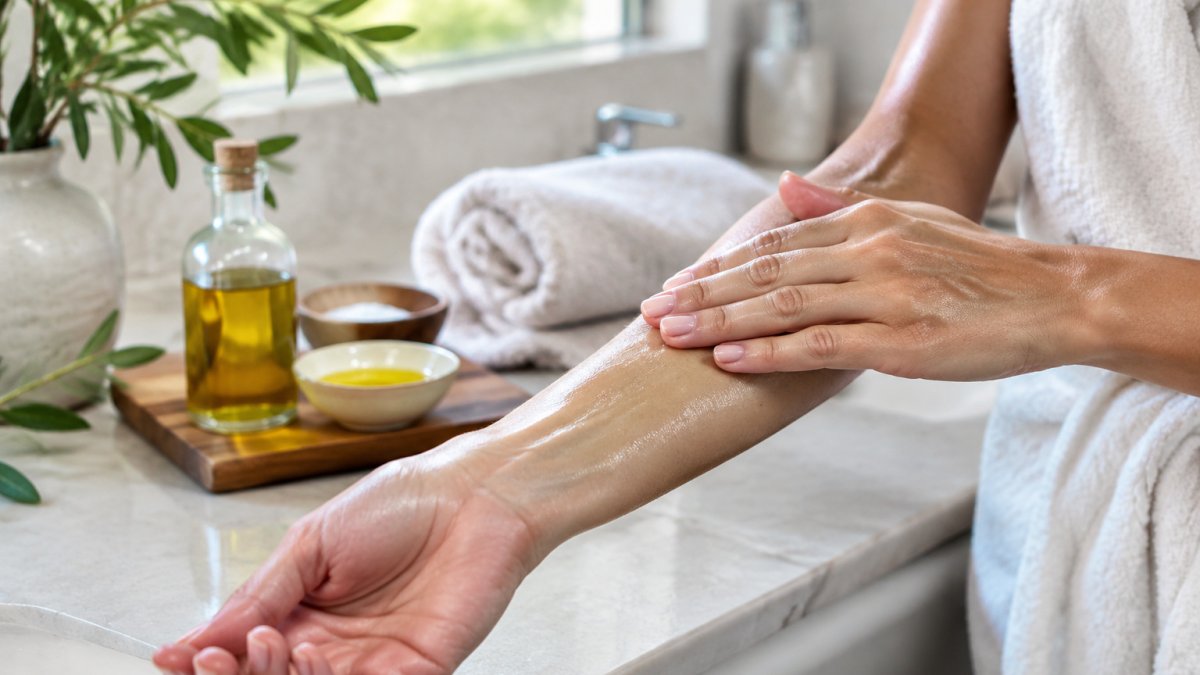
Always patch test before using any new oil on a larger area. Apply a small amount to the inner forearm and wait 24 to 48 hours. Stop use if redness, itching or a rash appears.
How to Apply Oil to Damp Skin for Dermatitis
Apply oil to damp skin within a few minutes of washing. Pat the skin dry, leaving it slightly damp, then massage a thin layer of oil over the area. This helps trap moisture.
Keep the amount small. Too much oil can feel greasy and may not absorb well.
Oils to Avoid and Warning Signs of a Reaction
Avoid essential oils applied to broken skin and any oil that stings when applied. Stop using a product and seek medical advice if you notice swelling, blistering, spreading redness or worsening itch.
Some people find that natural products sting or irritate sensitive skin, so test slowly and change one thing at a time.
Building Your Plant-Based Oil Routine for Dermatitis
Start with one product. Use it once a day after bathing for two weeks, then adjust. Keep a simple note of how your skin feels each day.
A basic routine looks like this:
- Morning: gentle cleanse, light olive oil layer on dry patches
- Evening: cleanse, apply oil to damp skin, seal with balm on the driest areas
- Weekly: patch test any new product first
Our olive oil soap and soothing balm fit neatly into this routine. Results vary, so give any routine several weeks before judging it.
Get started with Oliveoil Skincare Group's soothing balm and gentle olive oil soap for your daily care. Shop Now
Frequently Asked Questions
Which plant-based oils are safest for dermatitis-prone skin?
Fractionated coconut oil, jojoba oil and sunflower seed oil are commonly chosen carrier oils for dry, sensitive skin, because they are light and well tolerated by many people. Cold-pressed, unrefined versions can carry more plant compounds that irritate some people, so refined options are often a gentler starting point. Safety depends on the individual, so start with one oil at a time and stop if redness, stinging or itching develops. If your dermatitis is severe, weeping or spreading, see a GP or dermatologist before adding any new oil.
How do you patch test a plant oil before using it on dermatitis?
Apply a small amount of diluted oil to a discrete area such as the inner forearm or behind the ear, then cover it lightly and leave it for 24 to 48 hours. Check for redness, swelling, burning, or new itching during that time. Avoid testing on already inflamed or broken skin, since a healthy patch of skin gives a clearer result. Only move to a larger area if the test site stays calm throughout the test period.
Can olive oil help soothe symptoms of dermatitis?
Olive oil is a traditional emollient, and its fatty acids help soften dry skin and support the lipid barrier. It is a rich oil, so some people find it heavy or find that it irritates them, particularly if they are prone to allergic reactions. Our Soothing Balm Pure Original 60g (AUD $25.99) uses olive oil as its core ingredient and is free from sodium lauryl sulphates, palm oil, parabens and artificial colours. Patch test first, as with any oil.
What is the difference between essential oils and carrier oils for skin health?
Carrier oils, such as olive, sunflower and jojoba oil, are large-volume plant oils used to dilute and deliver products onto the skin. Essential oils are concentrated aromatic extracts that can cause allergic contact dermatitis and irritation, even at low doses. For dermatitis, carrier oils are generally the safer choice, and essential oils should be avoided unless a qualified professional advises otherwise. Always dilute any essential oil heavily before use.

